
Haitians here in the United States on Temporary Protected Status have just been granted a temporary reprieve by a federal judge.
The Trump Administration had planned to terminate TPS for Haitians on Wednesday. Early Monday evening, U.S. District Judge Ana Reyes granted the plaintiffs’ motion to stop the termination. The lawsuit argued that the Trump Administration’s decision to end TPS for Haitians was driven by bigotry, and it pointed to Trump’s own comments about Haitians as evidence. The administration is expected to appeal the decision to the Supreme Court.
If the court allows the Department of Homeland Security to proceed with its plans to revoke TPS, nearly 400,000 Haitians in the United States, including about 90,000 who live and work in Florida, will be unable to work legally and will face deportation back to Haiti. That country is considered one of the world’s most dangerous, as it is currently ravaged by gang violence, political corruption and food insecurity.
Human rights advocates detail the dire situation in Haiti as they push for the extension of TPS. NBC6’s Hatzel Vela reports
The United States Department of State recommends not traveling to Haiti “due to dangerous conditions and violent crime.”
However, the Department of Homeland Security maintains that conditions in Haiti have improved enough for Haitians on TPS to go back to their homeland. That decision will have a major impact on health care in South Florida.
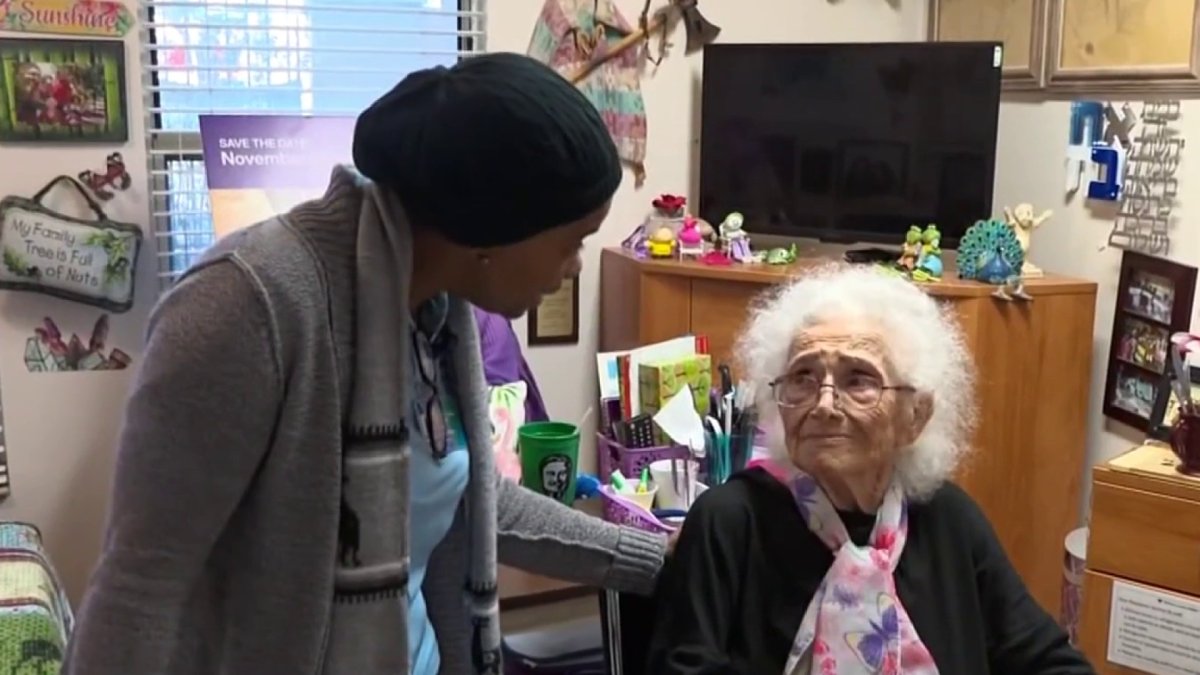
At Miami Jewish Health, one of the region’s largest elder care facilities, they are bracing to lose more than three dozen hard-to-replace employees, including certified nursing assistant Marie Shirley Sanon. She’s been living in the United States on TPS for 22 years, paying taxes, raising her two daughters, caring for people, and can’t imagine going back to Haiti now.
“I don’t have no place to go in Haiti, I don’t have no house, I can say I don’t have no country, the country is finished, every day, people die, they killing people, they kidnap people, they burn people alive, imagine?” Sanon said.
She is among the estimated 6,000 Haitians on TPS who work in South Florida’s health care industry, most of them in nursing homes or in home health care, taking care of elderly patients like Marion Marker.
“I feel strongly that the people that are here, if we didn’t have them, who would we have?” said Marker, who is a resident at Miami Jewish Health. “If I were younger, I would go out and protest.”
Miami Jewish Health CEO Jeffrey Freimark said his facility is losing 37 employees who are on TPS.
“Devastating on many levels, first of all, I think it is morally and ethically reprehensible,” Freimark said. “I have the utmost respect for our caregivers, they are the ones that make this organization work, they are the ones answering that call bell at 2 a.m.; these folks are wired in such a way that they are here to care.”
Freimark is worried that continuity of care will be lost when nurses who are trusted by patients and who know the issues of their patients are suddenly gone.
Amina Dubuisson is a past president of the Haitian American Nurses Association and now directs clinical services for another South Florida elder care company. She says the TPS issue has created a crisis.
“Especially for nursing, we already have a shortage, so now removing these people, it just makes it worse, so we don’t have people that we gonna grab to replace them,” Dubuisson said.
Meanhwile, Sanon is feeling anger, anxiety, and outright fear at the prospect of being deported back to Haiti.
“I don’t do nothing wrong, I’m not a criminal, I’m not a rapist, why they treat us like that? We don’t deserve that,” Sanon said.
The judge’s decision does not mean the case is closed. The administration has already revoked TPS for Venezuela, Nicaragua and other countries, and in those instances, judges also granted motions to halt the process, but the Supreme Court allowed deportations to continue while they reviewed the cases.