
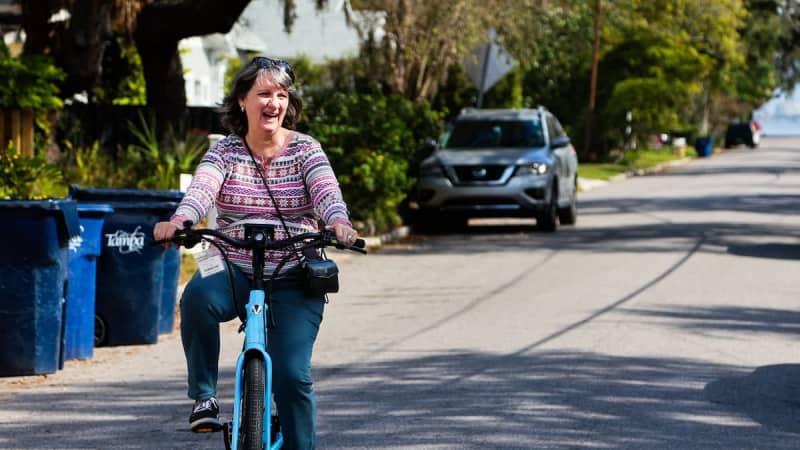
About three months had passed since anyone was killed atop an electric bicycle in Pinellas County.
It was a pretty fortunate streak, according to local law enforcement officials, who had noticed sidewalks, roads and shared paths were filling with more e-bikes — and with them, more crashes.
That quiet summer gave way to a string of fatal collisions in late September.
There was the Seminole woman riding an e-bike struck and dragged eight blocksby a suspected drunken driver in Gulfport. Three days later, a car killed a 73-year-old veteran headed home on his e-bike in St. Petersburg. A couple weeks later, two more riderswere fatally struck.
Concern about e-bikes — from reckless riders to dangerous roads to poor protections — had been growing among traffic investigators and emergency room doctors watching injuries and deathstick up.
Those weeks still haunt Dr. Patrick Mularoni, a pediatric emergency room physician at All Children’s Hospital in St. Petersburg.
“In a single two-week period, we had 12 trauma alerts related to e-bikes,” he said. “It’s seldom that something changes your work environment to this extent, and this is a paradigm shift in what we do in emergency medicine.”
Efforts to better educate drivers, track deaths and crack down on children riding e-bikes recklessly didn’t stem the streak of crashes.
Tampa Bay families have mourned more than two dozen deaths related to e-bike crashes over the last five years. Experts say a mix of lawmakers’ slow response, poor cycling infrastructure and deadly e-bike speeds have bred a dangerous environment for pedestrians and cyclists alike.
Some officials are hopeful that the state government, which has been slow to regulate e-bikes, will pass a bill this year that would codify safety rules already adopted by most other states.
The lack of state and local laws governing e-bikes means law enforcement can do little to curb bad behavior. Talks about escalating enforcement have stirred concern among residents who remember when Tampa police once wielded bike citations to target Black neighborhoods.
E-bike proponents say those in favor of more regulation are missing a crucial point: E-bikes, a vastly cheaper and greener option compared to cars, have the potential to unclog the region’s overcrowded streets.
The scale of the e-bike problem is also unknowable, since crash data is murky and many agencies have only just started tallying fatalities.
But emergency room doctors say they have seen enough to understand the scope. Electric bikes and scooters now pose the biggest emerging risk for traumatic injury, said Dr. Eric Shamas, an emergency room physician at Orlando Health Bayfront Hospital. Last year, the hospital logged 513 emergency rooms visits related to electric bikes and scooters.
“They’re ubiquitous, and we have not figured out how to manage them,” Shamas said. “It’s like we have an invasive species. We never planned on it. They’re here now. They’re not going away.”
Gaps in data make it difficult to count exactly how many people have died on e-bikes in Tampa Bay. State crash reports lump in e-biker deaths with bicyclists. Conflicting definitions of what counts as an e-bike further obscures crash data.
The Florida Department of Highway Safety and Motor Vehicles, an agency tasked with tracking crashes, defines a bike fatality as a person who died “while operating a vehicle propelled solely by human power or a motorized bicycle … rated at 200 watts or less.”
State law offers a different view: E-bikes with motors as powerful as 750 watts are still considered a type of bicycle, as long as top speeds are capped at 28 mph. But police and medical experts say these bikes are easily modified by children and adults to reach speeds greater than 55 mph, making them more akin to electric motorcycles. It also means some e-bike deaths are recorded as motorcycle fatalities, muddying the already scant data on crashes.
Severe injuries resulting from a high-speed e-bike collision more closely resemble a motorcycle crash than a bicycle crash, Shamas said.
“It may not be a gasoline engine,” he said. “But it’s a motorcycle injury, and they should be treated exactly the same way.”
While nonfatal crash numbers remain a mystery, a patchwork of data from hospitals, law enforcement departments, transportation planning agencies and medical examiner’s offices across the Tampa Bay region shows the tally ofe-bike deaths is rising.
In Pinellas County, one of the deadliest places in Florida for bicyclists, 18 people have died riding e-bikes over the last five years, a Tampa Bay Times analysis found.
Three people in Pasco and six in Hillsborough were killed on e-bikes during the same time frame, according to county medical examiner’s offices.
In 2024, five people were killed riding “micro-mobility devices,” which could be an e-bike or e-scooter, in Pinellas. Last year, fatal crashes doubled.
At the urging of county transportation officials, St. Petersburg police began tracking e-bike deaths separately from other bicycle and scooter deaths in September. The agency also launched a more aggressive campaign to educate drivers and cyclists on busy roads, said Lt. Jason Levey, who leads the agency’s traffic division.
“It’s not just a city of St. Pete problem. It’s countywide, statewide, nationwide, because of the ease — you can get these on Amazon, you can get them wherever, and they’re relatively inexpensive,” Levey said.
A post-pandemic explosion of e-bike sales coincided with an “exponential” increase in crashes, according to a study published last year in the National Library of Medicine. Researchers saw a 90% uptick in injuries nationwide from 2019 to 2022.
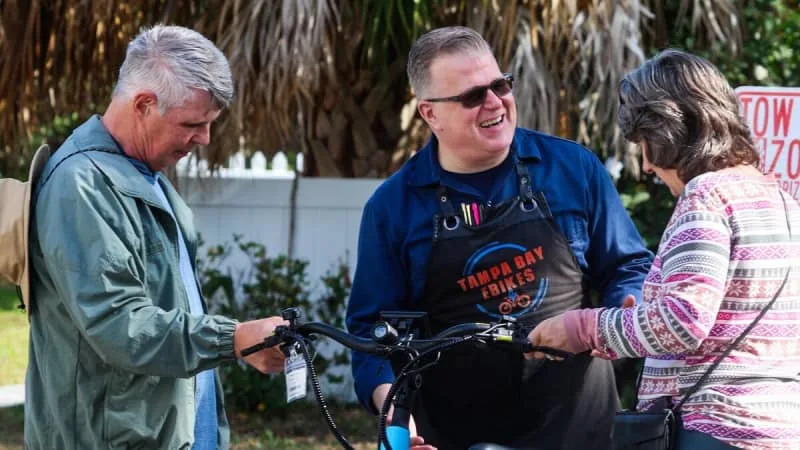
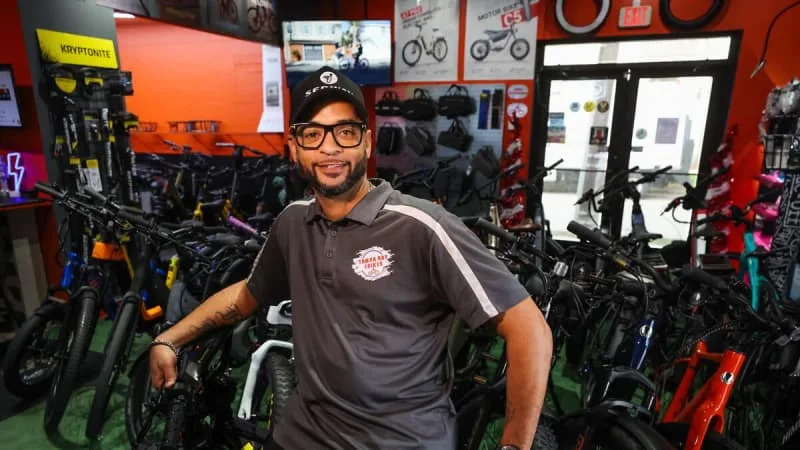
More people working from home meant fewer long commutes by car. It opened up a niche that e-bikes quickly filled, said Forrest Fleming, a customer service manager at Tampa Bay E-Bikes in South Tampa. And they’re here to stay, he added.
“In 2026, this is going to be a $20 to $30 billion industry. You wouldn’t have thought that three or four years ago,” Fleming said. “I don’t see it slowing down.”
The wave of e-bikes flooding Tampa’s streets, trails and sidewalks caught many by surprise, he added.
“Infrastructure-wise, the city wasn’t really ready for as many bikes that came onto the market,” Fleming said.
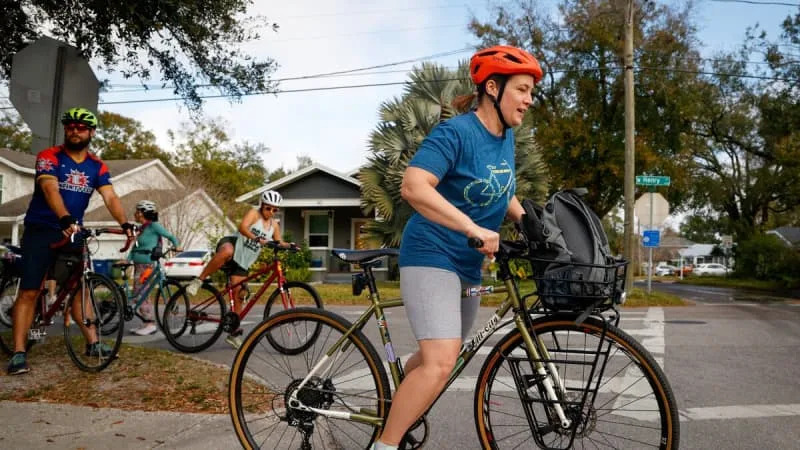
On a recent foggy Sunday morning, Tampa City Councilmember Lynn Hurtak and a dozenothers saddled bicycles and e-bikes at Henry and Ola Park.
Hurtak, detailing the riding rulesto her group, strapped on a helmet and fastened a backpack with a patch declaring a “war on cars.” She hosts a ride like this every other weekend to teach residents how to patch together the city’s disjointed and isolated bike networks.
Over 12 miles through the heart of the city, Hurtak showed the good — like a new flashing light at Dr. Martin Luther King Jr. Boulevard and Ola Avenue that drew cheers as the group bounded across the intersection — and the bad. The point of this ride, Hurtak explained, would be learning how to safely cross the narrow pedestrian bridge to Davis Islands.
Tampa’s patchwork of bike lanes means cyclists often have to make a decision on the fly when they run out of road, Hurtak said. She expects the city’s bike culture will develop at the same time its burgeoning infrastructure takes shape. Educating road users, including e-bikers, will help during that transition, Hurtak said.
“It all hinges on people being reasonable,” she said.
Paula Flores, 61, spent her youth racing road bikes around New York City. Her pace has slowed as she hasaged, and Hurtak’s rides are plenty fast for her now. Two summers ago was Tampa’s hottest on record, and she found herself in the emergency room with heat stroke after a ride.
“It was traumatic. It was like six months of no riding, and I was in doctor’s appointments and with cardiologists and all that stuff. My solution was this,” Flores said, gesturing to her glossy black beach cruiser. “It was an e-bike.”
She has already racked up 1,200 miles and hopes to crack 3,000 this year. Flores, a retired transportation engineer who volunteers as the social media manager for nonprofit Walk Bike Tampa, knows the city’s bike network needs work. But she’s sympathetic to city staff who do their best on a tight budget, she said.
Austin Britt runs the city’s e-bike voucher program, an initiative aimed at getting people out of gas-guzzling cars and onto green, affordable electric bikes. While wrapping this year’s voucher lottery, which will disperse $570,000 to prospective e-bikers, he’s also been tallying the good that the program has done.
Three out of five residents who got e-bikes in recent years said they rode it to work at least three days a week, he said.
”We collect data on the usage of the bike — where they’re going, how far their trips are — so we can start getting an idea of the carbon offset and the footprint that we’re saving,” he said.
Other cities already have a good idea of that environmental benefit: A 2019 study conducted in Portland, Oregon estimated that a 15% increase in e-bikes could lead to an 11% decrease in carbon emissions across the city.
All 248 residents who receive a voucher this year will be required to go home with a helmet. Bike shops partnering with the city on vouchers must perform a mandatory safety demonstration.
Those efforts won’t guarantee safe behavior, said Tampa mobility director Brandon Campbell, so safety will need to be a constant drumbeat.
The last time Rosita Hubbard saw her father was a blur.
She was swamped with preparations for open enrollment week at her insurance company in St. Petersburg. Sterling Hubbard, a 73-year-old Air Force veteran with a square jaw and short-cropped hair, was picking up a cell phone she had bought him before he zipped toward home on his electric bicycle.
Hubbard had sold his Hyundai soon after he moved to Florida in April to be closer to his adult children. His reaction time had slowed in his golden years, he told them. Drivers running traffic lights and cutting him off became a constant gripe.
That September afternoon, his daughterasked Hubbard if he wanted to ride home after work. He needed to change into his church clothes before they met again for Wednesday worship. He would take his e-bike, he told her.
Rosita Hubbard doesn’t remember how much time had passed before she heard the sirens. It couldn’t have been more than five minutes, because her father was struck and killed by a driver with a suspended license less than half a mile from her office.
Local crash investigators have ruled nearly all e-bike deaths in recent years as cyclists’ fault, according to crash reports reviewed by the Times. But transportation experts highlight sparse regulation, lacking bike lanes and unclear traffic rules as failures that put cyclists at risk.
The majority of recorded deaths in Pinellas and Pasco counties were men over 60 who were not wearing a helmet. Most were struck by cars, but a handful simply took a bad fall. Young children and older adults, who often lack fine motor skills that electric vehicles demand, are particularly at risk, medical experts said.
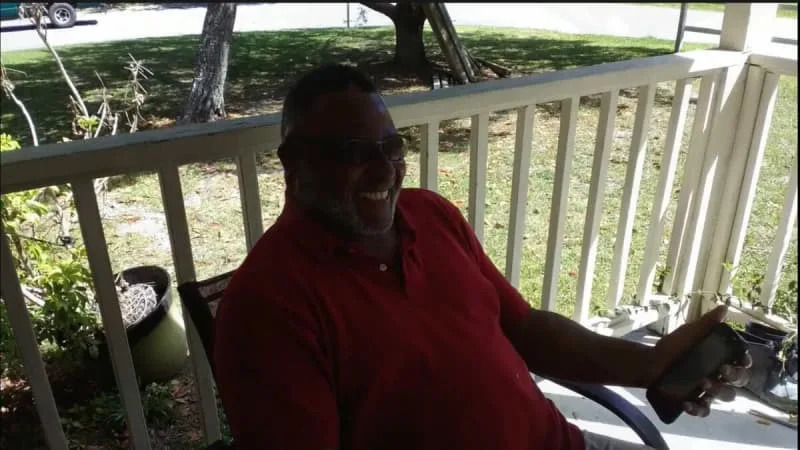
Hubbard was wearing his helmet, yet the impact fractured his skull, pelvis and both arms. Crash investigators estimated the black Nissan Sentrathat struck him was moving about 30 mph. The collision sent his bike skidding 110 feet down the road.
St. Petersburg police arrested the driver, who was on probation following a guilty plea for aggravated assault after striking her brother and another woman with a car two years ago.
The driver told police Hubbard had run a red light. Camera footage confirmed her story, investigators found, and she was not charged in connection with Hubbard’s death.
“He was by the book,” Rosita Hubbard said of her father. “So to say, ‘Oh, he just ran a red light.’ I couldn’t imagine that.”
Julie Taylor got a call from her mother on the night her father was killed on his electric bike.
Randall Weck’s license had been suspended as long as Taylor could remember. While she was growing up, her father was always borrowing someone’s car or finding another way to get around. His new e-bike allowed him to get most places he needed.
On Mar. 19, 2023, Weck had been drinking before he rode home from his sister’s house. He went over the handlebars in downtown Clearwater and fractured multiple ribs. Weck was taken to a hospital where he died more than a month later from complications related to his injuries.
So when Taylor’s sister bought her nephews electric bikes and scooters for Christmas last year, she was beside herself.
“I even told my mom: I was like, ‘Oh Lord, I’ll wait for the phone call from you to tell me that RJ got hit by a car,’” she said.
Weeks later, her 14-year-old nephew was hit by a car on his e-scooter. He wasn’t hurt, but the impact knocked him out of his shoes, Taylor said.
“I’m highly against e-bikes. I’ve watched accidents happen where I drive past and somebody hits somebody on an e-bike,” she said. “I watch these kids go down the road, and it’s just like you’re just asking for your kid to die.”
Pinellas County Commission chair Brian Scott remembers when the Pinellas Trail first opened 35 years ago. At the time, it stretched just six miles linking Largo to Seminole.
When Scott was first elected to the board in 2022, his inbox filledwith complaints about reckless e-bikers. At the time, he didn’t think it was asbad as people were saying.
“You see somebody misbehaving here and there. There’s idiots on every vehicle,” he said. “But since that time, over the last three years, it’s really, really, really escalated.”
“Hardly a week goes by now where you’re not hearing about a serious e-bike accident somewhere in Pinellas County,” Scott added.
E-bike fatalities on the road far exceed those on shared paths in Tampa Bay — just seven of the 27 deaths reviewed by the Times did not involve a car. (Of those seven, alcohol and drugs were a factor in three deaths.) But public outcry is loudest when it comes to shared trails.
You don’t have to scroll far down the Friends of the Pinellas Trail Facebook group page to read about close shaves between e-bikers and pedestrians. Scott has had his own share of near misses.
“You have a moment of fear, but you almost feel like you’ve been violated a little bit,” Scott said. “You’re like, shit, this guy almost killed me, and then they’re gone. And there’s nothing you can do about it other than go on social media.”
Scott is considering traffic cameras, intersection redesigns near trails and steps taken by other local governments, like a Palm Beach town ordinance that banned children under 15 from riding e-bikes and outlawed their use on sidewalks.
“The challenging thing on the (Pinellas) Trail is because it’s not a road, you can’t write a speeding ticket,” Scott said. “There’s 20 mph speed limit signs on the trail, but it’s more like a suggestion.”
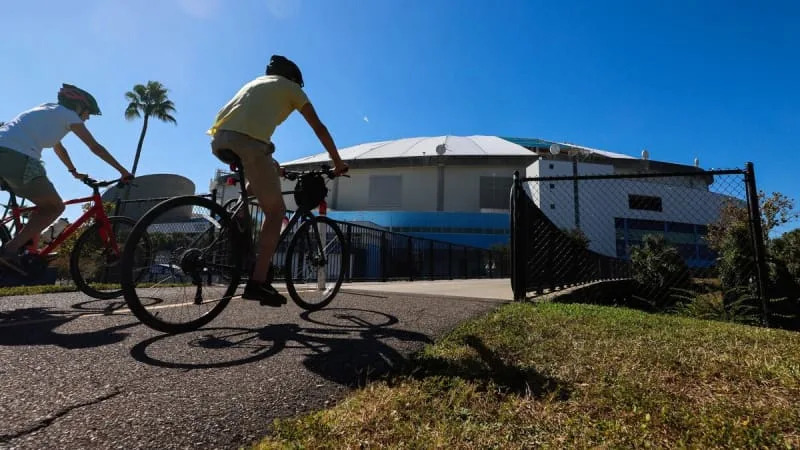
Before passing any local rules, Scott and other community leaders are waiting to see whether an e-bike bill filed this year makes it to Gov. Ron DeSantis’ desk.
The measure would require e-bikers to give a verbal warning when passing a pedestrian, make modifying an e-bike illegal and bar children 15 or younger from riding one with a motor that is 750 watts or bigger — a law that already exists in most states.
The bill would also require state accidentreports to say whether a crash involved a motorized scooter, an e-bike or an electric motorcycle.
The Tampa City Council recently tabled a heated discussion about regulating bikers’ speed and behavior on city paths until the legislative session endsin Tallahassee. Some residents worried the proposed city ordinance, which would have banned wheelies and other tricks, “primarily targets young riders — disproportionately youth of color.” City leaders will revisit the topic in April.
In Pinellas County, educating deputies and enforcing laws regulating DUIs, reckless driving and helmets on trails couldsoon be part of the agency’s strategy, Sheriff Bob Gualtieri said.
“That’s probably what we’re going to be doing here in the near future,” Gualtieri said. “Otherwise, a lot of these people are just not going to comply.”
Whit Blanton is the director of Forward Pinellas, the county’s transportation planning agency, and an avid e-biker. He’s not so sure a crackdown would solve much.
“Law enforcement is only going to get you so far,” Blanton said. “I would lean more into communication and education and in building better facilities.”
Blanton said policing cars will do more good for pedestrian safety than policing bikes. It’s an opinion shared widely in bicycle and “safe streets” advocacy circles.
A few “bad apples” might be staining e-bikes’ reputation, but most are no worse than the average driver, he said.
“I’m also leery of spending a lot of resources on something that, to me, is not as serious a problem as what’s happening on the roadways where we have far more fatal crashes, and we have 4,000-pound vehicles that are running red lights and doing all kinds of misbehavior.”
Restrictions on e-bikes, he said,could disproportionately harm low-income workers who rely on them for commuting.
Although e-bikes present a new set of challenges for health officials and city planners, Tampa Bay and other metro areas have been down a similar road before.
A recent study by Tampa General Hospital showed that 40% of hospitalizations related to e-scooter crashes involved traumatic brain injuries. E-scooter injuries in Tampa peaked at 43 hospital visits whenthey were introduced at the end of 2019, the study showed. Injuries plummeted during the pandemic before steadily rising again, but have not topped the numbers reached during e-scooters’ inception.
Dr. Jason Wilson, the University of South Florida Health researcher who authored the study, said it’s too soon to tell whether e-bike injuries will follow a similar trend.
“We’re still at the beginning of a new technology or transportation tool,” he said. “I think we’ll hit a space at some point where there are expectations of what we should do with e-bikes.”
Until then, experts and officials say they can really only urge pedestrians, cyclists and e-bikers to do one thing to lessen tension and breed a safer environment for all. Be neighborly.