
SEMINOLE COUNTY, Fla. — Last month, Seminole County switched its public transportation from LYNX buses to a new microtransit service called Scout.
The chief executive officer at LYNX recently sent a letter to the county to ask for help, as crews continue removing hundreds of bus stops and shelters.
What You Need To Know
For months, LYNX and Seminole County have been working to negotiate this process, but recently a letter to the county from LYNX broke down the estimated cost.
The total to remove all the bus shelters, stops and other amenities is $663,680.
There could also be additional costs for Seminole County depending on the age of the equipment; some money might need to be paid back to the Federal Transit Administration.
The negotiations to get all bus stops removed are ongoing, and there is no timeline on when it will be resolved.
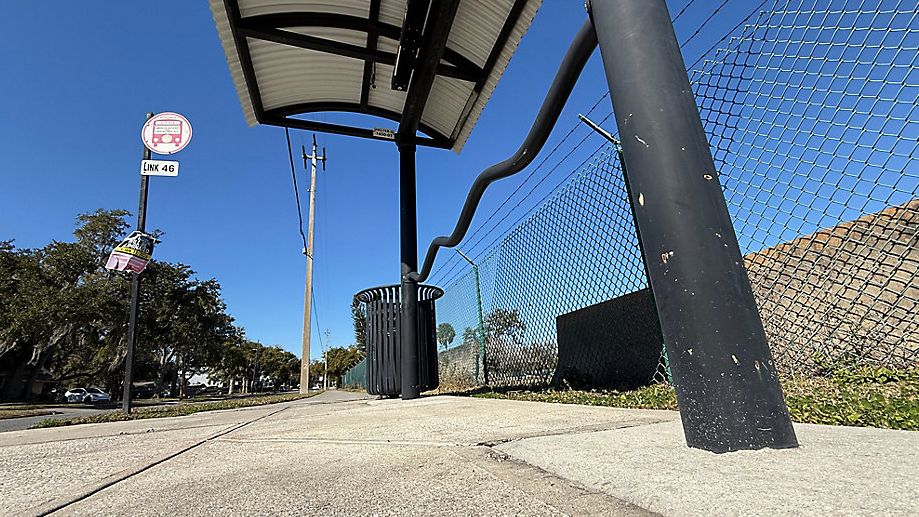
Signs are posted at each bus stop that was eliminated across Seminole County.
“So you don’t want to give false hope or thoughts that the buses may be coming along,” said Matt Friedman, the director of marketing and communications for LYNX.
The work continues to remove the rest of the stops, shelters and other amenities.
“Everyone is trying to come to a common solution,” Friedman said.
For months, LYNX and Seminole County have been working to negotiate this process, but recently a letter to the county from LYNX broke down the estimated cost.
“We anticipated that. We knew it was part of the deal,” said Chris Patton, the director of communications for Seminole County.
The estimated costs are about $567,000 to remove more than 100 shelters, about $73,000 to remove dozens of trash cans, bike racks and benches and $22,000 to take down 400 bus stop poles.
“Where we can see some advantages is that we could have some of our own staff do some of this work, so that is what we are trying to work through with LYNX,” Patton said.
The total cost estimate is around $663,000, but the total could be higher because some money might need to be paid back to the Federal Transit Administration.
“There is something with the FTA that is called useful life, so the shelter has to be in the ground for 10 years…If you have any value left on that structure, there is money that has to be paid back to the FTA,” Friedman said.
More than half of the shelters have already been removed and stored to determine whether they can be reused in Osceola and Orange counties.
“We need to figure out what needs to stay and what can be thrown out, so that is part of the discussion here,” Patton said.
Whatever the final price tag, the money to pay it on Seminole’s end will come from the cost savings of switching from LYNX to Scout, which is an estimated $7 million a year.
There is no official timeline of when this could get resolved and all the equipment could be taken down, but LYNX estimates it will take at least another month to remove all the shelters, stop poles and other amenities.