
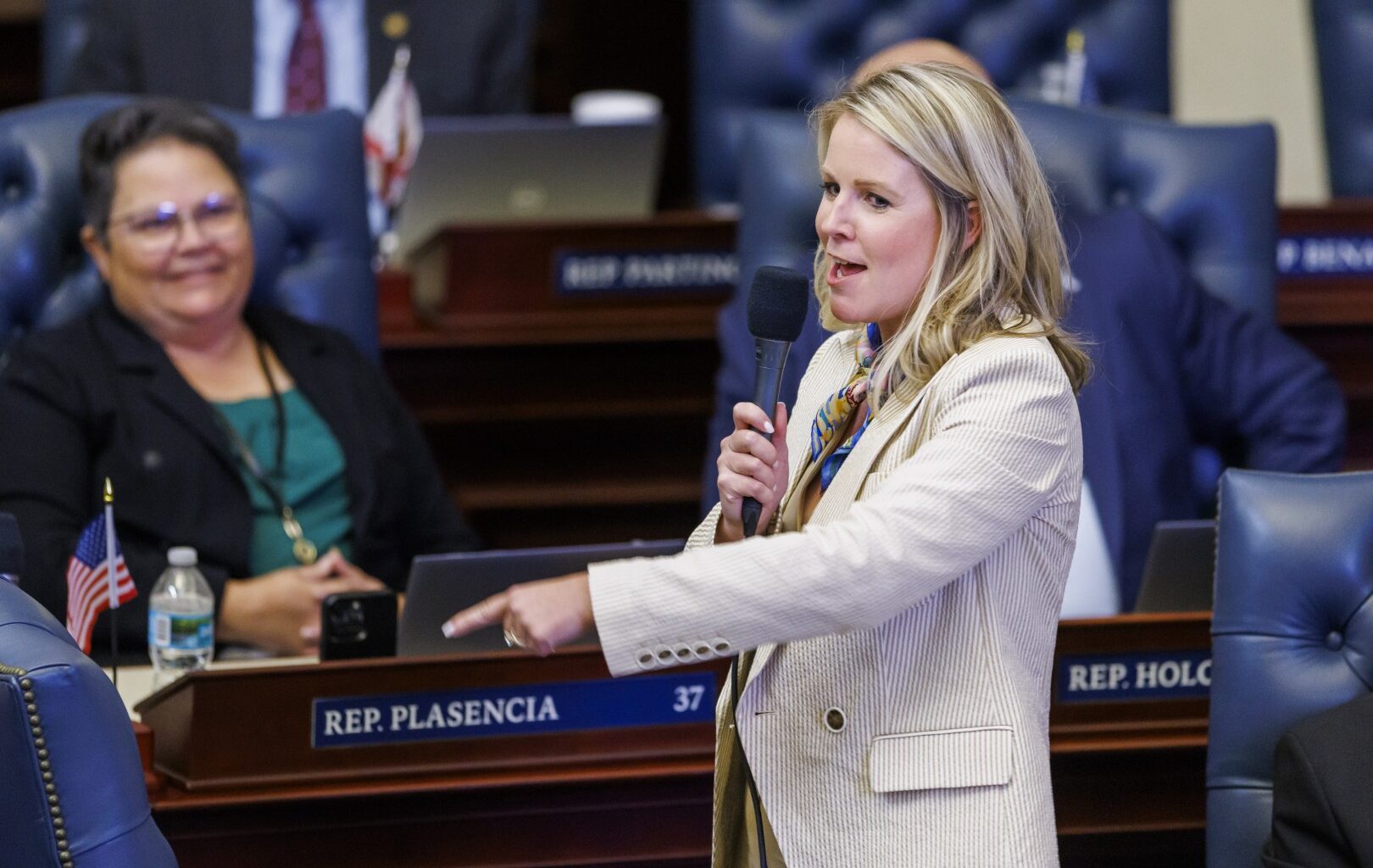
Florida could soon start revoking tax receipts for companies doing business with Cuba.
The House Judiciary Committee advanced the Foreign Interference Restriction and Enforcement (FIRE) Act (HB 905), aimed at limiting foreign influence on Florida’s economy or elections by hostile actors from around the globe.
“It brings foreign agents of foreign countries of concern into the sunshine by requiring certain registration,” said Rep. Jenna Persons-Mulicka, a Fort Myers Republican carrying the legislation.
The House Government Operations Subcommittee crafted the legislation and advanced it last week with no dissenting votes. The House Judiciary similarly cleared the bill with no opposition, sending it to the Commerce and State Affairs Committees to consider before it reached the House floor.
Rep. Daniel Alvarez, a Tampa Republican, said the bill seeks to address national security issues that could have been addressed by a similar bill scuttled in the last Legislative Session.

“It is our responsibility to defend our homeland in the state of Florida and make it against all threats, foreign and domestic. The thing is, we literally have foreign enemies coming at us right now,” Alvarez said.
“This bill should have passed last year with flying colors, and it got caught up in politics. I hope, I hope, when the bomb goes off, you remember the politics that stopped you from voting for this if you did last year, and I hope it gets you to vote this time.”
The Judiciary Committee added language about Cuba specifically, which comes as President Donald Trump’s administration applies additional economic pressure on the communist nation 90 miles off Florida.
“It permits the appropriate tax collector or local government governing. Authority to request a sworn affidavit from the business or entity or individual attesting as to whether they are doing business with Cuba in violation of federal law,” Persons-Mulicka explained, “and then it provides a penalty of a sworn affidavit of federal law.”
Advocates for the legislation said the most important policies contained relate to China. Marina Macklin of American Global Strategies, a former policy adviser at the U.S. Treasury and a National Security Council staffer, said loopholes in Florida law allow companies controlled by an Eastern power to reach officials and influence government decisions without disclosing ties to the Chinese Communist Party.

“The risks that this bill addresses are especially acute when there are no existing guardrails against reliance on vendors’ contracts or technologies with deep ties to foreign adversaries,” she said.
“When critical infrastructure, energy, water, telecommunications and data networks are reliant on adversary-linked entities, the result is threat vectors that may impact us today and in years to come. This bill tackles those challenges head-on.”
The legislation requires entities engaged in lobbying and gift-giving on behalf of foreign countries of concern to disclose funding sources and activities. It also prohibits public employees and elected officials from accepting gifts from such countries and restricts the award of contracts.
The bill would also end sister city agreements between local governments and those abroad in nations hostile to the U.S. Macklin said the Sister Cities program is often treated by U.S. municipalities as an economic and cultural bridgeway to international local governments, but nations like China keep tight state control and use it to advance an economic edge on the global stage.