
This article is written by a student writer from the Her Campus at FSU chapter and does not reflect the views of Her Campus.
In 2026, FSU celebrates its 175th birthday, allowing students, faculty, and alumni to reflect on the school’s long and accomplished history. In honor of the historic birthday, here is a brief recap of the past 175 years of Florida State.
Early Beginnings
On Jan. 14, 1851, the Florida Legislature established the Seminary West of the Suwanee River, though the school didn’t open its doors until 1857, and served as a post-secondary education for male students. In 1858, the Seminary became coeducational after absorbing the Tallahassee Female Academy.
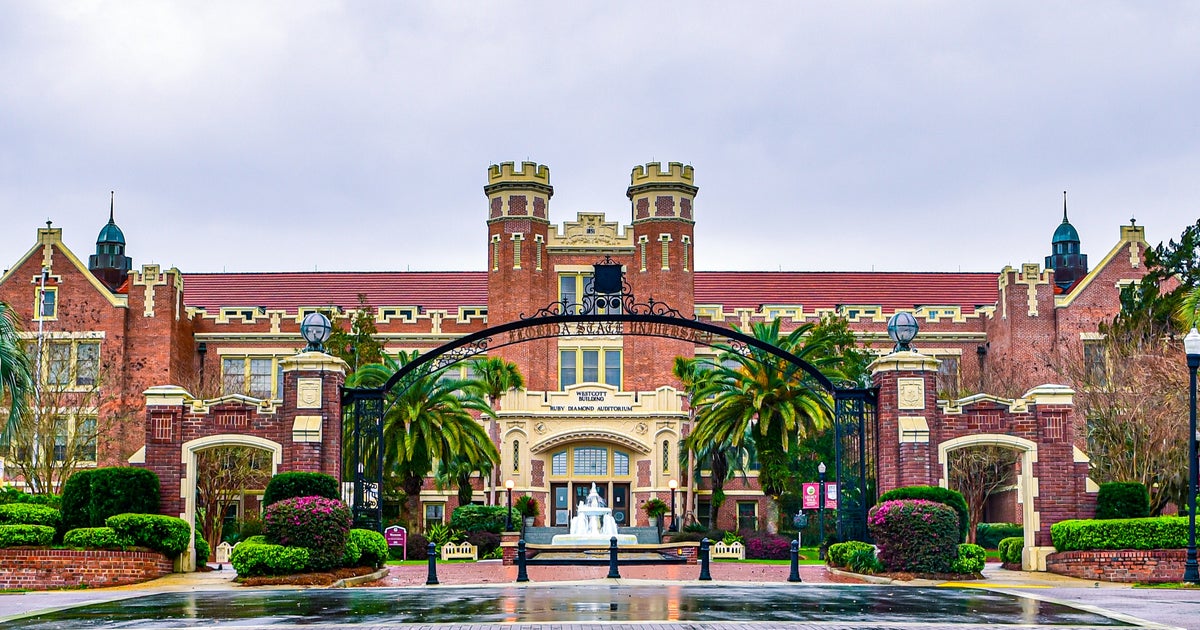
The coeducational seminary began providing educational services only 12 years after Florida achieved statehood, located on the hill that the infamous Westcott Building now stands. By 1897, the institution evolved into the first liberal arts college in the state.
A New Century
In 1901, the Seminary West of the Suwanee River became Florida State College. As a result of a reorganization of Florida’s educational system, six state educational institutions were consolidated into two schools: the University of Florida in Gainesville, established as a men’s school, and the Florida State College, reestablished and renamed as the Florida Female College. That’s right: UF’s earliest gators were really Noles at heart.
In 1909, Florida Female College was renamed to the Florida State College for Women and later became the third-largest women’s college in the country.
FSU Beginnings
1947 is the year FSU experienced the true beginnings of the university we know and love today. On May 15, 1947, the government signed an act that returned Florida State College for Women to coeducational status and renamed it Florida State University. The student body marked the advent of the fresh institution by choosing a new alma mater and the Seminole as the school’s new athletic symbol.
1947 also marks the birth of FSU’s world-renowned Flying High Circus, and is the year our beloved colors, garnet and gold, made their first appearance on an FSU uniform.
Fun fact about FSU: Our colors in 1904 were gold and purple, and in 1905, the administration combined purple with crimson to get FSU’s signature garnet.
The ’50s, ’60s, and ’70s
The ’50s, ’60s, and ’70s at FSU, like the rest of the country, were a time of massive change. In the ’50s, new courses of study such as business, journalism, and nursing were added to the University’s educational offerings. Notable campus landmarks such as Doak Campbell Stadium, Tully Gymnasium, and Strozier Library were also built throughout the decade.
The ’60s saw the construction of many new buildings on campus, including the Oglesby Union and the Fine Arts Building. On the social side of progress, in 1962, African American teachers officially integrated the university through their enrollment in graduate-level classes alongside Maxwell Courtney, FSU’s first African American undergraduate student.
Though FSU had been using a depiction of a member of the Seminole Tribe as the school’s symbol since 1947, Florida Seminoles attended homecoming festivities for the first time in 1972, marking the beginning of a long-standing relationship between the university and the Seminole Tribe of Florida.
In the same vein, the school’s beloved Osceola and Renegade tradition began after consultation with the Seminole Tribe in 1978. The ‘seventies ’70s also saw the introduction of African American and Women’s studies programs, reflecting the university’s slow but steady progress that aligned with the movements of the time.
Another fun fact about FSU: Salley Hall was built in 1962 and originally housed the football team!
the 21st Century
The 2000s at FSU saw the construction of new residence halls as well as a new College of Medicine. The home of the FSU football team was renamed Bobby Bowden Field at Doak S. Campbell Stadium in 2004 and has since served as the origin of FSU’s signature school spirit.
Florida State University comprises 17 independent colleges, campuses across the globe, and is ranked No. 11 in Niche’s 2026 Top Public Universities in America. Home to roughly 46,184 graduate and undergraduate students and more than 419,000 living alumni, the long history of FSU and its resilient progress have made FSU a remarkable place to live, learn, love, and grow.
Happy birthday, FSU, and here’s to another 175 more!
Want to see more HCFSU? Be sure to follow us on Instagram, Twitter, YouTube, and Pinterest!