
Ownership of property is one of the cornerstones of our society. At the same time, local governments are tasked with a careful balancing act: protecting a property owner’s right to develop while ensuring projects serve the broader public good. Does a proposal comply with local code? Is it compatible with surrounding uses? Does it threaten an irreplaceable public asset—like the decades-long effort to protect the Everglades from development beyond Miami-Dade’s Urban Development Boundary?
These are legitimate questions, and they deserve thoughtful consideration. But there is an important distinction between advocacy that genuinely serves the public interest and opposition driven by a narrow, not-in-my-back-yard agenda.
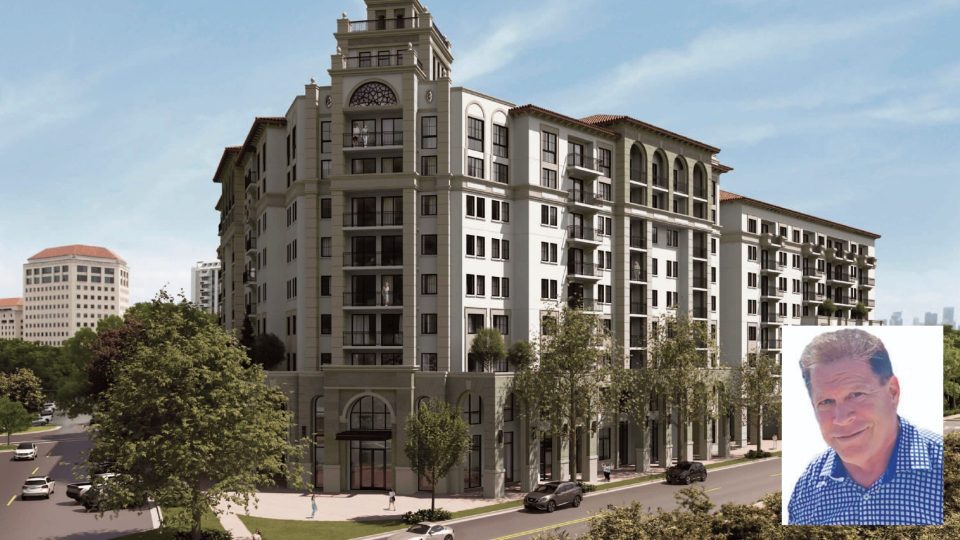
That distinction sits squarely at the center of a long-running dispute in Coral Gables, where a proposed development at 110 Phoenetia Avenue has been stalled for nearly four years. The project would bring 200 rental apartments and a new, purpose-built facility for Crystal Academy, a school serving children on the autism spectrum. Yet it has faced repeated delays due to serial appeals filed by neighborhood activist Bonnie Bolton.
Ms. Bolton’s objections have focused primarily on two claims: preserving a tree she asserts is more than 200 years old—despite professional arborists estimating its age at closer to 80 years—and requiring the property owner to maintain a privately owned garden as a permanent community amenity.
Those arguments have been exhaustively reviewed and rejected. The City of Coral Gables Historic Preservation Board, the City Commission, the city’s Board of Architects, a Special Master panel of architects, the Miami-Dade County Circuit Court, and the Third District Court of Appeal have all ruled against the objections. Still, the project now faces yet another appeal. Once again, it should be denied.
The proposed development is a textbook example of thoughtful urban infill. The surrounding area already includes office buildings, condominiums, hotels, and apartment buildings. The project is consistent with those uses and aligns with the city’s long-standing planning principles.
It also includes significant public benefits. Crystal Academy would receive a brand-new school facility and a 99-year, rent-free lease—providing long-term stability for a school that has become a vital resource for families navigating autism. The existing oak tree would not be destroyed but carefully relocated approximately 200 feet to a location identified by arborists as better suited for its long-term health and survival.
Beyond the site itself, the project addresses a growing regional need. Miami is in the midst of a severe housing shortage, driven by population growth and a development pipeline heavily skewed toward ultra-luxury high-rise towers. Market-rate rental housing in established urban neighborhoods is increasingly scarce—and increasingly necessary.
The future of Crystal Academy deserves special attention. If continued appeals succeed in derailing this project, there is no guarantee a future buyer would make the same commitment to the school. Crystal Academy could be displaced and forced into the open market, facing today’s soaring rental costs. That outcome would harm not only the school, but the families who rely on it and the community that values it.
The true public benefit here is clear: new housing in an appropriate location and a permanent home for a beloved school. It is not served by freezing a property in time so a neighboring resident can preserve a private garden view.
The rule of law rightly gives everyone the opportunity to be heard. But it must also protect against abuse of the process—when repeated appeals no longer advance the public good and instead delay progress to the detriment of the broader community.
Connect To Your Customers & Grow Your Business