
Dead sea life has been washing ashore across Southwest Florida, from Marco Island to Sanibel, after a drop in water temperatures stunned and killed marine creatures not built for the cold.Beachgoers have come across stingrays, sea stars, eels, crabs, and fish littering the sand this week. Among the casualties Tuesday: at least three sharks. One of them, roughly two feet long, was spotted on Tarpon Beach by a vacationing Minnesotan out for a morning run.Gulf water temperatures dropped into the low 50s… cold enough to trigger major stress in marine life. Some animals go into a stunned, slowed-down state, like the frozen iguanas people see during Florida cold snaps. But for many species, especially those with gills, a few minutes out of the water can be fatal.“Some of them are dead. Some of them have just slowed down and get washed up because they can’t get the oxygen they need,” said Dr. Rick Bartleson, a marine research scientist with the Sanibel-Captiva Conservation Foundation. “They still need to be in the water for their bodies to keep processing that oxygen.”Bartleson said the worst of the damage is often seen in invertebrates and bottom-dwellers in shallow areas, where water temperatures drop the fastest. Fish like snook are particularly sensitive, and past cold events have shown the potential for long-term consequences.“In 2010, we had a major fish kill when water temperatures fell below 50 degrees,” he said. “That event affected certain populations for years.”Still, he said, it’s too early to know whether this cold snap will have any significant or lasting impact. Some species may rebound quickly. Others, especially those already under environmental stress, could take longer to recover.Chris Oberg, visiting from Minnesota, said she’d never seen anything like what she found on the beach this week.“It is really cool looking,” she said about the shark. “I’ve never seen one like that. Not on a beach.”Whether this fish kill was minor or meaningful, scientists say it’s too soon to tell.DOWNLOAD the free Gulf Coast News app for your latest news and alerts on breaking news, weather, sports, entertainment, and more on your phone or tablet. And check out the Very Local Gulf Coast app to stream news, entertainment and original programming on your TV.
SANIBEL, Fla. —
Dead sea life has been washing ashore across Southwest Florida, from Marco Island to Sanibel, after a drop in water temperatures stunned and killed marine creatures not built for the cold.
Beachgoers have come across stingrays, sea stars, eels, crabs, and fish littering the sand this week.
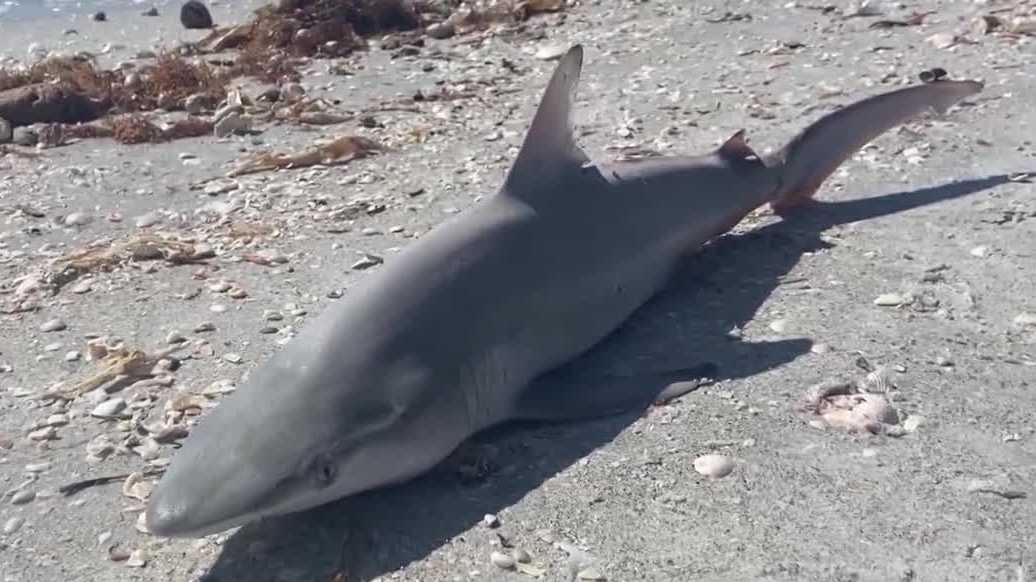
Among the casualties Tuesday: at least three sharks. One of them, roughly two feet long, was spotted on Tarpon Beach by a vacationing Minnesotan out for a morning run.
Gulf water temperatures dropped into the low 50s… cold enough to trigger major stress in marine life. Some animals go into a stunned, slowed-down state, like the frozen iguanas people see during Florida cold snaps. But for many species, especially those with gills, a few minutes out of the water can be fatal.
“Some of them are dead. Some of them have just slowed down and get washed up because they can’t get the oxygen they need,” said Dr. Rick Bartleson, a marine research scientist with the Sanibel-Captiva Conservation Foundation. “They still need to be in the water for their bodies to keep processing that oxygen.”
Bartleson said the worst of the damage is often seen in invertebrates and bottom-dwellers in shallow areas, where water temperatures drop the fastest. Fish like snook are particularly sensitive, and past cold events have shown the potential for long-term consequences.
“In 2010, we had a major fish kill when water temperatures fell below 50 degrees,” he said. “That event affected certain populations for years.”
Still, he said, it’s too early to know whether this cold snap will have any significant or lasting impact. Some species may rebound quickly. Others, especially those already under environmental stress, could take longer to recover.
Chris Oberg, visiting from Minnesota, said she’d never seen anything like what she found on the beach this week.
“It is really cool looking,” she said about the shark. “I’ve never seen one like that. Not on a beach.”
Whether this fish kill was minor or meaningful, scientists say it’s too soon to tell.
DOWNLOAD the free Gulf Coast News app for your latest news and alerts on breaking news, weather, sports, entertainment, and more on your phone or tablet. And check out the Very Local Gulf Coast app to stream news, entertainment and original programming on your TV.