
TAMPA, Fla. — The state has given preliminary support for a potential deal between the Tampa Bay Rays and Hillsborough Community College to build a new baseball stadium on the school’s Dale Mabry campus.
As the proposal advances, local leaders are now taking a closer look at what the project could mean for taxpayers and the region’s economy.
What You Need To Know
Construction of a new Rays stadium in Tampa would cost an estimated $2.3 billion
The Rays would pay for half the cost of a new stadium, leaving Tampa and Hillsborough County on the hook for the rest
Economic impact studies are underway to determine how a new baseball stadium could impact the financial health of the region
The Rays have promised transparency and resident outreach as the deal moves forward
RELATED: Gov. DeSantis, MLB commissioner, others lend support to Rays’ stadium proposal
PREVIOUS STORIES on Rays stadium pursuit
The Tampa Sports Authority has formally requested that Hillsborough County and the city of Tampa conduct an economic impact study to evaluate how a new Rays stadium would affect the area’s financial health.
The request comes amid growing discussion — and caution — over the estimated multi-billion-dollar price tag. Under the current framework, the Rays have offered to cover roughly half the cost of construction.
That leaves more than $1 billion to be generated through a combination of public and private funding sources.
City and county leaders have emphasized that minimizing the use of taxpayer dollars will be a priority.
Tampa Mayor Jane Castor said the city is exploring alternative revenue streams that would reduce or eliminate the need for direct public funding.
“As you will learn in the next couple of days, there are viable options that can raise revenue that isn’t taxpayer dollars,” Castor said. “All of that will be explored, and not all of it has been exhausted yet.”
Hillsborough County Commissioner Ken Hagan, who has worked behind the scenes for years on efforts to bring the Rays to Tampa, said negotiations will need to begin quickly if the project is to meet its proposed timeline.
“I anticipate over the next couple of weeks I will actively begin negotiations,” Hagan said. “We do not have a long timeline, and I admire the ownership group’s sense of urgency. They have a goal and a deadline of wanting to play ball in 2029.”
The Rays have also indicated they plan to seek public input as discussions continue, signaling that transparency will be a key part of the process.
If built, the stadium would rank among the most expensive in Major League Baseball.
While no direct state funding has been promised for stadium construction, the state could still incur costs tied to the project.
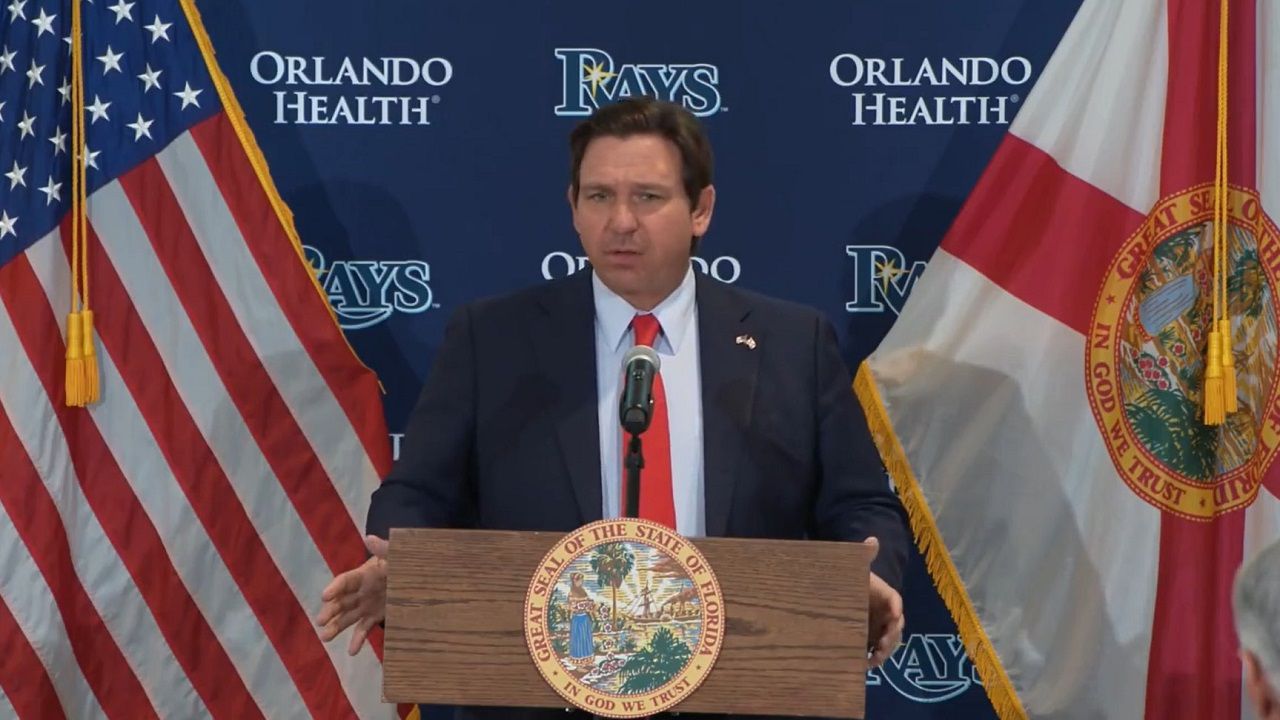
Gov. Ron DeSantis noted that the state would likely pay to relocate HCC’s Dale Mabry campus, potentially to the neighboring Westshore District of Tampa.
He said those funds would be necessary regardless, given that parts of the existing campus are more than 50 years old and in need of significant upgrades.
As negotiations and studies move forward, local leaders say major decisions still lie ahead before any final agreement is reached.