
 Logos for the St. Pete and Clearwater ‘Energy Alliance.’ Credit: Screengrab
Pinellas Energy Alliance is spending tens of thousands of dollars on ads, consultants and canvassers to oppose municipal takeovers of Clearwater and St. Petersburg’s electric grids. They’re not telling anyone where they got the money, or who created the group.
The alliance’s activity comes as St. Petersburg’s contract with Duke Energy is up for renewal this summer. The city is officially exploring the possibility of buying local power lines from Duke Energy, then buying electricity wholesale and selling it to residents through an electric utility run by the city—a process referred to as “municipalization.” Other Florida cities that switched experienced lower costs and fewer service interruptions, according to pro-municipalization group Dump Duke.
Members of the Pinellas Democratic Socialists of America formed Dump Duke to support a city takeover of the electric grid. They were backed at a press conference last Wednesday by St. Petersburg City Council Vice Chair Richie Floyd, as well as local groups like the Suncoast Sierra Club, Faith in Florida, Food and Water Watch, and Hillsborough Affordable Energy Coalition.
Only one local organization appears to be in favor of investor-owned utility Duke continuing to control the local grid: Pinellas Energy Alliance, which has subsidiaries in St. Petersburg and Clearwater.
Duke ties
Creative Loafing Tampa Bay asked Pinellas Energy Alliance and Dump Duke to both disclose their leadership, funding sources, and other affiliations. Dump Duke answered; Pinellas Energy Alliance stopped responding to CL’s emails when these questions were asked.
The incorporation paperwork for Pinellas Energy Alliance says that it is “organized for the purpose of promoting the business interests of the owners and operators of energy holding companies, electric utilities providers, and individuals and organizations that have a stake in who and how electricity is delivered” in Florida.
Dump Duke’s membership consists of unpaid community residents, many of whom are DSA members. Dump Duke is co-chaired by Jason Scott, a utility planning engineer who lives in Clearwater, and Marley Price, a business analyst in St. Petersburg. Scott and Price pay out-of-pocket to run online ads, while some expenses like printing are paid by DSA, which is funded entirely through local membership dues.
“Let’s be honest—it doesn’t matter who’s behind this, it’s 95% lies,” St. Petersburg City Councilmember Brandi Gabbard told Poliverse in a recently-published investigation of Pinellas Energy Alliance. “Everything that’s stated is just fabrication and fear mongering against something we don’t even know is feasible.”
 St. Petersburg City Councilwoman Brandi Gabbard at WMNF in. Tampa, Florida on June 20, 2025. Credit: Ray Roa / Creative Loafing Tampa Bay
As of publication, Pinellas Energy Alliance has not answered a single question from any media outlet about its funding sources. That’s despite spending at least $53,000 on Facebook and Instagram ads, per Meta records, and an unknown amount on canvassers and public relations consultation.
Meta requires a name and phone number to be publicly linked to all political advertisements. The person who published Pinellas Energy Alliance’s ads is identified only as Micaela. The phone number is associated with Micaela Chavez, a digital PR specialist with Left Hook, a California-based Democratic political communications firm. The phone number associated with the ads did not return any of CL’s calls or texts.
Floyd said at the press conference that constituents told him Pinellas Energy Alliance was engaging in “predatory hiring practices,” and that “all arrows” point to Duke Energy funding the group. It’s a 501(c)(6), a type of nonprofit that advocates for business interests and doesn’t have to disclose their donors. Whatever entity organized it used a popular business management firm, CT Corporation, who also manages all of Duke Energy’s Florida business filings.
The only person listed on Pinellas Energy Alliance’s public paperwork is Lisa Lohss, a former Duke Energy employee, as confirmed by public record and her LinkedIn profile. CL called Lisa Lohss, who said she was “not at liberty to discuss” the group.
Dark money
Dump Duke called Pinellas Energy Alliance a “dark money group,” since the group spends to influence political outcomes without disclosing their funding sources. If Duke Energy is indeed funding the group, they’re likely using money from their customers’ electric bill payments to do so, Price said at Wednesday’s press conference.
“You have a group of people, entities … who are trying to influence public policy, and they’re not telling you who you are,” Brendan Glavin told CL.
He is the director of insights at OpenSecrets, a nonpartisan watchdog organization that tracks political spending across the U.S.
“They’re lobbying citizens directly on an issue, but they’re not giving citizens full information about who’s behind the messaging and what their motivations are. You can guess, obviously, what their motivations might be,” Glavin said. “That constitutes dark money.”
At the press conference, Price said that there was a representative from Pinellas Energy Alliance in attendance. She gestured towards audience member and Clearwater resident Sean Schrader.
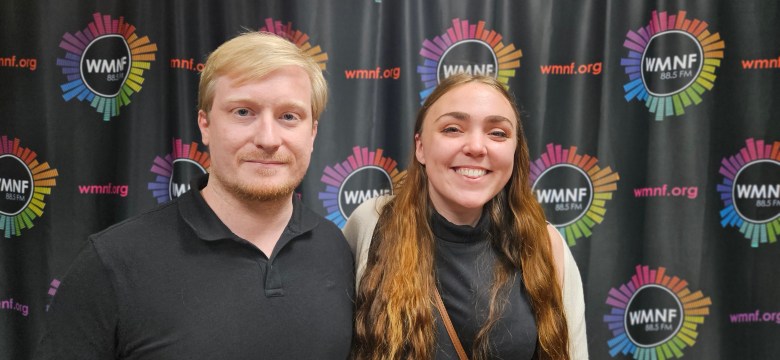 Jason Scott (L) and Marley Price at WMNF in Tampa, Florida on Jan. 23. 2026. Credit: Ray Roa / Creative Loafing Tampa Bay
CL attempted to speak with Schrader after the press conference. When asked if he was a representative of Duke Energy or the Pinellas Energy Alliance, Schrader said no and that he was “just an interested resident.” Schrader was, however, a spokesperson of the Pinellas Energy Alliance, he later confirmed via email. “Maybe I misunderstood you today,” Schrader told CL. “I thought you were asking me if I worked for Duke and I do not.”
Schrader also did not answer questions about Pinellas Energy Alliance’s funding sources. Instead, he said that the group “operates independently.”
The group has not answered any other questions from CL, including questions about funding, spending, leadership and other affiliations. They have also not answered questions regarding claims made on their website about municipalization hurdles and clean energy.
CL asked Duke Energy representatives if they fund, communicate with, or created Pinellas Energy Alliance. They did not respond to repeated requests for comment via call, text or email.
New contract, old playbook
CL obtained a 2003 article titled “10 tools to fight take-overs” written by the Edison Electric Institute, the leading interest group for investor-owned utilities. Despite the article being old enough to blame municipalization on “the Enron debacle,” it outlines a strategy Duke Energy seems to be using today to fight municipalization.
The article suggests that utilities “encourage credible allies and third parties to participate,” and continues:
“In some takeover battles, the utility itself may not be the most credible messenger or spokesperson,” the article reads. “This could be because voters see the utility as having too much vested in the outcome, rendering its arguments ineffective. In other instances, if customer dissatisfaction with the utility company is high (often because of rate increases or service problems), the utility also becomes the wrong entity to deliver persuasive messages. Consequently, voters often turn to other, locally trusted individuals and interests for guidance.”
“In several recent takeover battles, incumbent electric utilities helped organize third-party communications campaigns in affected communities but played a low-key public role,” the article adds. “For example, companies organized citizens’ committees that led efforts against takeover ballot measures. Often, these committees included a number of well-known community leaders from various sectors—business, retirees, civic organizations, etc.—who served as the primary media spokespersons and appeared in print and electronic advertising. Even when the companies involved provided funding for such activities, the efforts were very effective due to the personal credibility of the committee members.”
St. Petersburg city council members and Dump Duke have suggested that Duke may be following this model with the Pinellas Energy Alliance, considering its ties to Duke and both parties’ unwillingness to comment on their connection.
This strategy has proven successful for investor-owned utilities in the past. St. Petersburg and Clearwater are Duke Energy Florida’s largest clients; If they municipalize, Duke’s future in Florida is unclear.
Pitch in to help make the Tampa Bay Journalism Project a success.
Subscribe to Creative Loafing newsletters.
Follow us: Google News | NewsBreak | Reddit | Instagram | Facebook | BlueSky
This article appears in Jan. 29 – Feb. 04.
Related