
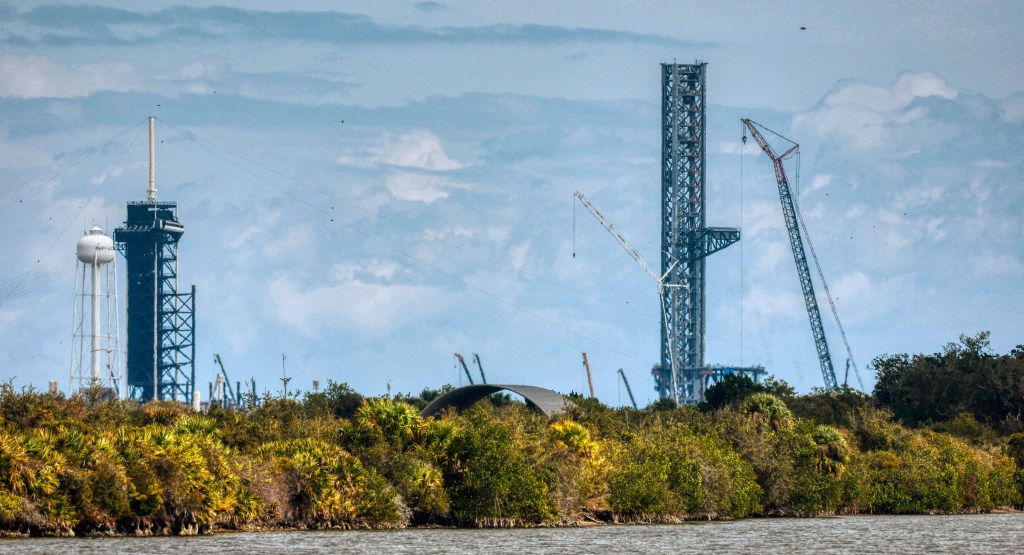
SpaceX launched 26 missions from Kennedy Space Center’s Launch Pad 39-A in 2025, including four human spaceflight missions. That era is coming to an end.
A massive crane has been put in place this week with speculation it will soon remove the crew access arm from the historic launch site that hosted most the Apollo and space shuttle missions as SpaceX shifts plans for all future launches of its Crew Dragon spacecraft to its neighboring pad at Cape Canaveral Space Force Station.
So far in 2025, SpaceX has flown seven times from SLC-40 and zero times from KSC.
“It’s great to have two launch pads off the Florida coast. For our manifest going forward, we’re planning to launch most of our Falcon 9 launches off of (Canaveral’s) Space Launch Complex 40,” said SpaceX’s Lee Echerd, senior mission manager for its human spaceflight mission management program. “That will include all Dragon missions going forward. Now we’ll allow our Cape team to focus … on Falcon Heavy launches and hopefully our first Starship launches later this year.”
That includes the first, and so far only, human spaceflight mission provided by SpaceX announced for this year, coming up next week. Crew-12, headed to the International Space Station for an eight-month stay, features NASA astronauts Jessica Meir and Jack Hathaway, European Space Agency astronaut Sophie Adenot and Roscosmos cosmonaut Andrey Fedyaev.
The quartet are set to fly from Houston into KSC this Friday and will climb aboard the Crew Dragon Freedom targeting liftoff from SLC-40 at 6 a.m. on Wednesday, Feb. 12. They’re headed to the space station to join the three members currently on orbit after the early departure last month of Crew-11 to bring home one its four crew because of a medical incident while on orbit.
That means for Kennedy Space Center, the only human spaceflight this year is likely to be for Artemis II at nearby Launch Pad 39-B, no earlier than March 6, and pending the results of NASA completing a successful wet dress rehearsal of its Space Launch System rocket sitting on the pad. Teams tried to complete one earlier this week, but ran into a liquid hydrogen leak that has to be fixed before NASA will let its astronauts on board.
AP photo
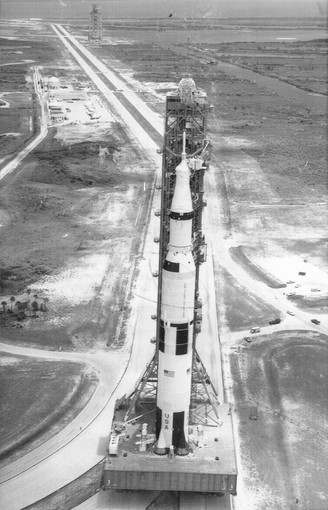
The Apollo 11 space capsule riding atop its Saturn V booster, is shown as it left the Vertical Assembly Building at Cape Kennedy today on a three mile ride to the launch pad in the background. (AP File)
AFP/GETTY IMAGES
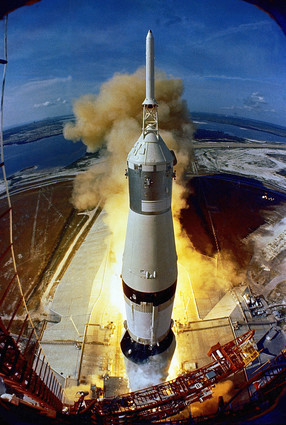
The 363-foot tall Apollo 11 Spacecraft 107/Lunar Module S/Saturn 506) space vehicle launched from Pad A, Launch Complex 39. Kennedy Space Center (KSC), at 9:32 a.m. (EDT). Onboard the Apollo 11 spacecraft were astronauts Neil A. Armstrong, commander; Michael Collins, command module pilot; and Edwin E. Aldrin, Jr., lunar module pilot. (Courtesy/NASA)
Associated Press
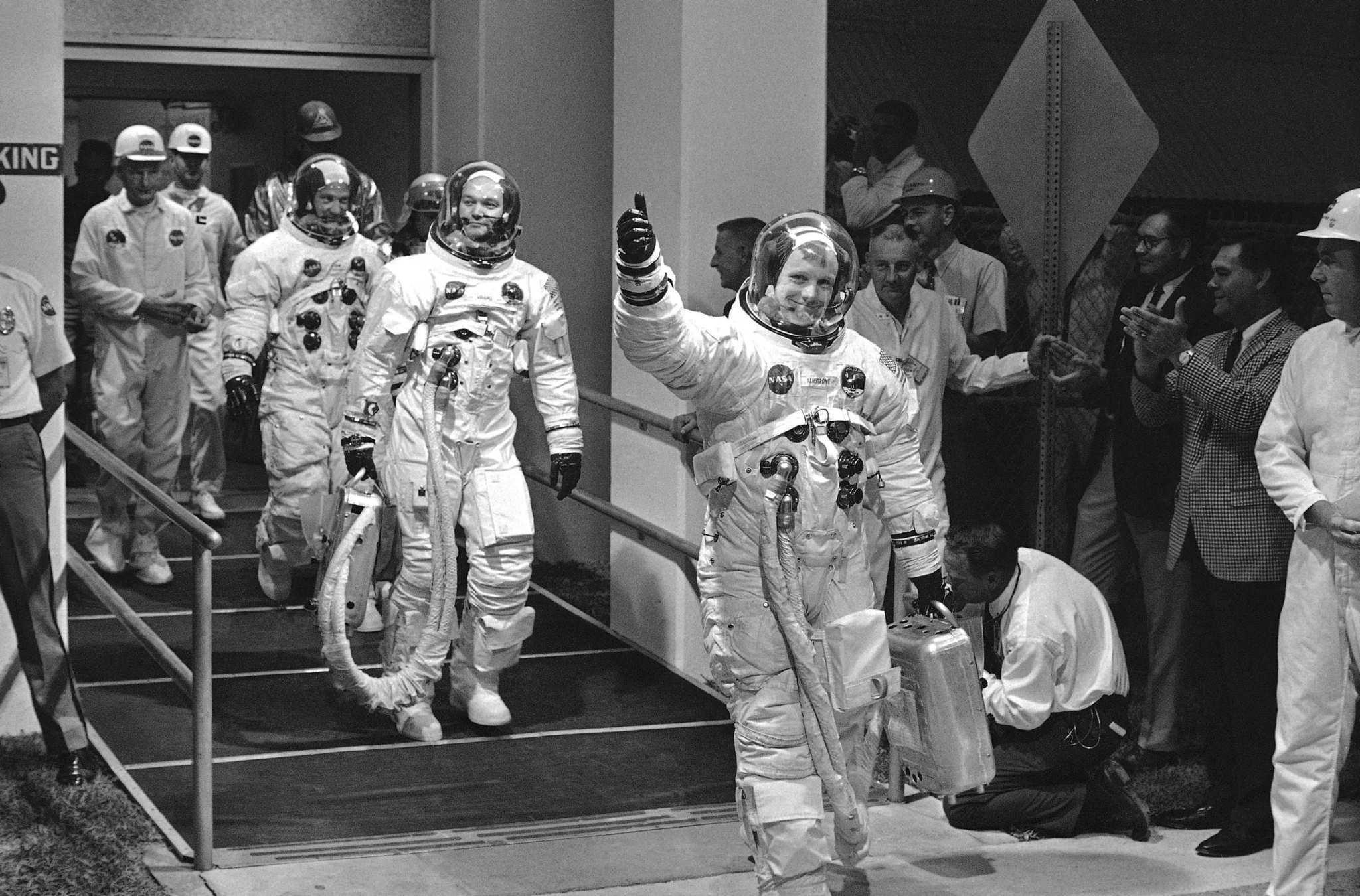
Apollo 11 astronauts, from right, Neil Armstrong, Michael Collins and Edwin A. “Buzz” Aldrin Jr. appeared in a cheerful mood as they left the Manned Spacecraft Operations Building to enter the transfer van that takes them to Pad 39 to enter the Command Module on July 16, 1969, at Cape Kennedy, Fla. (AP File)
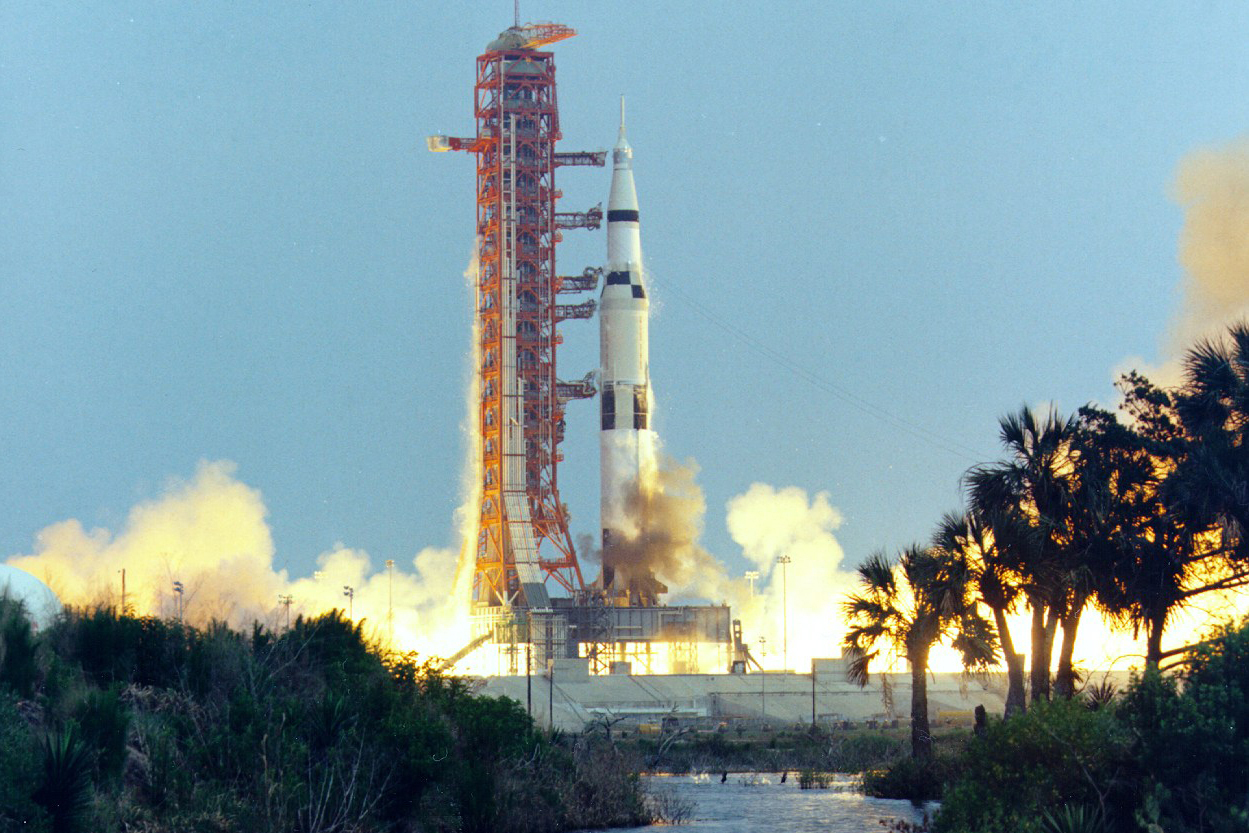
AP
In this April 11, 1970 photo made available by NASA, the Saturn V rocket carrying the crew of the Apollo 13 mission to the moon launches from the Kennedy Space Center in Florida. (NASA via AP)
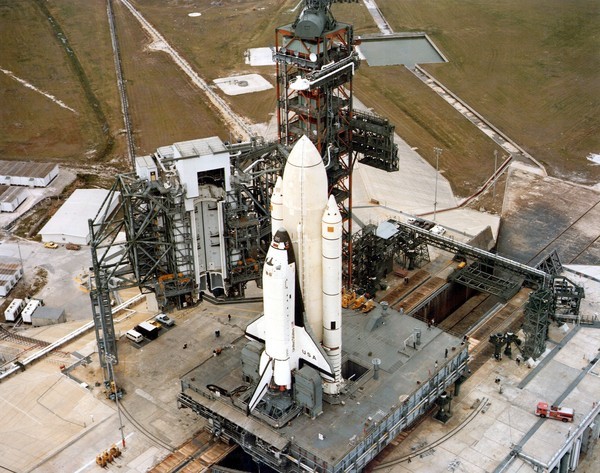
NASA, REUTERS
Space Shuttle Columbia arrives at launch complex 39A in preparation for mission STS-1 at Kennedy Space Center on Dec. 29, 1980. (Courtesy/NASA)
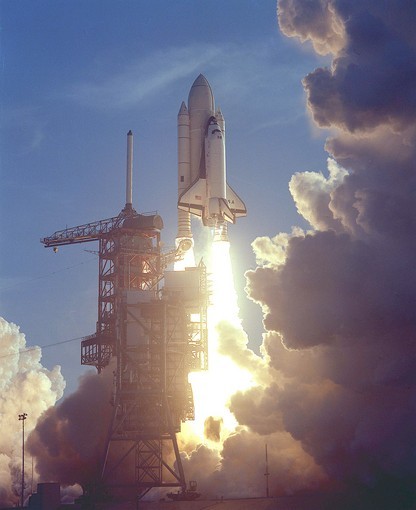
NASA, REUTERS
NASA’s Space Shuttle Columbia (STS-1) rises above Launch Complex 39’s Pad A at Kennedy Space Center on April 12, 1981. Commander John Young and pilot Robert Crippen were on board STS-1, the first orbital flight of the space shuttle program. (Courtesy/NASA)
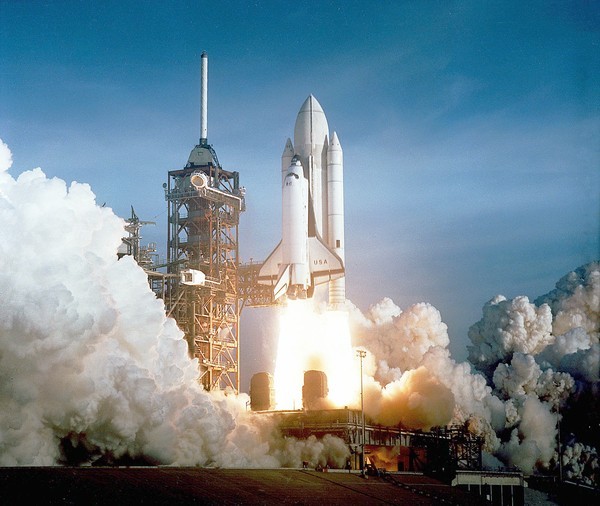
NASA, REUTERS
NASA’s Space Shuttle Columbia (STS-1) rises above Launch Complex 39’s Pad A at Kennedy Space Center on April 12, 1981. Commander John Young and pilot Robert Crippen were on board the first orbital flight of the space shuttle program. (Courtesy/NASA)
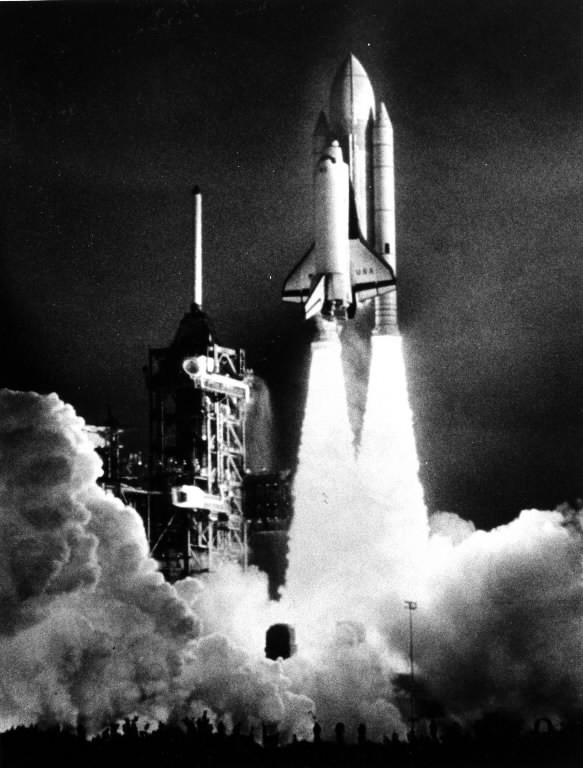
Red Huber
April 12, 1981 (Kennedy Space Center, FL) – Space Shuttle Columbia (STS-1) launches from the launch pad at KSC on it’s first flight into orbit. (Red Huber/Orlando Sentinel)
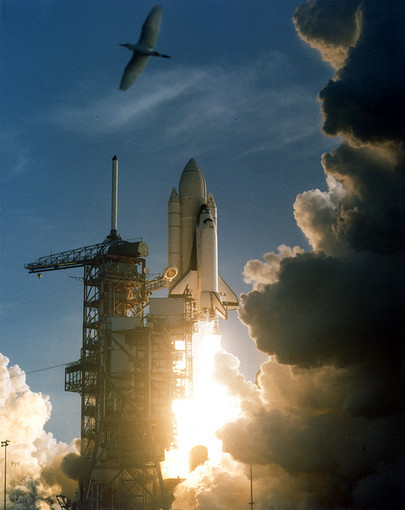
Orlando Sentinel, Orlando Sentinel
Space Shuttle Columbia (STS-1) launches from the launch pad at KSC on its first flight into orbit, April 12, 1981. (Orlando Sentinel File)
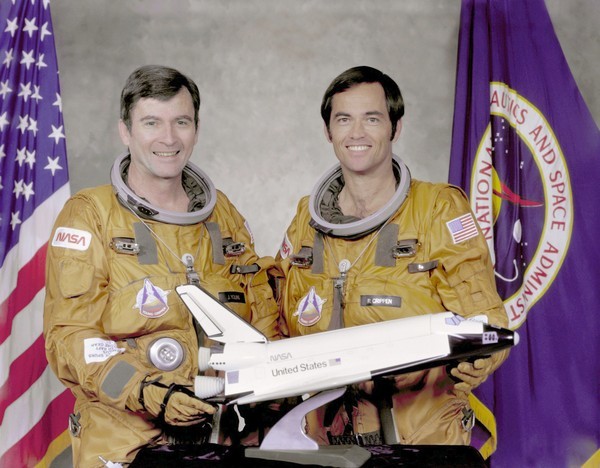
NASA, REUTERS
STS-1 crew members Commander John Young (L) and Pilot Robert Crippen pose with a model of the Space Shuttle Columbia at Johnson Space Center in Houston on May 7, 1979. Young and Crippen flew the first orbital mission of NASA’s space shuttle program aboard the Columbia. (Courtesy/NASA)
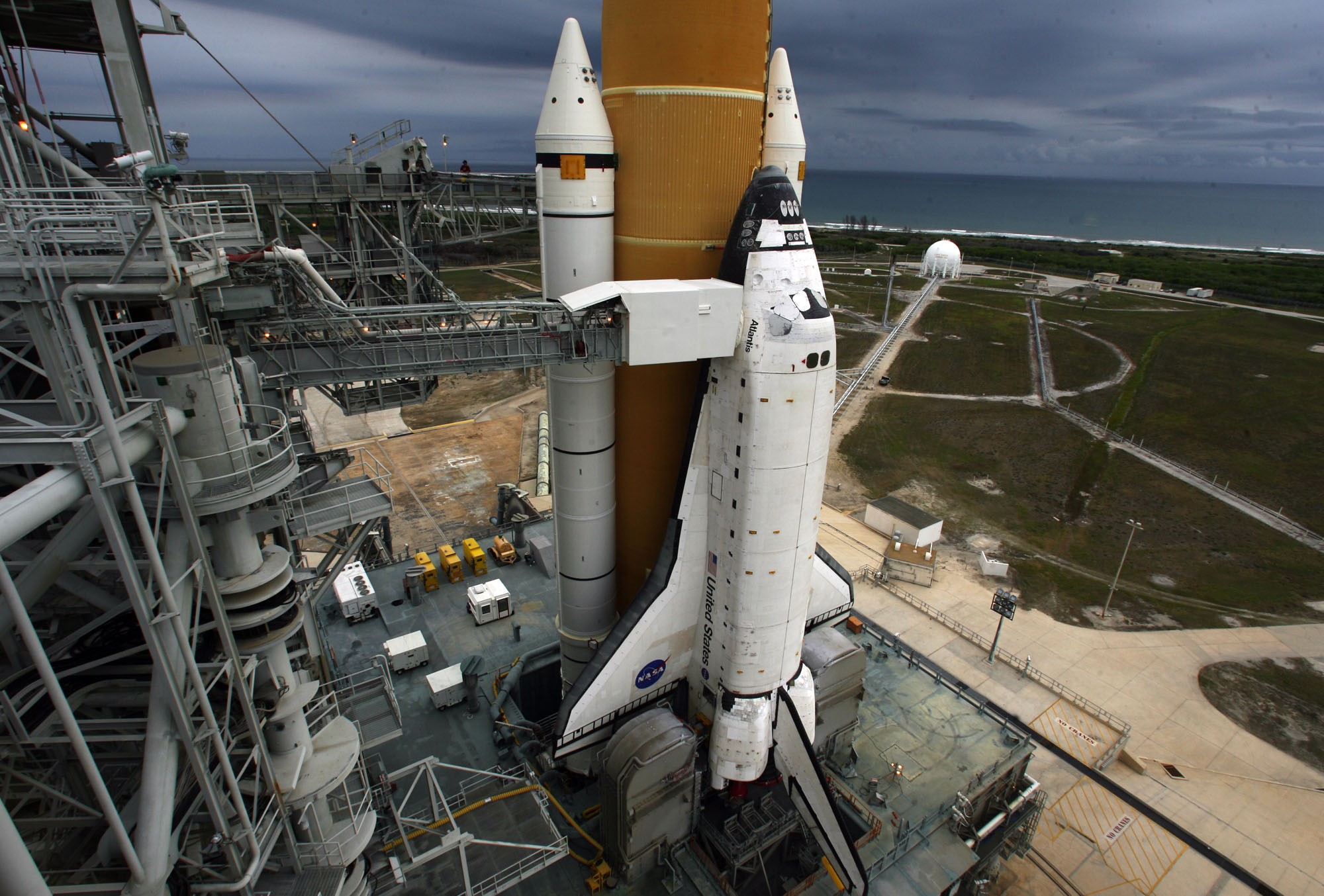
Red Huber / Orlando Sentinel
Space shuttle Atlantis, STS-135 sits on launch pad 39A Wednesday, June 1, 2011 after making a overnite trek to launch pad 39A at the Kennedy Space Center. (Red Huber/Orlando Sentinel)
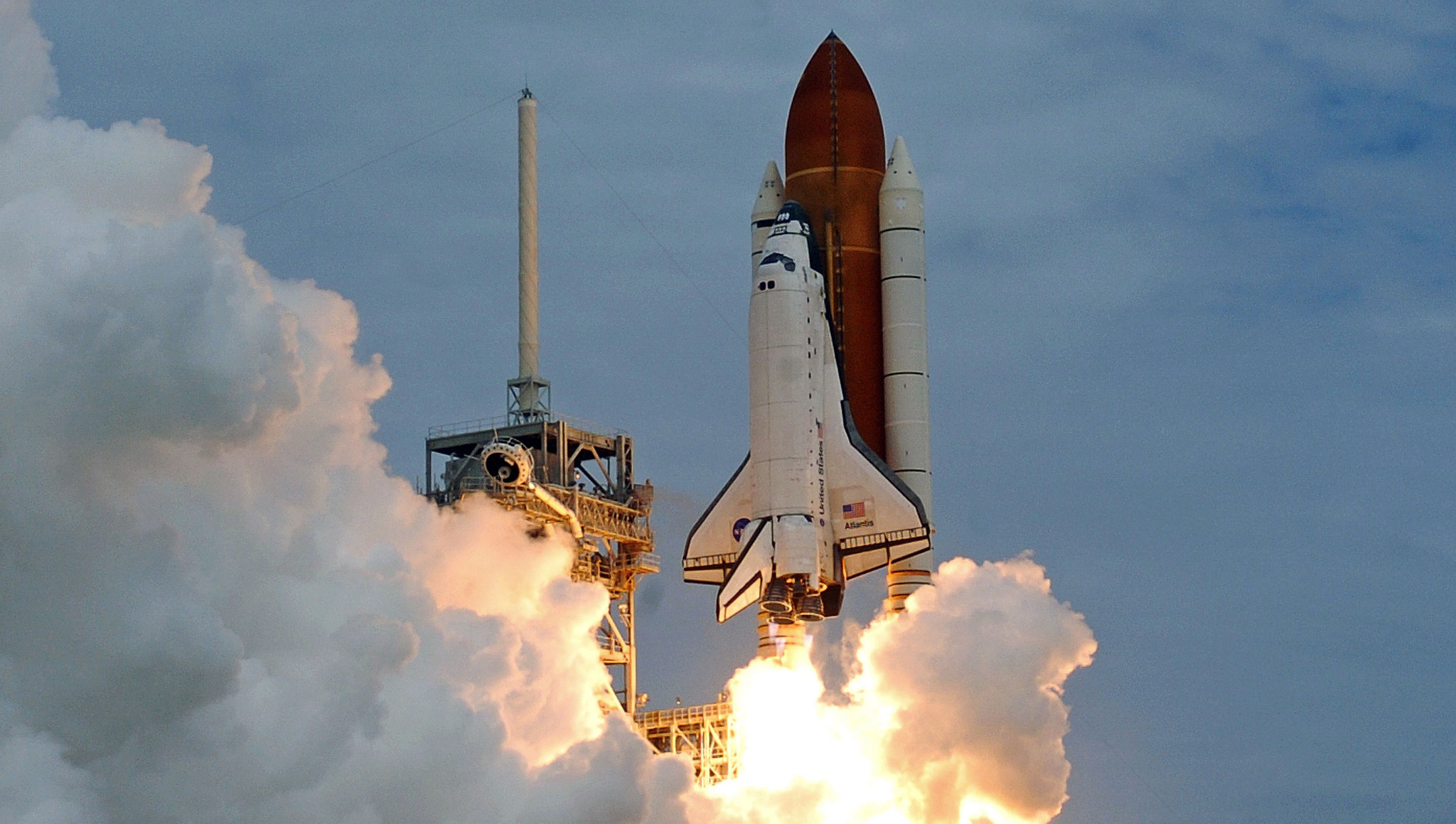
Red Huber / Orlando Sentinel
Space shuttle Atlantis, #sts135 is launched skyward Friday, July 8, 2011 on the final flight of a 30 year program. A crew of 4 is on a mission to re-supply the international space station. (Red Huber/Orlando Sentinel)
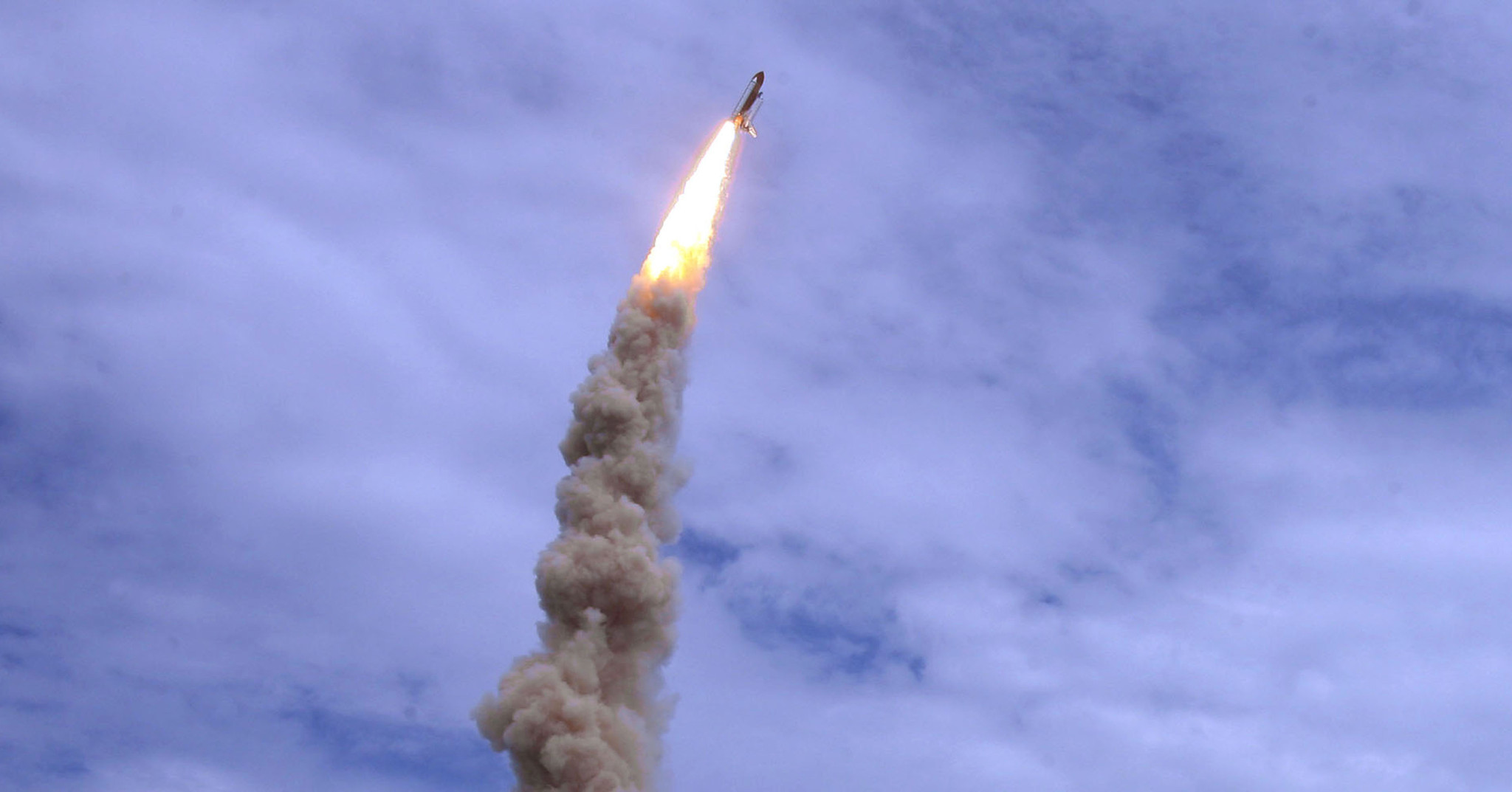
Red Huber / Orlando Sentinel
Space shuttle Atlantis, #sts135 is launched skyward Friday, July 8, 2011 on the final flight of a 30 year program. A crew of 4 is on a mission to re-supply the international space station. (Red Huber/Orlando Sentinel)
Joe Burbank/Orlando Sentinel
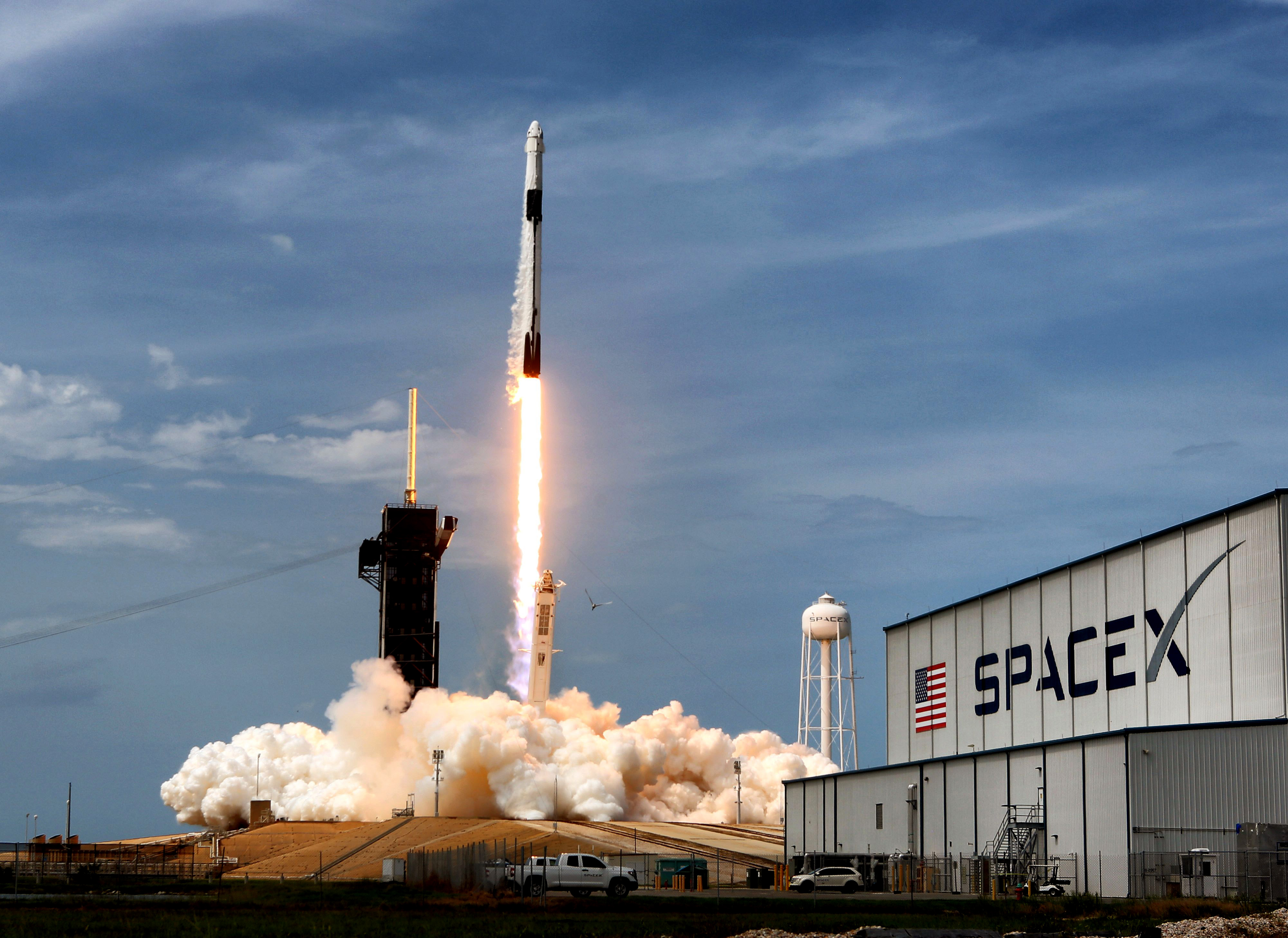
The SpaceX Falcon 9 rocket carrying astronauts Doug Hurley and Bob Behnken in the Crew Dragon capsule lifts off from Kennedy Space Center, Fla., Saturday, May 30, 2020. The SpaceX Demo-2 mission is the first crewed launch of an orbital spaceflight from the U.S. in nearly a decade. (Joe Burbank/Orlando Sentinel)
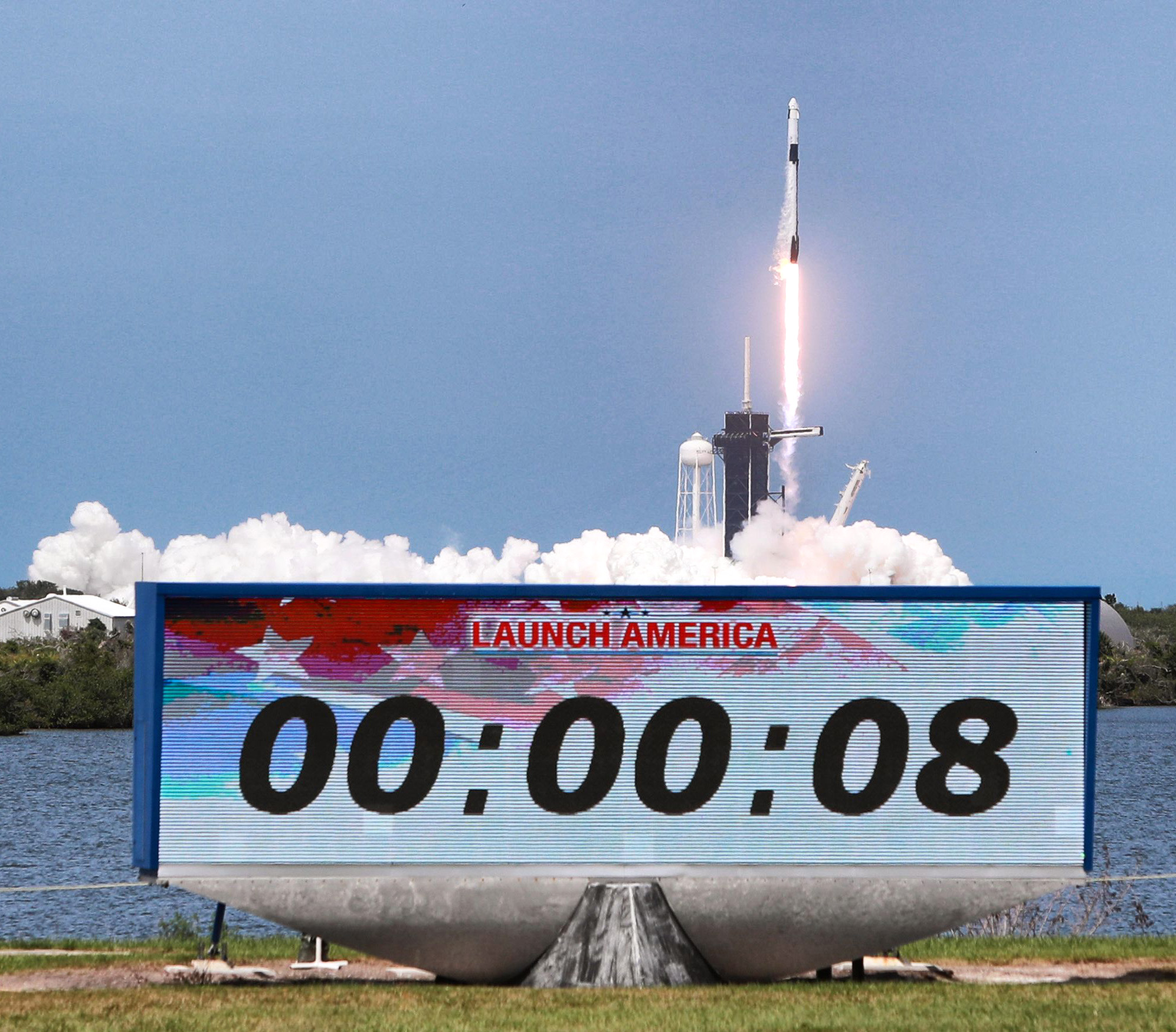
The SpaceX Falcon 9 rocket carrying astronauts Doug Hurley and Bob Behnken in the Crew Dragon capsule lifts off from Kennedy Space Center, Fla., Saturday, May 30, 2020. The SpaceX Demo-2 mission is the first crewed launch of an orbital spaceflight from the U.S. in nearly a decade. (Joe Burbank/Orlando Sentinel)
Show Caption
AP photo
1 of 15
The Apollo 11 space capsule riding atop its Saturn V booster, is shown as it left the Vertical Assembly Building at Cape Kennedy today on a three mile ride to the launch pad in the background. (AP File)
For 39-A, its pedigree of human spaceflight includes all but one of the crewed Apollo launches, including Apollo 11, sending Neil Armstrong to become the first man to walk on the moon. It also hosted most of the launches from the Space Shuttle Program including the first, STS-1 with Orlando’s John Young commanding Space Shuttle Columbia in 1981, and the last, STS-135, with Space Shuttle Atlantis in 2011.
The launch pad has seen 219 launches. The first was Nov. 9, 1967, an uncrewed Saturn V launch on Apollo 4. The most recent was Dec. 17, 2025, a SpaceX Falcon 9 on a Starlink mission.
SpaceX, which signed a 20-year lease for 39-A in 2014, had its first launch there in 2017. It brought human spaceflight back to KSC in May 2020 with the historic Demo-2 mission to the International Space Station, the first crewed Dragon flight.
It has since flown its fleet of five Crew Dragons from Launch Pad 39-A for an additional 17 missions, bringing 70 people into space including Demo-2. That includes 10 commercial crew rotation flights and four Axiom Space flights to the space station and three private orbital flights including last year’s Fram2 as well as two flights — 2021’s Inspiration4 and 2024’s Polaris Dawn — funded by current NASA Administrator Jared Isaacman.
The shift to Canaveral for SpaceX will also likely see a Crew-13 mission in October to relieve Crew-12, but that has yet to be announced. And unlike last year, which saw both the private Axiom 4 and Fram2 missions, no other Dragon missions have been announced yet.
The launch of Crew-12 will mark only the second human spaceflight from SLC-40 after the Crew-9 launch in 2024.
That launch will also feature the first use of a newly constructed landing pad for the first-stage booster, known as Landing Zone 40. SpaceX had previously used two landing zones farther south at Launch Complex 13, but the Space Force has shifted priorities, requiring launch providers to use landing sites at the same complex from which they launch.
Echerd said that LZ-2, last used in December, will still be available to SpaceX, and most likely to be used for future Falcon Heavy missions that would require two landing zones for the rocket’s two side boosters.
SpaceX did not fly any Falcon Heavy missions in 2025 but could see a few this year. Those include launches for Astrobotic’s Griffin lunar lander and for NASA’s Nancy Grace Roman Telescope, which is ahead of schedule.
Adjacent Launch Pad 39-A is a new Starship and Super Heavy launch tower under construction. The Federal Aviation Administration recently published the final version of an environmental review that paves the way for SpaceX to pursue a launch license for its massive rocket. The Space Force has indicated it expects to see the first Starship arrive to the Space Coast this summer.
SpaceX also plans to construct a pair of Starship launch towers at Canaveral’s Space Launch Complex 37 after taking over the lease from United Launch Alliance after the final Delta IV Heavy launch in 2024.
SpaceX last year received an upgraded FAA approval to launch as many as 120 Falcon 9 missions from SLC-40, up from 50, which includes up to 34 first-stage booster landings. SpaceX was also seeking to increase its launch capability at Launch Pad 39-A to increase its baseline from 20 to 36 launches per year and up to 20 booster landings.
Meanwhile, Elon Musk’s company looks to fly as many as 120 Starship flights a year from its three launch towers at KSC’s Launch Complex 39-A and Canaveral’s SLC-37. Those would allow for as many as 240 landing operations. The Super Heavy booster would come back to the launch tower while the upper Starship stage could make a return landing after orbiting the Earth at least once, depending on the mission.