
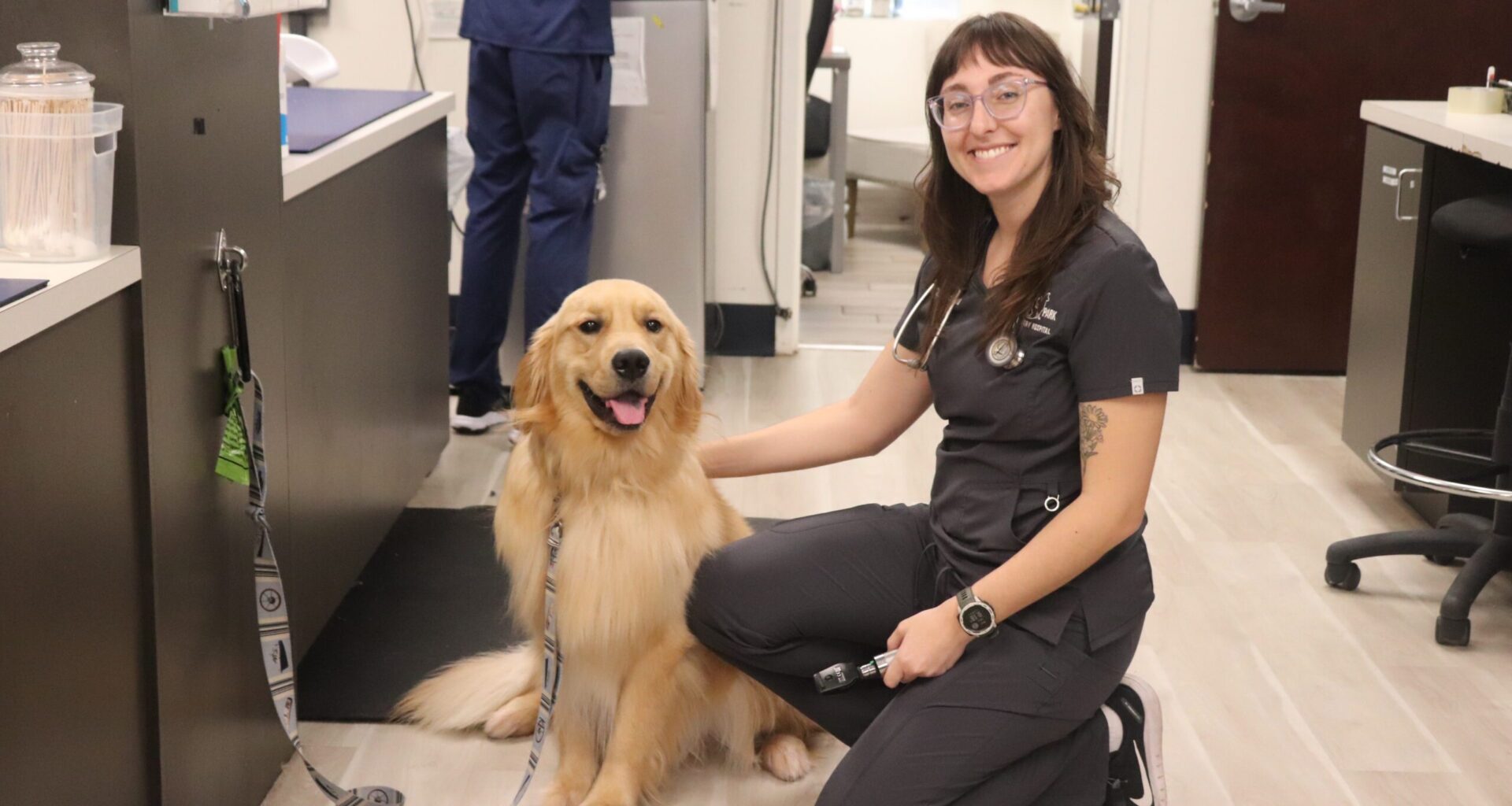
The start of the new year often prompts health checkups, even for family pets.
Liz Andrade, a veterinarian at Winter Park Veterinary Hospital, said identifying the problem with a pet’s allergies can be more difficult than it seems because of multiple factors.
“You kind of have to do your due diligence trying to figure it out,” Andrade said.
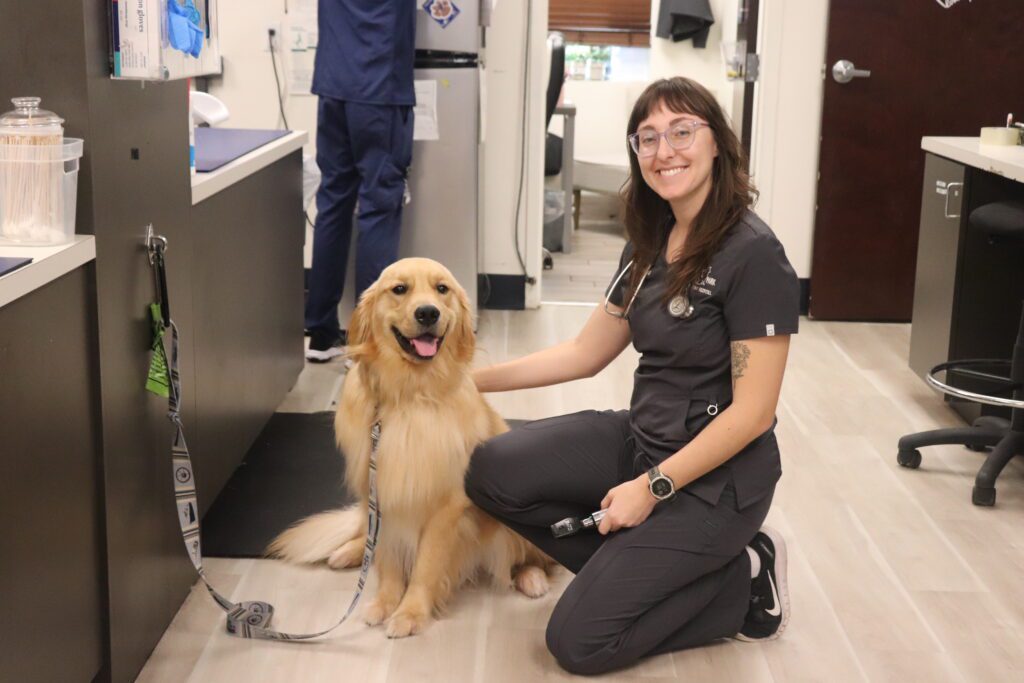
Liz Andrade and her patient at the Winter Park Veterinary Hospital. (SARAH MORELLI)
Each immune system is unique to the patient, Andrade said, so it is important to understand the signs that may point to an allergy. Recognizing the signs early can significantly improve a pet’s quality of life.
Pink or irritated skin, excessive licking or chewing at the paws, and scabs along the skin can all signal an allergic reaction.
Andrade said the next step is an exam to determine how to mitigate the issue, which may include flea medication, medicated shampoos or topical treatments.
“One of the biggest things is not realizing how important strict and consistent flea medications and flea preventatives are in helping manage skin issues,” Andrade said.
Pets can develop allergies from fleas, pollen, grass, trees and certain proteins. These allergies do not correlate with a specific time of the year and can affect pets year-round, Andrade said.
“If your pet has allergies, that doesn’t mean that you’re doing anything wrong,” Andrade said. “All the efforts that you’re putting into making sure that your pet is comfortable is certainly worth it.”
___
Editor’s note: Winter Park Veterinary Hospital is a former advertiser with The Community Paper, and we partnered with them on this article.