
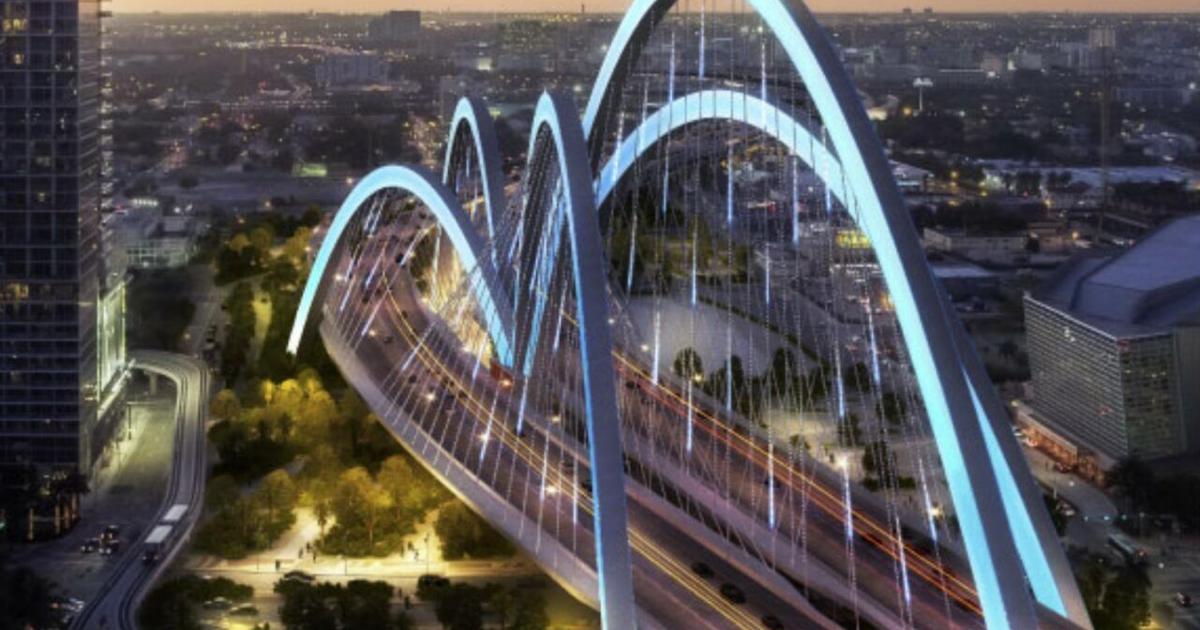
What was once envisioned as a $802 million infrastructure marvel for South Florida has become a symbol of delays, legal disputes, and rising costs. The Florida Department of Transportation (FDOT) in 2017 aimed to complete a smoothly flowing interchange where I-95, I-395, and SR-836 meet, including a 1,000-foot-long “signature” bridge over Biscayne Boulevard, by 2021.
Now, nearly a decade later, the project’s centerpiece, dubbed “The Fountain” by its builders, is far from finished, with a completion date projected for 2029. The Archer Western-De Moya Joint Venture (JV), chosen by FDOT to lead construction, claims design errors and defective concrete have cost it more than $400 million, according to lawsuits reviewed by NBC6 Investigates.
Drivers navigating the congested interchange say they’ve been left in the dark about why traffic snarls persist. “It’s horrible,” Jasmine Whitfield told NBC6. “So what I had to do was get off of the highway to get back on to avoid at least 100 cars at this point.” Another driver added, “It’s a mess.”
FDOT has cited weather, supply chain issues, utility relocation, and a bid protest from a losing joint venture as reasons for delays. But the JV points to design miscalculations by Nebraska-based HDR Engineering Inc. Lawsuits allege HDR miscalculated wind loads for the bridge’s spider-leg-like arches, which would not have withstood winds up to 140 mph. HDR redesigned the bridge to meet FDOT specifications, causing “multiple years” of delays and “$405 million in increased design costs, construction costs, supervision costs, quality control and inspection costs, expert investigation costs, and attorneys’ fees,” the JV claims.
Nicholas Duran, policy and advocacy manager for Transit Alliance Miami, said, “I’m not exactly surprised. It really does speak to the reason why we’ve seen so many delays with this project.”
HDR denied the allegations, saying the original drawings were “a conceptual, preliminary design of the Signature Bridge for purposes of submitting a competitive proposal to FDOT…not intended to be used for purposes of construction.” The JV argues it relied on these drawings to calculate its bid. Because the contract guaranteed a lump-sum price, the JV bears much of the financial burden while pursuing recoveries from insurance lawsuits. “This is a taxpayer-funded project,” Duran said. “We want accountability.”
The JV also reported $3.6 million in losses due to defective concrete poured from a malfunctioning on-site plant. A broken valve caused excess fly ash in the mixture, damaging “concrete, rebar, forms, structures, and other building components,” the JV alleged. Repairs involved removal and strengthening of these structures.
The Signature Bridge, rising above NE 2nd Avenue and Biscayne Boulevard, is part of a larger $866 million project including reconstruction of I-395, improvements from NW 17th Avenue to the MacArthur Causeway, and upgrades to I-95 between NW 8th Street and NW 29th Street. FDOT reports three of six arches erected, 288,646 cubic yards of cast-in-place concrete, and over 95 million pounds of rebar installed.
“This is the most complex design-build segmental bridge, honestly, in the world,” said Riccardo Castracani, business development director for precaster Rizzani de Eccher. “As complex as it looks from afar, you can multiply that by ten” when examined closely.
FDOT emphasized safety remains a priority. “The Department was not a party to this lawsuit as it was an internal dispute within their respective team…FDOT continues to work closely with the project’s leadership to ensure rigorous safety standards remain a top priority,” a spokesperson wrote.
The City of Miami plans a mile-long I-395 Underdeck and Heritage Trail to reconnect the historically Black Overtown neighborhood. A $60 million federal grant was rescinded, but city officials remain committed to the project.
Duran stressed transparency. “We want to make sure that this project moves forward as it’s supposed to. And we want to make sure that you know any issues that the public should anticipate that those are being communicated to the public transparently. I believe that we as taxpayers deserve that transparency.”