
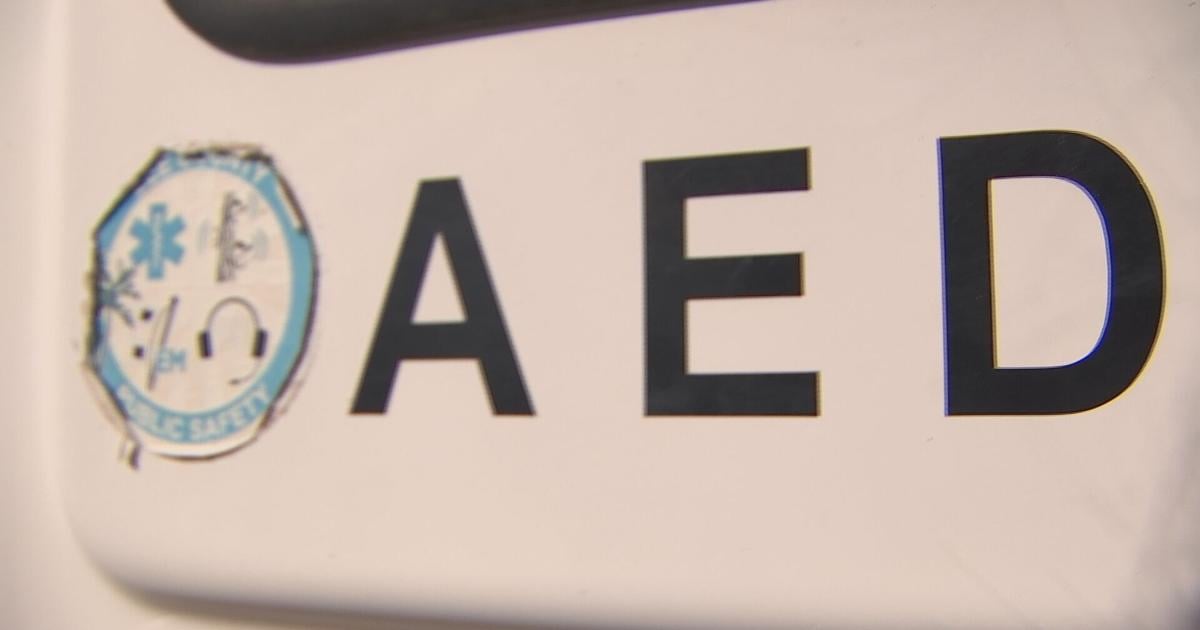
FORT MYERS, Fla. — Every year, more than 350,000 Americans suffer a sudden cardiac arrest outside of a hospital. According to the American Heart Association, it remains the leading cause of death for adults over 40 and, tragically, a significant threat to school-aged children.
For decades, survival rates have remained stubbornly low, hovering around 10%. But in Lee County, a new partnership with a Silicon Valley tech firm is turning the region into a testing ground for increased AED access.
A “Miracle” on the Diamond
Keenan Brown, a 65-year-old from Michigan, was in Lee County for a senior baseball tournament two years ago when his world went black.
“My heart stopped,” Brown recalled. “Instant darkness and then I woke up.”
Brown is only alive today because he beat the odds. Tony Nazzaro, the tournament’s head of security, reached Brown in under 45 seconds with an Automated External Defibrillator (AED) in hand.
“I heard it, turned, and grabbed the AED,” Nazzaro told Chief WINK Investigates Reporter Chorus Nylander. “That’s how much of a miracle how quick this was.”
Breaking a 20-Year Stagnation
While Brown’s story has a happy ending, Samir Jafri, CEO of the tech firm Avive, says his experience is statistically a rarity.
“Today, only about 2% of cardiac arrests actually get an AED to the patient before EMS arrives,” Jafri told WINK Investigates. “Survival rates have stayed stagnant for two decades. Is that good enough? Absolutely not.”
Jafri’s vision is to close that gap by ensuring an AED is never more than four minutes away. Lee County has become a key partner in this effort, deploying approximately 260 “smart” AEDs across government buildings and public spaces. So far, Avive does not have an official “4-minute community” in Florida, Jafri said he would love to see Lee County be one of the first.
How the “Smart” System Works
According to Lee County Public Safety Director Benjamin Abes, these devices are a far cry from the passive wall-boxes of the past:
Daily Self-Checks: The system automatically verifies the device is functional every 24 hours.Emergency Alerts: If 911 is activated nearby, the county can alert the device itself.Bystander Mobilization: The AED can voice-prompt a bystander to take the device to a victim at a nearby GPS location.The Next Frontier: Your Neighborhood
While public parks and stadiums are now well-equipped, a massive gap remains. Data shows that 80% of cardiac arrests happen at home, far from the AEDs located in government buildings.
The local movement toward total accessibility began in 2008 when Lee County rescinded a local ordinance that required mandatory CPR training to use a device. By removing those legal hurdles, the county paved the way for the current “high-tech, high-access” model.
By the Numbers: AED Access in Southwest Florida
A WINK Investigates data analysis compared AED deployments across neighboring counties. While Lee County leads in total volume, neighboring counties currently hold a slight edge in density per resident:
CountyTotal AED DevicesPer Capita RankingLee2583rdCollier1782ndCharlotte1451st
Lee County officials tell us they continue to look for ways to improve access to make sure the devices are working and ready to go during an emergency.
A Second Chance at Life
For Janine Brown, Keenan’s wife, the statistics matter less than the reality of having her husband home.
“That machine gave us a life back,” Janine said. “I didn’t have to tell my kids their dad wasn’t coming home. Our kids point them out now wherever we go. They know what they do.”
Jafri told us he hopes to have a community partner in Florida for his “4-minute community” goals within the next year.