
Florida officials this week unveiled test results showing multiple breads commonly sold in grocery stores contained residues of glyphosate weed killer, a chemical scientists have linked to cancer.
Florida Gov. Ron DeSantis said in a press release that the bread product testing is part of a broader testing program designed to “arm Floridians with the information they need to make the best choices for their families’ well-being.”
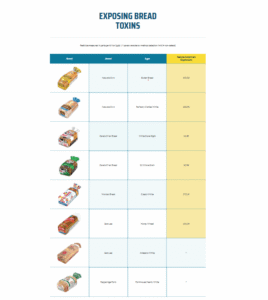
The state Department of Health found glyphosate in six of eight bread products tested: Nature’s Own Butter Bread, Nature’s Own Perfectly Crafted White, Dave’s Killer Bread White Done Right, Wonder Bread Classic White, Sara Lee Honey Wheat, and Dave’s Killer Bread 21 Whole Grain, the state said.
The Dave’s Killer Bread brands are certified organic and labeled as free of genetically modified (GM) ingredients. Nature’s Own Perfectly Crafted White is also labeled as not containing GM ingredients. Flowers Foods, which owns both, did not respond to a request for comment.
 Source: Healthy Florida First
Glyphosate is a weed killing chemical introduced in the 1970s by Monsanto that grew to become the world’s most widely used herbicide. Used in brands such as Roundup, it’s popular with farmers around the world, particularly those growing GM crops that have been genetically altered to tolerate being sprayed directly with the weedkiller.
Glyphosate is also used as a desiccation agent on wheat and other non-GM crop before harvest, a practice that makes harvest more efficient for farmers but can leave higher residues of glyphosate in the grain.
Many tests done over the years by researchers have detected glyphosate residues in not only breads but in an array foods, including baby food oatmeal.
Monsanto, and its German owner Bayer, maintain that glyphosate does not pose a health risk, and government officials say that residues of glyphosate and other pesticides found in food products are almost always so low that they are not considered harmful.
But international scientists affiliated with the World Health Organization have classified glyphosate as probably carcinogenic to humans, and recent studies out of Europe have found glyphosate herbicides pose not just cancer, but other health risks.
“Bread is a staple food for many Florida families, and they should be able to consume it without worrying about toxins,” State Surgeon General Dr. Joseph Ladapo said in a statement. “Our testing found high levels of glyphosate in some popular bread brands. Chronic exposure to glyphosate is linked to harmful gut microbiome changes, liver inflammation, and adverse neurologic effects. Florida is taking action through transparency, continued testing, and a clear focus on reducing exposure to protect families.”
The glyphosate announcement comes after Florida officials last month said testing of 24 infant formula products found elevated levels of mercury, arsenic, cadmium, and lead.
Featured image by Getty Images for Unsplash +.
Carey Gillam is the editor-in-chief of The New Lede and a veteran investigative journalist with more than 30 years of experience covering US news, including 17 years as a senior correspondent with Reuters international news service (1998-2015). She is the author of “Whitewash – The Story of a Weed Killer, Cancer and the Corruption of Science,” an expose of Monsanto’s corporate corruption of agriculture. The book won the coveted Rachel Carson Book Award from the Society of Environmental Journalists in 2018. Her second book, a narrative legal thriller titled The Monsanto Papers, was released March 2, 2021.
She also has contributed chapters for a text book about environmental journalism and a book about pesticide use in Africa.
Gillam testified as an invited expert before the European Parliament in 2017 about her research, and was a featured speaker at the World Forum for Democracy in Strasbourg, France in 2019. She also has been a keynote and/or panel speaker at events and universities throughout North America, Australia, The Netherlands, Brussels, and France.
Gillam writes regularly for The Guardian. Her work has additionally been published in The New York Times, Huffington Post, Time, and other outlets.
In 2022, Gillam helped launch The New Lede as a journalism initiative of the Environmental Working Group.
Gillam is a member of the Society of Environmental Journalists.