
Orange County commissioners are expected to discuss Tuesday a revised contract with destination-marketing agency Visit Orlando that addresses a scathing July audit of its use of taxpayer money — but not everyone is certain the revisions will do the trick.
An amended pact was yanked from the commission agenda last month after some commissioners protested they hadn’t had sufficient time to look over the proposed changes hammered out by county staff and Visit Orlando, which primarily operates on tourist-tax revenue.
Since then, the proposed revisions have been revised some more.
But Commissioner Kelly Martinez Semrad protested again last week — noting that as of Thursday she hadn’t seen a final draft. She sent an email to County Administrator Byron Brooks asking to delay the discussion, which he mostly rebuffed.
The tension underscores the high stakes surrounding the Visit Orlando contract, which funnels a staggering $100 million annually to the agency to promote Central Florida’s tourism industry.
“When more than $100 million in public funds are on the line, ‘trust us’ is not a strategy. Transparency is,” Semrad said.
The agency says the area welcomed 75.3 million visitors in 2024, asserting its place as the nation’s top tourist destination and enriching the local economy as well as the entertainment giants whose theme parks are the area’s biggest attractions. Nevertheless, the industry itself contributes just a small fraction of Visit Orlando’s budget.
In a Friday email to Semrad, Brooks assured her that staff representing county government, the Comptroller’s Office — which conducted the audit — and Visit Orlando had been working together during the week on contract language that would address the findings of auditors, who had concluded Visit Orlando mistakenly classified public funds as private funds, which have far fewer spending restrictions.
The late discussions were “simply to fine tune the proposed amendments,” Brooks explained. “So, what remains for [the Board of County Commissioners] consideration as it relates to the proposed amendments to the agreement are a few relatively minor or procedural tweaks…”
The audit said at least $3.54 million and possibly much more had been misclassified, and as a result, some of the money had been improperly spent. Among the questionable spending listed in the audit were hefty expenditures on car allowances and office furnishings.
The proposed rules would require that Visit Orlando classify money it receives from any event funded with tourist tax revenues as public funds subject to spending restrictions rather than private money it may spend as it wishes. The agency also must develop written standards for identifying and handling these reclassified revenues. The procedures are subject to county review and approval.
A preliminary draft also included rules forbidding Visit Orlando from lobbying the Legislature without prior county commission approval, another issue flagged in the audit. The agency in the past has been accused of lobbying against the county’s interests, particularly on state rules governing the allowable uses of tourist tax funds.
But a revision posted late Friday removed the contract’s new restrictions on lobbying.
Semrad, a faculty member at the University of Central Florida in the Rosen College of Hospitality Management, said Brooks’ explanation did not change her view.
“County Administration calls the remaining changes minor. Perhaps they are,” she said. “But it is not their job to decide what is minor for elected officials who must be accountable to taxpayers. Our job is to read the contract, ask questions, and vote with confidence, not on faith.”
Audit says Visit Orlando broke rules on spending public money
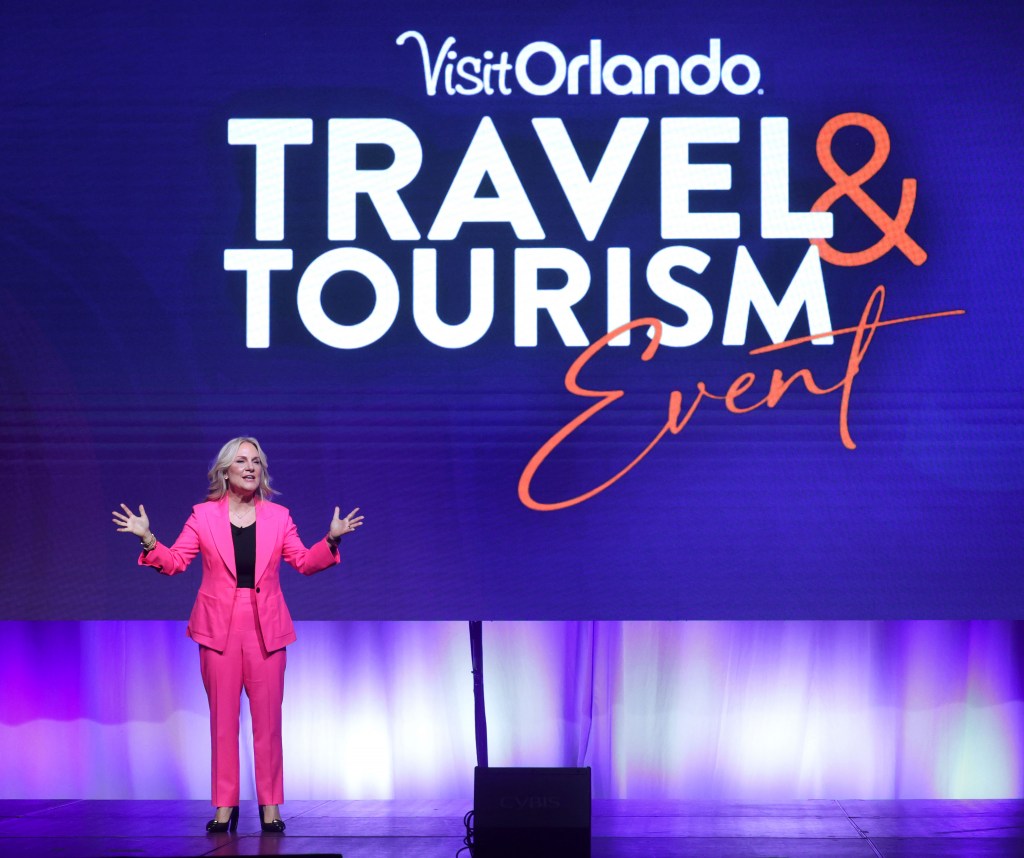
Asked about the discussions, Casandra Matej, president and CEO of Visit Orlando, said her staff has been working diligently with the county to address the audit recommendations.
“Visit Orlando remains committed to the process, and we look forward to a resolution that will help us return our full focus to our mission to inspire, promote and grow global travel to Orlando for economic and community benefit,” said Matej, hired in 2020 to lead the agency.
Visit Orlando receives some contributions from private companies in the tourism industry but most of its budget comes from taxes paid by tourists who stay in hotels and home-sharing rentals. The Tourist Development Tax, known as TDT, is a 6% surcharge on the cost of a hotel room or other short-term lodging option in Orange County, including a home-sharing rental like Airbnb.
Viewed as a gauge of the tourism industry’s health, the tax generated a record $389.9 million in calendar year 2025.
With $34 million for December, Orange County’s tourist tax sets another record
Commissioner Mayra Uribe, a candidate for Orange County mayor, said she, like Semrad, is uncertain what the final edits will be.
“I think it’s taken a long time to get to this point,” she said in a phone interview last week while the proposed amendment language was in flux. “I think there has to be accountability and transparency. But with all honesty, I have more questions than answers.”
Uribe raised concerns last fall in a memo to colleagues about Visit Orlando and its “compliance and fiscal accountability.”
She said oversight remains a concern for her.
“The county’s been in negotiations, and I appreciate that,” Uribe said of the contract discussions with Visit Orlando. “But all along, we’ve been kept outside of it. We’ve expressed our concerns at public meetings…but have all our concerns been addressed?”
Comptroller Phil Diamond, who participated in discussions with his staff and Visit Orlando officials, said he was hopeful the amended agreement would address the concerns raised by the work of his auditing team. “If that happens,” he said, “that’s a win for taxpayers.”
shudak@orlandosentinel.com