
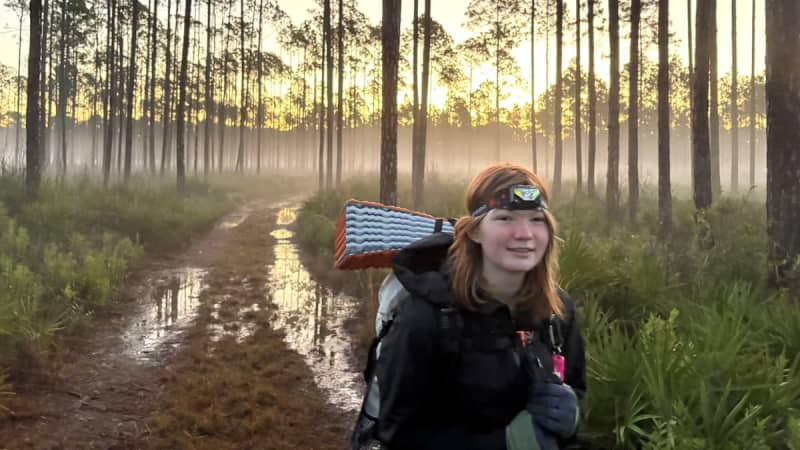
Less than a mile remained between Cali Booth and the finish line.
The 13-year-old and her father, Jamie, had just hiked more than 1,100 miles of the Florida National Scenic Trail. Over five months, they tromped through the swamps of Bradwell Bay and the white, sandy banks of the Suwannee River. They shared choruses to emo metal and folk songs, laughs over the shoe-sucking muck and hours of silence.
But the most memorable day — the day father and daughter say they will remember decades from now — was the last.
With the northern terminus of the trail within reach along the Gulf Islands National Seashore, Jamie pulled his daughter aside. She was more confident now, at ease among the elements.
“I’m so impressed with you, and I want you to know how proud of you I am,” Jamie told her. “You are the proof that when you put your mind to it, anybody can do hard things.”
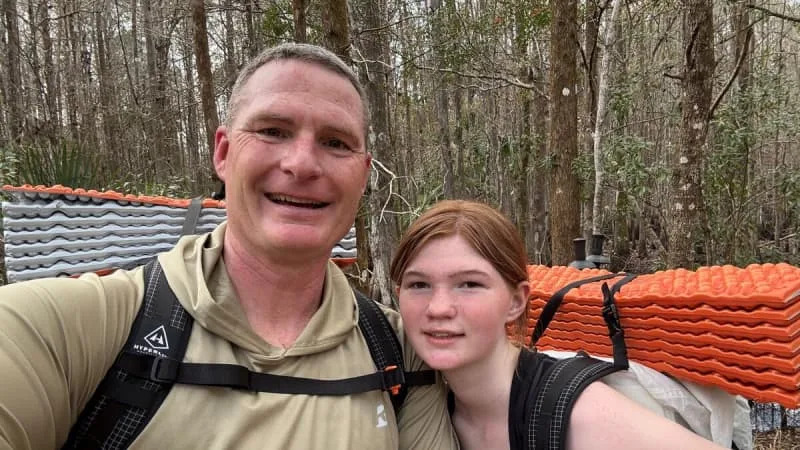
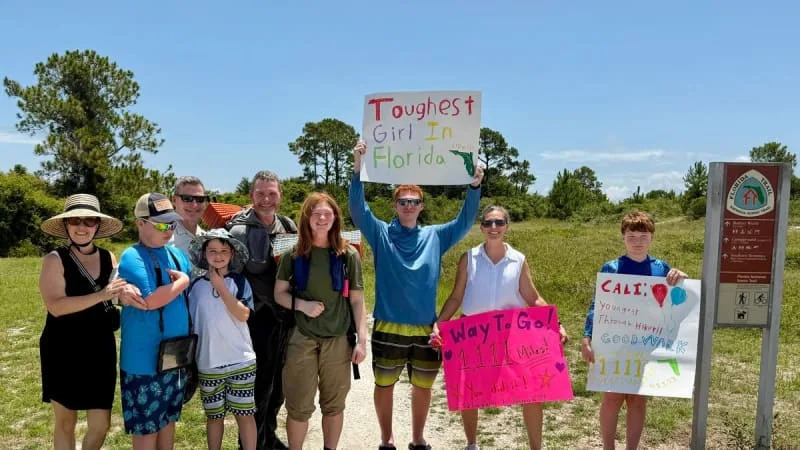
On June 4, Cali crossed the finish line at Fort Pickens, cementing her place in the Florida hiking history books as the youngest person on record to complete the trail end-to-end.
Seven family members awaited her, hoisting signs with phrases like “Toughest girl in Florida,” and “Way to go!” Dozens of other bystanders joined the fanfare.
All told, Cali hiked 1,111 miles.
“You may not think you can do something amazing —and over time, it might feel stressful or, like, scary — but at the end, it feels really amazing to be able to get something done like that,” Cali told the Tampa Bay Times.
“No matter what it is, when you get it done, you feel good about yourself and you feel stronger at the end,” she said.
Trail group: Cali’s hike a ‘remarkable accomplishment’
In 1966, a Floridian named Jim Kern set out on a 40-mile hike on the Appalachian Trail while on vacation. When he returned home to Miami, he itched for more.
One glaring issue: There was a lack of hiking opportunities in Florida, and Kern set out to change that.
He founded the Florida Trail Association that year to help build a long-distance hiking trail that would weave through the Sunshine State. The first path was soon blazed through Ocala National Forest, and the organization netted 70 members in its first six months.
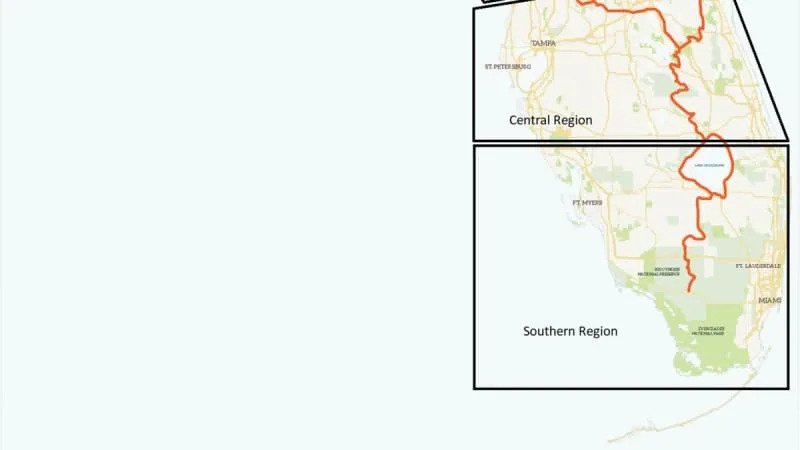
Today, there are roughly 5,000 dues-paying members, according to the association, and the Florida Trail is now one of only 11 federally designated scenic hiking trails in the nation.
Still, there are gaps in the trail that need to be closed.
On one particularly grueling day in mid-April, for instance, the Booths woke up at 1 a.m. and hiked along a busy roadway until 10:30 that morning. They arose early, trying to avoid the traffic and the heat, to tackle the roughly 23-mile roadside section between Deer Park to just south of Christmas. Cars zipped by at 75 mph.
The trail association estimates that there are about 373 miles of road hikes that the group would like to one day reroute back into the wilderness.
It’s a sweeping effort that requires buy-in from all levels of government — counties, state agencies and the U.S. Forest Service — plus the help of private property owners.
Florida Trail Association spokesperson Jane Pollack said the organization is impressed by Cali’s remarkable accomplishment. She also said the Booths’ journey highlights why protecting and maintaining access to the trail is so important.
“These public lands create opportunities for family connection, confidence-building, and lifelong memories that can only be found in wild Florida,” she said, adding she hopes Cali’s story encourages others to explore the trail.
The Booths,who are from Keystone Heights, which is just northeast of Gainesville, also hope that their historic hike helps raise awareness for closing the remaining gaps in the trail.
That means finding creative solutions to reduce the miles beside busy roadways and streets, Jamie said.
“Our message is: Help the Florida Trail Association eliminate road hiking, and let folks get out there in the woods,” Jamie said. “That’s a gracious plea: We’re looking for people who are willing to come alongside the entire hiking community to make the Florida trail even better.”
Jamie himself is no stranger to tackling some of Florida’s most complex environmental issues. In September 2021, Booth took command of the U.S. Army Corps of Engineers Jacksonville District.
Over a three-year tenure, Booth, a colonel with the Corps, oversaw federal projects with state and local leaders on complicated problems ranging from renourishing beaches, preventing floods and — perhaps the most complex of all — restoring more than 2 million acres of Florida’s Everglades while curbing damaging Lake Okeechobee discharges to coastal estuaries.
On some days of their hike, Booth would reach out to past professional connections from his Army Corps days to fill them in on Cali’s progress.
He texted with famed gladesman Ron “Alligator Ron” Bergeron, Everglades National Park superintendent Pedro Ramos and Tina Osceola, a leader in the Seminole Tribe of Florida.
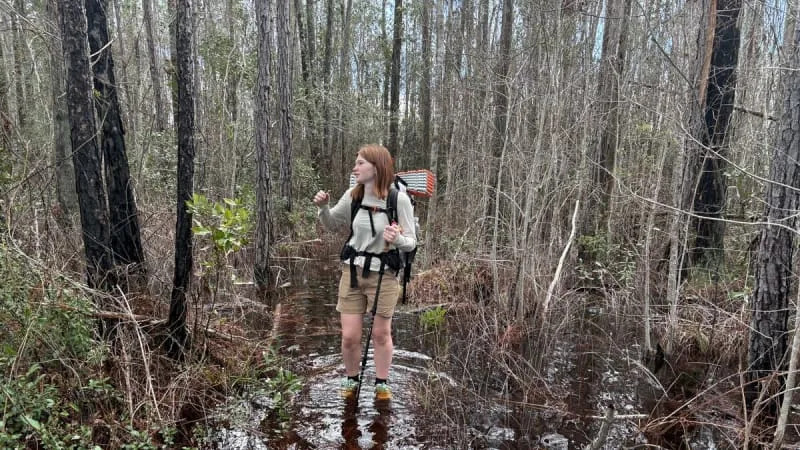
Along the way, Cali said she built a deep appreciation for wild Florida. Trudging waist-deep in swamp water was a highlight, and watching the slow transition of ecosystems, from damp lowlands to drier highlands, was fascinating.
She said her new favorite quote, emblematic of her monthslong trek, comes from outdoor educator Mary Davis.
“To walk into nature is to witness a thousand miracles.”
 A family effort
There’s more than one way to walk the whole Florida Trail. Hikers can thru-hike it in one shot, an effort that can span up to three months.
Or hikers can take the Booths’ approach, biting off long sections of the trail over several months.They would hike for long stretches and usually camp for up to four nights at a time.
The section hiking method can take a village of support to pull off. Cali’s mother, Melissa, estimates she drove more than 10,000 miles across the state as she supported the duo on their quest to complete the trail.
“I can’t even tell you how many trips I made down the Florida Turnpike,” she said.
Cali’s siblings joined the efforts, too, and Melissa jokingly started referring to everyone as the H.E.I.S.T: the Hiking Extraction and Insertion Support Team.
For Melissa, the moment that sticks with her is that first day in the Everglades, dropping off her husband and daughter at the trail’s southern terminus at Oasis Visitor’s Center in Big Cypress National Preserve.
“It was that moment where I’m watching my daughter get ready to walk away from me and into the Everglades. There’s gators, there’s wild boar, there’s all kinds of things out there.”
But she had complete confidence that Cali was going to be OK.
Jamie turned to Melissa, who had tears running down her face, as they prepared to depart that day.
“I’ve got her,” he said. “I’ll take care of her.”
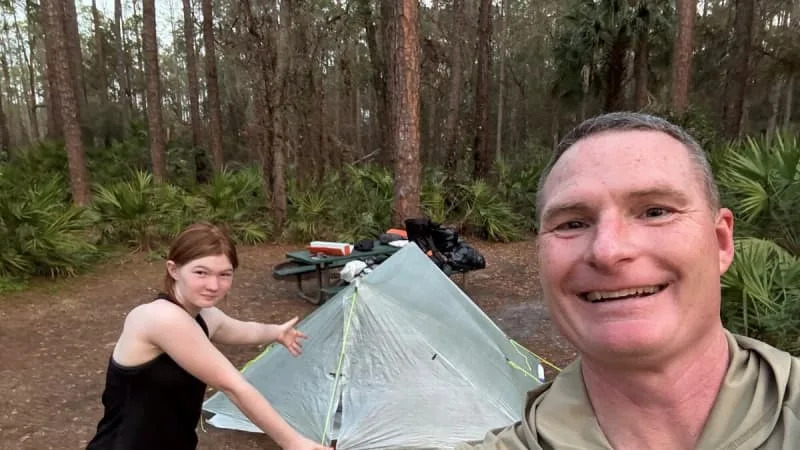
As Cali walked through the glades, the prairie flatlands, scrubby highlands and pine forests, she became more serious about the mission.
Along the way, her parents discovered she could become the youngest to ever hike the trail end-to-end, and that solidified her drive to see it through. Her friends started calling her “Tarzan,” for all the time she was spending outside, and cheered her on along the way.
She wants to return for more hikes along the Florida Trail. But — she added with a smile — maybe not all the way through.
Cali said she has a message to other kids her age who are considering a hike or a long-term adventure.
“Get out with family and friends and go enjoy it,” she said.
“It doesn’t have to be a long hike. It could even be 20 minutes of walking outside or in the woods. But go out and talk with each other, or just walk and embrace the silence.”
The Tampa Bay Times launched the Environment Hub in 2025 to focus on some of Florida’s most urgent and enduring challenges. You can contribute through our journalism fund by clicking here.