
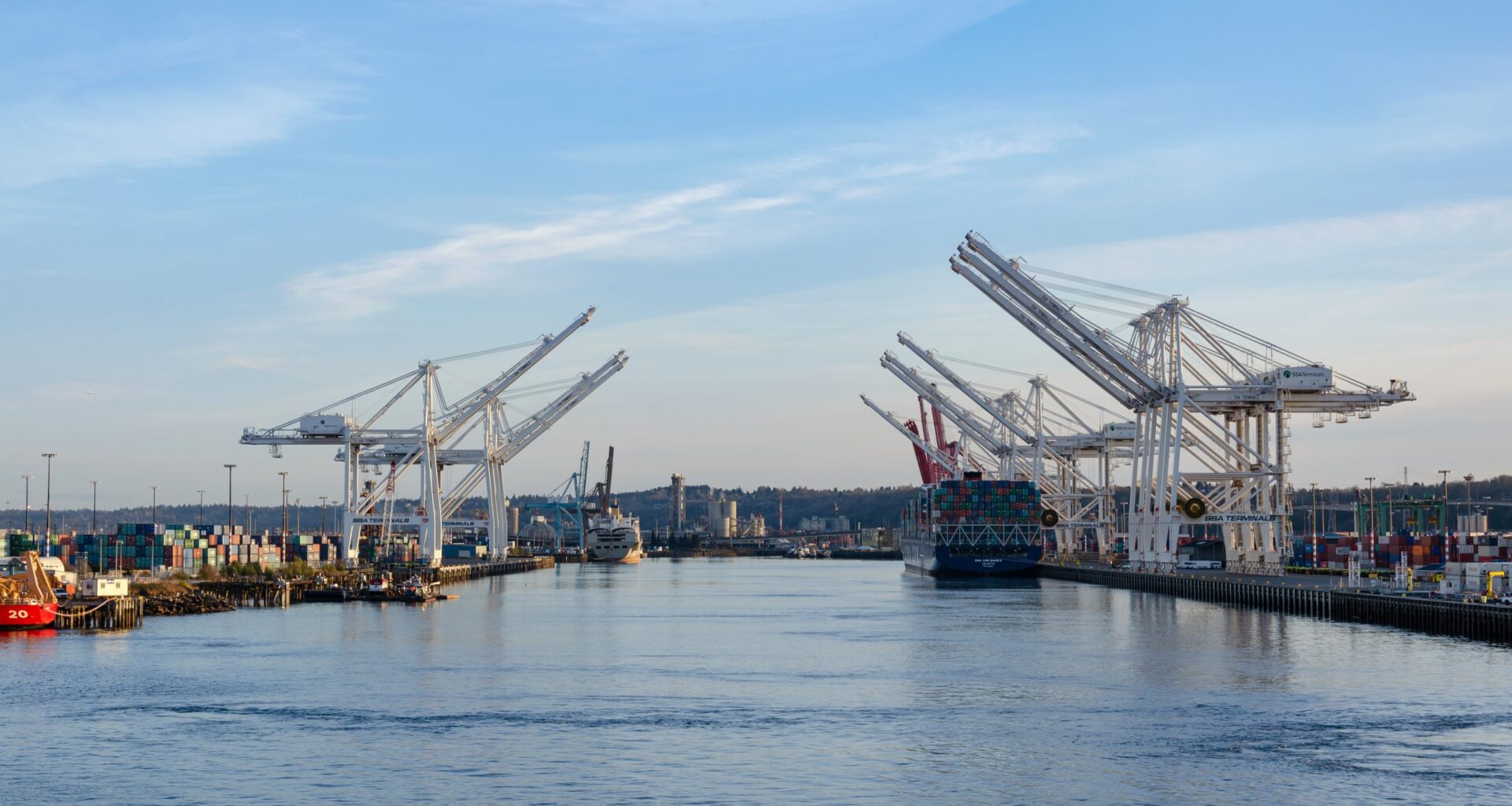
 SSA terminal in port of Seattle on March 12, 2015 in Seattle, Washington.
A well known marine developer says it will conserve Rattlesnake Key. Court settlements and the company’s record in other parts of the country have environmentalists in doubt.
SSA Marine sparked outrage last month when it announced plans to build a large cruise ship port in the 328-acre Knott-Cowen tract—with promises of “conservation” for the 710-acre Rattlesnake Key, an undeveloped island adjacent to the tract just south of the Sunshine Skyway Bridge in Manatee County.
“We are at the beginning of engaging with the community to discuss our vision for the region which is rooted in the idea of protecting and conserving Rattlesnake Key, while creating long-term economic opportunities on the Knott-Cowen tract.” Sally Dee, a spokesperson for SSA Marine, told Creative Loafing Tampa Bay in a statement.
But SSA has been forced into settlements after receiving violations related to maintenance and certification of cargo-handling equipment at the ports of Long Beach and Oakland.
In 2017, SSA Containers, owned by SSA Marine, settled for $2.5 with the California Air Resources Board (CARB), which said that SSA failed to repower, retire or retrofit its Cargo Handling Equipment (CHE) and failed to certify large spark ignition engines on yard trucks servicing those terminals, as required by state law. CARB fights for worker protections against the risks of excess diesel exhaust, which the board says contains harmful gases and more than 40 known cancer-causing compounds.
SSA told CL that no determination was made that any diesel emissions were released, and that delays were related to “market availability of required filters.” The issue was fixed by the time of the settlement, per SSA.
Two years later, in September 2020, SSA Terminals, also owned by SSA Marine, paid $37,500 in a settlement with CARB for violating CHE Regulations in Oakland. CHE Regulations aim to reduce toxic diesel emissions from cargo equipment at ports. These violations were directly tied to harmful emissions from SSA’s machinery polluting the air. This investigation by CARB found that SSA failed to perform annual opacity tests, which measure smoke and diesel emissions, on 29 pieces of CHE as required by the CHE Regulation in 2018 and 2019. This issue was also fixed by the time of the settlement, per SSA.
SSA is also involved in an ongoing lawsuit brought on by an environmental group, Puget Soundkeeper, which argues SSA and the Port of Tacoma were in violation of the Clean Water Act for failing to control polluted stormwater runoff into Puget Sound. An appeals court ruled that stormwater runoff, which carried metals and other pollutants from the terminal, was subject to state stormwater permit requirements and that the Port and SSA did not have proper stormwater controls in place.
In June 2025, the U.S. Supreme Court declined to hear an appeal from the Port and SSA., but the case is still ongoing.
SSA Marine, Inc. was dropped from the case, while SSA Terminals (Tacoma), LLC remains a party to the lawsuit.
“SSA Terminals continues to vigorously defend itself, while operating in compliance with the Clean Water Act and Washington’s Industrial Stormwater General Permit,” the company told CL.
Puget Soundkeeper referred to the SCOTUS decision as “a win for clean water, Puget Sound, and the rule of law.”
In its four-page response to CL, SSA argues that it has been environment-forward, reducing greenhouse emissions, using solar power and LED light upgrades and earning industry certifications and high sustainability scores.
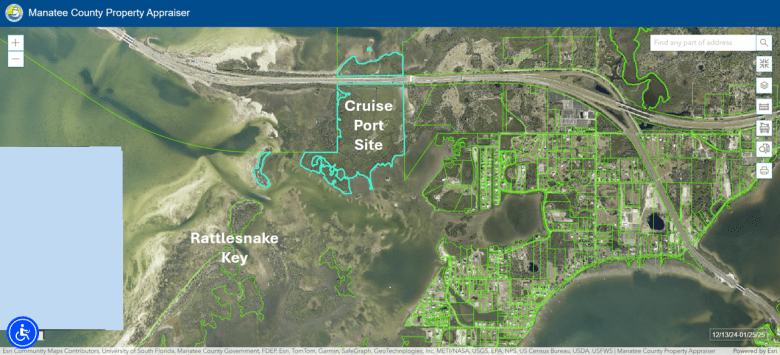 SSA Marine sparked outrage last month when it announced plans to build a large cruise ship port in the 328-acre Knott-Cowen tract—with promises of “conservation” for the 710-acre Rattlesnake Key, an undeveloped island adjacent to the tract just south of the Sunshine Skyway Bridge in Manatee County. Credit: Tampa Bay Waterkeeper
Tampa Bay area environmentalists are pushing back on SSA’s cruise port plans
SSA Marine is working with Tampa-based Slip Knott LLC to bring a terminal to Tampa Bay with similar promises of conservation. The project would include a multi-berth cruise port adjacent to the Sunshine Skyway Bridge on the seaward side, allowing newer, larger cruise ships that can’t fit under the Skyway to port in Tampa Bay.
Manatee County resident Corey McKeever told CL he got to work organizing an opposition effort within hours of SSA’s proposal launch on Jan. 16. By 9 a.m. the following morning, he’d posted a petition and ordered yard signs.
“I was gonna do this fight without anyone,” McKeever told CL.
But McKeever is not alone in this fight. His Change.org petition has already garnered over 18,000 signatures. The Save Rattlesnake Key social media page is approaching 800 followers as of this publication.
There, McKeever and community members post about the environmental concerns that a cruise ship port in Terra Ceia would pose.
Justin Tramble, Executive Director of Tampa Bay Waterkeeper, told CL it would not be enough even if SSA Marine leaves Rattlesnake Key untouched.
“It’s a ‘We’re gonna preserve your hand, but we’re gonna destroy your whole entire arm,’ type of argument,” said Tramble. “They’ve swooped in as this ‘superman’ saying they are protecting [Rattlesnake Key] for us at the expense of the whole entire area around it.”
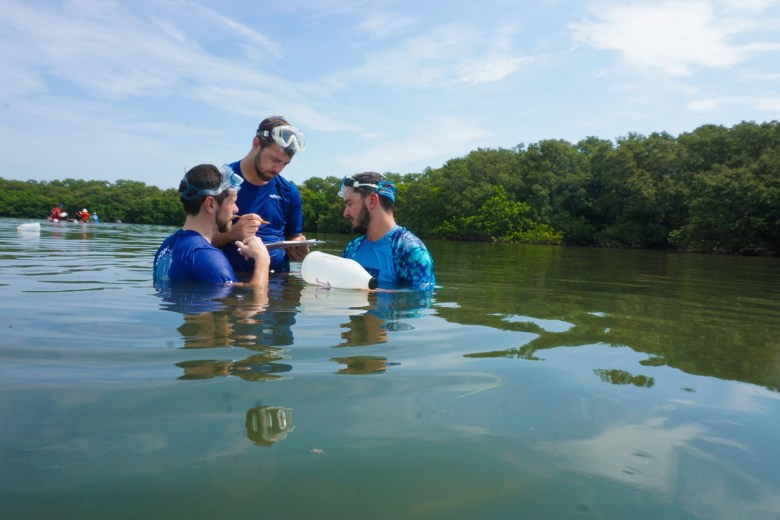 Tampa Bay Estuary Program volunteers in June 2019. Credit: TampaBayEstuaryProgram / Facebook
Construction of the proposed cruise terminal would harm the parts of the estuary within the site, according to the Tampa Bay Estuary Program.
TBEP estimates that approximately 295 acres of natural habitats are located within the proposed project site, and that impacts to these habitats would reduce progress of Habitat Master Plan 2030 restoration targets by 5% for freshwater wetlands, 23% for salt marshes and salt barrens, 67% for oyster bars, and 13.8% for seagrasses.
“I mean, there is a line. And I think Floridians are like, this crosses it significantly. We’re Olympic jumping across the line,” said Tramble, of the potential negative environmental effects of terminal plans.
To build a cruise port of this size, a significant amount of dredging would also be needed to deepen the channel for large ships to pass through.
Maya Burke, Assistant Director of the TBEP, told CL the primary impacts of dredging, filling, and building a cruise terminal in the proposed property would be harmful to the existing habitats in the area, consisting of seagrass, mangroves, marshes, and oyster reefs. There would also likely be secondary impacts that would need to be addressed, Burke added.
“We know from operating two major ports in Tampa Bay that these large ships do generate ship wakes and the wave energy changing the wave environment can create erosion that needs to be considered,” Burke said.
Shorelines within the project site would likely need to be fortified by artificial reefs, such as oyster reef balls and domes.
“This type of erosion could certainly be problematic for Rattlesnake Key,” Burke said.
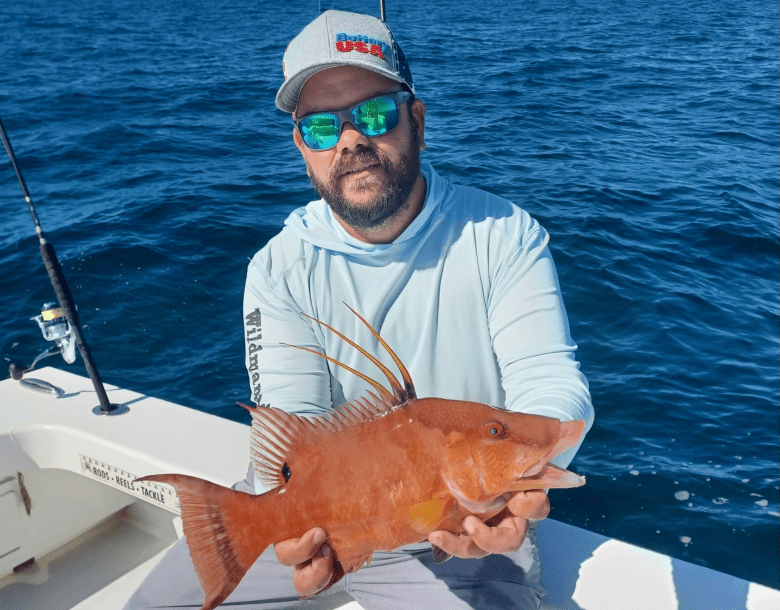 Wes Wildman, a local fisherman who has been running fishing charters and boat tours in Tampa Bay for 11 years. Credit: captweswildman / Facebook
‘I don’t think I would survive…’
For those who make their living working on Tampa Bay, the concerns raised by environmentalists and analysts aren’t just theoretical. The impacts would be immediate.
“I don’t think I would survive that as a fishing guide,” Wes Wildman, a local fisherman who has been running fishing charters and boat tours in Tampa Bay for 11 years, told CL.
Wildman grew up fishing off Anna Maria Island and has seen Manatee County lose the battle of environmentalism against economic promise as more housing and developments have been built in the once-quiet county. But he does recall a time when the voice of the community beat out corporate greed.
In 2013, well-connected developer Carlos Beruff proposed plans for a large mixed-use development on Long Bar Pointe in Sarasota Bay. The proposal faced major criticism due to environmental concerns, including mangrove and seagrass destruction and extensive dredging.
Community pressure stopped the most environmentally damaging aspects of Long Bar Pointe before its approval in 2017. And years of delays, lawsuits, and permitting hurdles resulting from community demands have so far stopped the project from being built.
Still, Wildman worries that public pressure may not be enough to stop this project.
“I just feel like the dollar is stronger at the moment,” Wildman said.
SSA Marine’s leading argument is its estimation of new 31,000 jobs earning those workers about $1.6 million.
“You’ll create some jobs. But is it the right thing to do?” Wildman asked.
Tramble doesn’t think so.
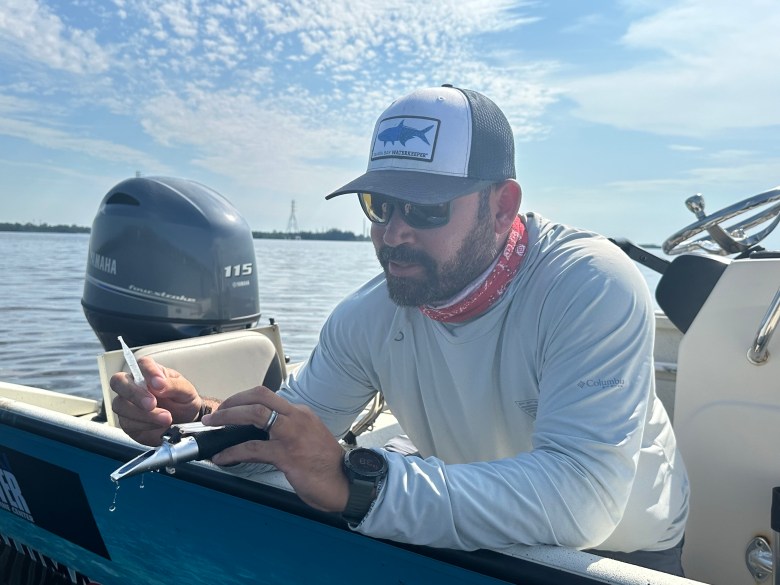 Justin Tramble of Tampa Bay Waterkeeper Credit: Yamaha Rightwaters™
The Tampa Bay region already has a strong tourism industry; many activities—like fishing, water sports, and sightseeing—rely on the health of marine ecosystems. The proposal would mainly benefit the property owners of the new port, not the broader tourism economy, Tramble argued.
“There’s so much value in protecting this spot that goes way beyond lining the pockets of the few folks that are going to prosper off of a project or a proposal like this,” Tramble said.
Even in the plan’s beginning stages, Tramble wants this issue at the forefront of people’s minds. He advised those against the development to attend public meetings, sign petitions, and stay informed by local environmental groups like Tampa Bay Waterkeeper and Suncoast Waterkeeper.
“We’re going to fight like hell to prevent this from happening,” said Tramble.
Pitch in to help make the Tampa Bay Journalism Project a success.
Subscribe to Creative Loafing newsletters.
Follow us: Google News | NewsBreak | Reddit | Instagram | Facebook | BlueSky
This article appears in Feb. 05 – 11, 2026.
Related