
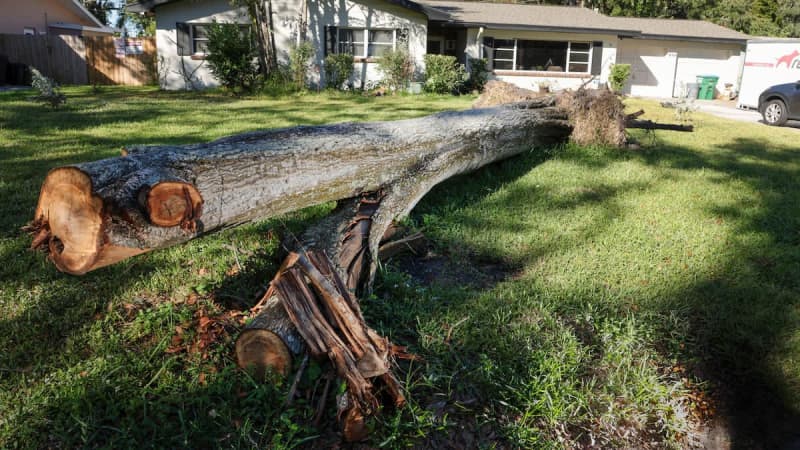
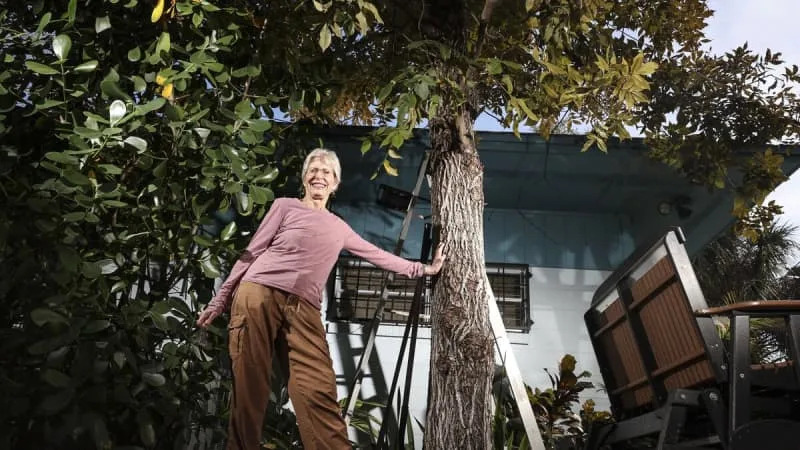
Carla Kelly has run out of ways to cool herTampahome.
Last summer, she installed tinted film that blocks UV rays passing through her windows. She had her roof painted white and mixed with a reflective coating that NASA applies to rockets.
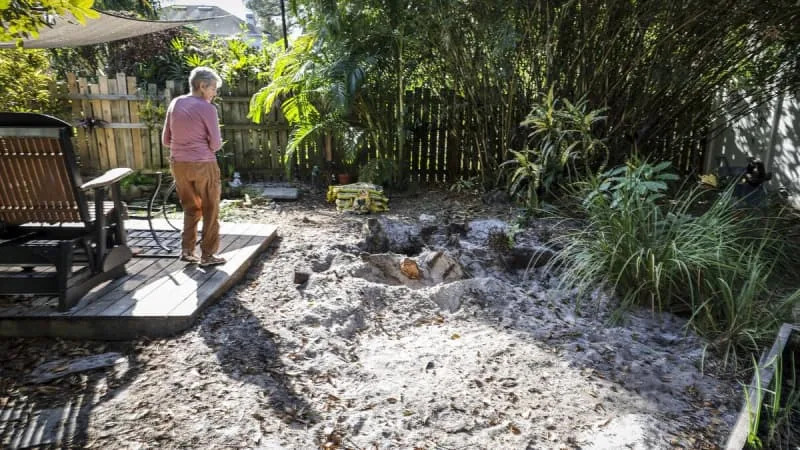
But nothing had netted as much energy savings as the 20 grand oak trees that had, until recently, dotted her yard since she moved there in 1976.
Hurricanes over the past five years knocked down the shady, broadleaf oaks until just two remained. Hurricane Milton’s 100-mph winds in 2024 finished them off, Kelly said. One fell on her roof, the other on her car.
Without that canopy, Kelly’s electric bill rocketed to more than $650 in September. It’s far more than the $200-per-month summer energy costs she was used to.
Around Tampa Bay and beyond, residents were shocked by their electricity bills last summer. Hundreds of readers wrote to the Tampa Bay Times as part of “Power Struggle,” an ongoing series exploring what has driven electric bills to new heights and the burden it has placed on customers.
Experts identified utility rate hikes, hurricane costs and stubborn fossil fuel prices as key factors. Tree canopy — greatly reduced by hurricanes and widespreaddevelopment in recent years — also plays an outsize role in how air temperatures feel inside homes.
Kelly keeps her 2,500 square-foot house built in the 1950s at 74 degrees most days. She has replanted her yard with crepe myrtles, which provide a smaller canopy than oaks. While waiting for her trees to mature, Kelly, 83, is looking for other ways to save energy.
“Anything to not give TECO more money,” Kelly said.
Trees help to conserve energy in two ways: in the household and on the neighborhood level, said Shawn Landry, the director of the University of South Florida’s Water Institute.
Shadier homes and streets mean residents have to use less AC to maintain cooler indoor temperatures — leading to lower energy costs.
Trees also function like misters, similar to what you see at Disney World, said Michael Andreu, a professor at the University of Florida’s School of Forest, Fisheries and Geomatics Sciences.
Urban forests, or tree-filled areas within a city, are a way to combat heat islands. A pilot study from 2024 found that a combination of asphalt and concrete with little greenery ratcheted up temperatures more than 10 degrees in parts of Hillsborough County.
“As (trees) transpire, they bring water up from the ground, and it moves out through their leaves into the air, and so they effectively create that similar effect of cooling,” Andreu said.
Landry and Andreu, among other researchers, worked on the city of Tampa’s Tree Canopy and Urban Forest Analysis in 2021. The study estimated that theproximityof trees to city homes netted nearly $7.5 million each year in energy savings from a combination of less electricity usage and lowercarbon emissions.
Temple Terrace just tallied every tree on city property. Here’s what it found
Vegetation, like trees and greenery, cool neighborhoods to milder temperatures, Landry said — the opposite of asphalt.
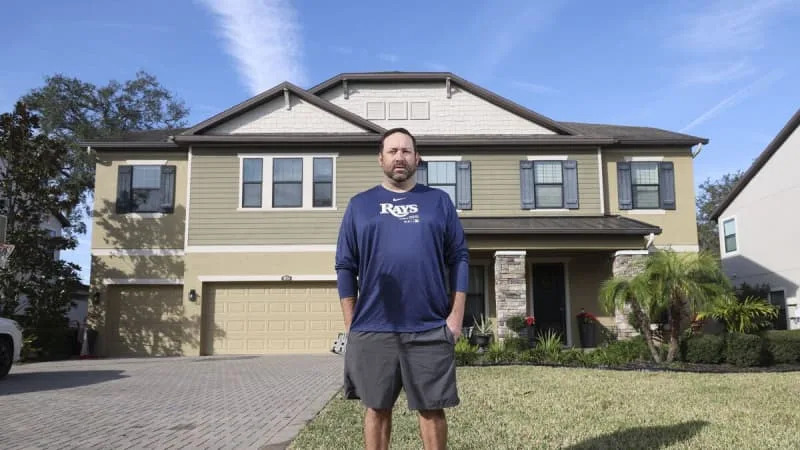
Jeff Whitcomb, who lives on the edge of Tampa’s Forest Hills neighborhood, said his street has never been particularly shady. After Milton, his home lost the few trees that blocked harsh rays from beating against his windows.
His highest bill last year spiked above $700.
Tampa’s tree canopy covered 34.6% at its peak in 1995 but has wavered over the years, and it has been on a declineover the last 15 years.Four years ago, trees covered about 30% of the city, its lowest in decades.
The city was making improvements to the canopy, but after the one-two punch of hurricanes Helene and Milton, much of that progress was undone. Helene’s storm surge saturated Tampa soil in coastal areas, then came Milton’s strong winds and flooding rains that knocked down trees, according to a post-storm canopy analysis.
Two years ago, canopy coverage had risen to about 31.4% before the storms. By last year, it had dropped to 29.9%.
“We lost pretty much all the gains that we made,” Landry said. “But the increase was definitely encouraging.”
About 39% of Pinellas County is covered by canopy, according to a study looking at data as recent as five years ago.The study showed that the county had tacked on about 8% more canopyover the prior decade.
But similar to Tampa, a more recent dive into tree coverage showed that the county may be on a downward trend.
A newer survey showed about a 2% canopy decrease, according to Carolyn Cheatham Rhodes, the county’s urban forester. But because the 2% fell within the study’s margin of error, canopy loss remains unclear.
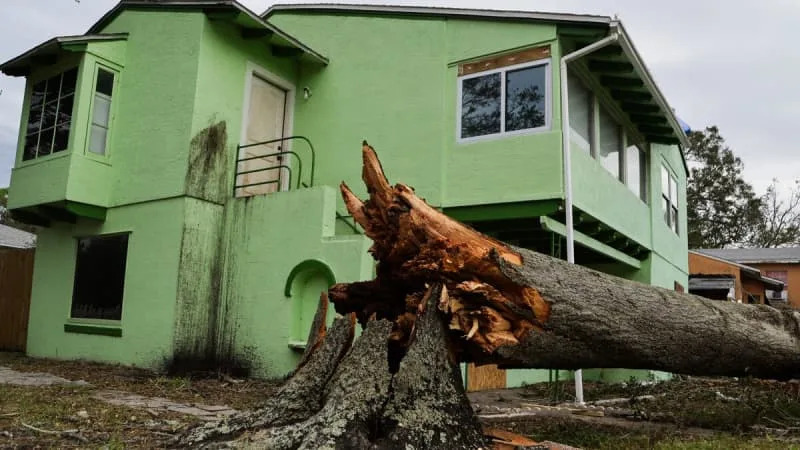
Beth Benson, 73, lost most of her St. Petersburg home’s canopy — and her roof — when three laurel oaks came crashing down during Milton.
When Benson’s utility bill rocketed to more than $800 in July, she turned the thermostat up to 78, shut off her second unit at night and strategically placed fans around the house.
“This summer was a killer,” she said. “The whole back wall of my family room are large picture windows, and we definitely can tell that that room heats up more now because of the lack of the trees.”
Not long after spending $22,000 on a modern air conditioner, Janice Szablewski purchased a combo washer-dryer that would slash her energy use in half when doing laundry. She opted for a recently returned floor model to further cut back on costs.
As energy bills rose last summer, affordability was top of mind for Szablewski, who lives off retirement savings. When her husband’s health diminished, it became even more important to keep their 2,500-square-foot home in Safety Harbor at 75 degrees.
Amazingly, none of the large oaks that stretched across their home, which borders lush Phillipe Park, fell during Milton. But Szablewski lost that canopy anyway when their home insurer forced the couple to trim the trees or have their coverage dropped.
The only remaining speck of shade comes from a faraway oak that briefly blots out the morning sun.
“We definitely feel the difference,” Szablewski said.
As development has surged in the region, trees have become a casualty.
In recent years, Florida has lost about 2% of its canopy, according to a state assessment found.
“Hurricanes, pests, diseases and rapid development — stemming from Florida having one of the fastest-growing populations in the country — all pose serious risks to the urban tree canopy,” the assessment said.
The result likely means more health, economic and quality-of-life problems, Andreu said.
Florida grew an average of just over 2% in 2024, according to census data, doubling the U.S. average. The Tampa-St. Petersburg-Clearwater metro area added about one person for every 67 residents, the Times reported.
Still, Tampa Bay’s growth showed signs of slowing. Pinellas was one of the few counties that showed a population decrease from 2023 to 2024.
As cities plan their urban development, Andreu said, they should factor in the many benefits of trees.
“When you have this massive pressure from increased population coming into the state of Florida, it’s inevitable,” Andreu said of development. “We’ve really got to figure out how to manage these forests, these urban areas.”
 • • •
• • •
The Tampa Bay Times launched the Environment Hub in 2025 to focus on some of Florida‘s most urgent and enduring challenges. You can contribute through our journalism fund by clicking here.