
Lewis Carroll’s The Walrus and the Carpenter tells the story of two well-spoken figures who invite a group of oysters to join them for a pleasant walk along the shore. The invitation is warm. The future sounds promising. The tone is reassuring.
The oysters hesitate, but they follow.
By the end of the stroll, they are dinner.
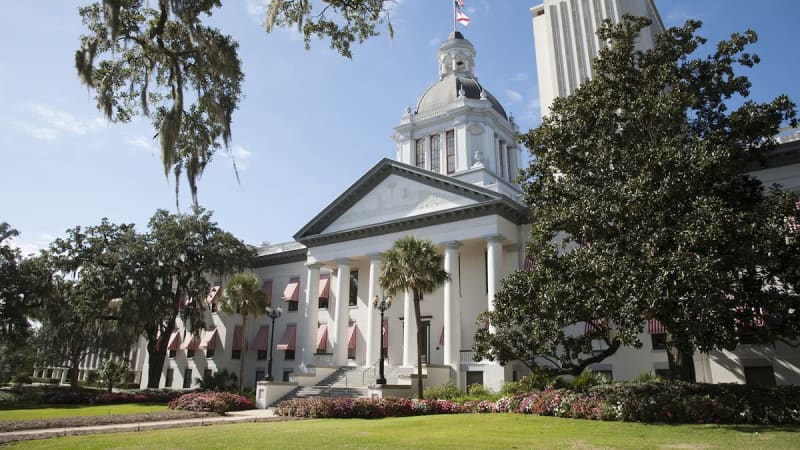
It is hard not to think of that poem as Florida edges toward a potential special session on property taxes.
We are told property taxes are too high. That relief is overdue. That something bold must be done. And in the governor’s words, a “very, very meaningful” plan will emerge sooner or later.
But meaningful to whom?
Property taxes are not a distant abstraction. They are the financial backbone of 411 cities and 67 counties. They fund police officers and firefighters, road maintenance and stormwater systems, libraries, parks and emergency response. According to a Florida League of Cities study conducted by Wichita State University, property taxes account for roughly 43% of municipal general fund revenue and represent the only stable, locally controlled revenue source for many communities. Eliminating or dramatically restructuring that system is not a tweak. It is a structural rewrite of local government finance in America’s third-largest state.
Structural rewrites demand time. A special session rarely provides it.
Special sessions are compressed by design. They are focused, and often largely negotiated before the first gavel falls. Rank-and-file members frequently see final language after the framework is already shaped. Committee hearings are abbreviated. Amendments are limited. Stakeholder input is constrained not by relevance, but by the clock.
That process may work for emergencies. It does not work for redesigning the primary revenue source of local government.
The League’s modeling makes the stakes clear. Full elimination of the homestead property tax would result in roughly a 38% loss in ad valorem revenue and a 14% drop in municipal general fund revenue. To maintain current service levels, millage rates would need to nearly double. Even large fixed-dollar exemptions of $250,000 to $500,000 would result in revenue losses of 25% to 32%, again requiring significant rate increases.
Those are not political talking points. They are arithmetic. And math always wins.
When revenue drops by a quarter or more, local governments face hard choices. Services are reduced. Fees rise. Millage increases shift burdens to renters, commercial property owners, and new homeowners. Infrastructure is deferred. Bond ratings are pressured. The same study notes that cities already spend more on public safety than they receive in property tax revenue, meaning even modest losses create structural gaps. Rural communities, with fewer alternative revenue options, face even steeper tradeoffs. Almost any other tax or fee to plug that hole is less steady and far more brutal. In the end, they will feast on Florida taxpayers, because this is not a cut, it is just a shift.
Someone pays.
The only question is whether we acknowledge that before we act. If relief is the goal, there are responsible paths forward — targeted exemptions, income-based relief, state revenue replacement mechanisms, greater local fiscal flexibility. Those options require modeling, transparency and deliberation. They require daylight.
A special session is built for urgency. Property tax reform is not urgent because of a hurricane or fiscal collapse. It is urgent because it is politically attractive. Those are different things.
Carroll’s poem is not really about oysters. It is about persuasion. It is about how pleasant words can mask serious consequences. It is about what happens when participants do not know the walk’s destination.
Before Florida convenes a special session to rewrite its primary local revenue system, taxpayers deserve more than reassurance. Legislators deserve more than a framework delivered at speed. Cities and counties deserve clarity about how they’ll fund public safety and infrastructure tomorrow. The oysters followed because the invitation sounded reasonable. Florida should insist on looking through the looking glass first, before we speak of shoes and ships, and sealing wax. Because once the walk begins, it may be too late to change direction.
Jeff Brandes, a former Republican state senator, is the founder and president of The Florida Policy Project, a non-profit, non-partisan research institute dedicated to improving policy outcomes across Florida’s most pressing challenges. For more visithttps://floridapolicyproject.com