

At fast-growing tech companies, the real chaos is often hidden in the backend systems moving data from one place to another, breaking at odd hours, patched together with tools that were never meant to talk to each other.
That’s the mess Miami-based Matia set out to fix, and investors have been taking note.
Today, Matia announced it had raised a $21 million Series A round led by Red Dot Capital Partners, bringing its total funding to more than $31 million. The new capital will go toward product development, hiring, and scaling the company’s go-to-market efforts as demand grows for unified, AI-ready data infrastructure.
For founder and CEO Benjamin Segal, the idea came from hard experience.
Before Matia, Segal [pictured above] worked at a global logistics startup that grew from about 30 employees to more than 250 in two years, offering Amazon Prime-style two-day shipping worldwide. At checkout, the company had less than 500 milliseconds to decide whether an item could ship from warehouses around the globe. That required real-time models built on top of a patchwork of data tools.
“When you do Amazon Prime all over the world,” Segal told Refresh Miami, “we had a large amount of issues with data because we had to make decisions real time, in a matter of milliseconds.”
To make that happen, his team relied on separate systems for ingestion, observability, warehousing, BI, and pushing insights back into operations. The stack worked, but it was fragile and complex.
“And this led me to say, hey. Data should not be as complex as is,” he said.
Matia’s answer is consolidation of processes into a single system designed to give teams full context over how data flows and how it is used.
“This was before AI was what it is today,” Segal said of Matia’s early days. “But even now, people connect and ask questions without knowing what’s happening behind the scenes – how the data is connected or whether the answers they’re getting are actually correct. We want to get to a point where people can really trust what they’re seeing.”
Today, companies including Ramp and Lemonade use Matia to operate data pipelines as production infrastructure. The broader vision, however, is even more ambitious.
“We are looking into one major layer that we are working on, which is you can think about it as the Cursor for data engineers,” he said. The goal is to help teams connect all their data and “help the developers move 10x faster than they are today,” while maintaining control and reliability.
In practical terms, that means evolving Matia into what he calls an AI data engineer: a system that supports pipeline creation, anomaly detection, and operational decisions in a unified environment. If successful, smaller teams could operate with the same level of infrastructure maturity as much larger organizations.
Matia now has about 40 employees across Israel and the United States, with Miami serving as its headquarters. Segal, who moved to Miami in 2020, said the company plans to grow both engineering and sales with the new funding, while maintaining an unusual focus on customer support.
“Today we have a sub five minute response time for customers,” he said. “We are willing to pay more to get the best customer support in the world.”
As AI becomes more central to how companies operate, Segal is betting that the real leverage lies not in the interface, but in the infrastructure beneath it. If teams cannot trust their data, they cannot trust their models.
And in the AI era, trust may be the most valuable layer of all.
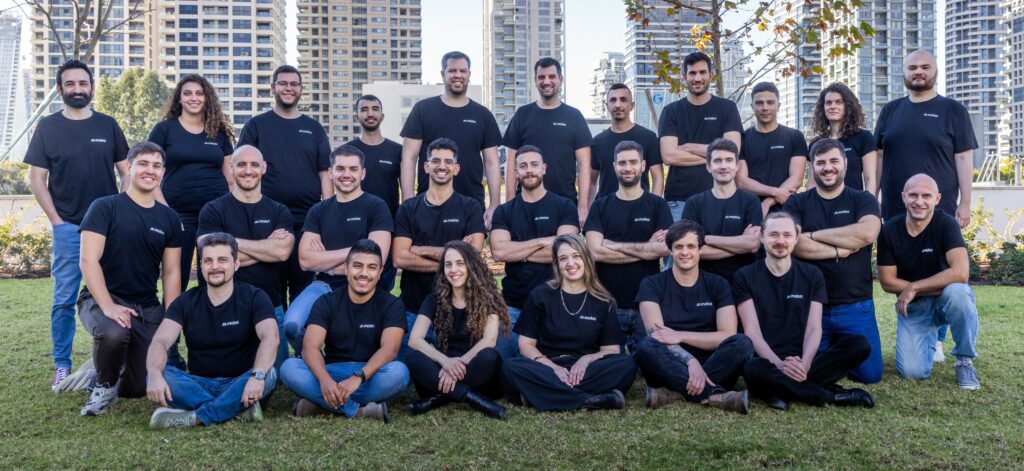 Part of Matia’s team.
READ MORE IN REFRESH MIAMI:

I am a Miami-based technology researcher and writer with a passion for sharing stories about the South Florida tech ecosystem. I particularly enjoy learning about GovTech startups, cutting-edge applications of artificial intelligence, and innovators that leverage technology to transform society for the better. Always open for pitches via Twitter @rileywk or www.RileyKaminer.com.
Latest posts by Riley Kaminer (see all)