
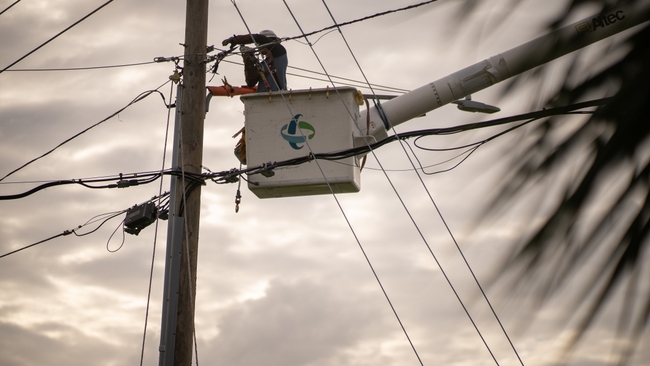
The City of St. Petersburg has issued a request for proposals seeking consultants to evaluate whether the city should break from Duke Energy Florida and establish its own municipal electric utility.
The move could reshape how electricity is generated, priced and governed within city limits. The solicitation calls for a comprehensive feasibility study examining the financial, legal, regulatory and operational implications of creating a city-owned Municipal Electric Utility (MEU) to replace Duke Energy as St. Petersburg’s sole electric provider.
Proposals are due March 19, with city officials aiming to bring a recommended contract to City Council by early June, according to city documents. The study is a response to growing resident concerns about affordability, reliability and transparency under Duke Energy, whose 30-year franchise agreement with the city expires in August.
The base scope of work, Phase 1 of the study would require consultants to assess the value of Duke Energy’s electric distribution and sub-transmission assets within city boundaries, estimate acquisition and transition costs, and model whether a city-run utility could deliver stable and affordable rates over the long term. The analysis would also compare continued service under Duke Energy with municipal ownership, accounting for startup costs, bonding capacity, rate impacts, operational risks and regulatory requirements.
The current franchise agreement does not include a purchase option allowing the city to acquire Duke’s local distribution system, making any transition to municipal power legally and financially complex. City Council signaled interest in studying municipal electric service last year with approval of a resolution asking Mayor Ken Welch to issue an RFP for a feasibility study, but city attorneys warned that Duke is unlikely to be a willing seller of its infrastructure — meaning any effort to form a municipal utility could require eminent domain and trigger a lengthy legal battle.

The city also looks to evaluate potential reinvestment of revenues into the community; expanded energy-efficiency programs; improved grid resilience through modernization, undergrounding and microgrids; and to support low-income customers through rate structures and assistance programs.
Two optional phases could potentially examine the feasibility of powering a city-owned utility entirely with renewable energy and storage and explore alternative municipalization models — including a city-operated utility, an independent municipal utility, a utility authority, a public-private partnership, or hybrid models. Consultants would also be tasked with producing non-advocacy materials to support community outreach ahead of any future policy decisions or referendums.
City staff expect to shortlist firms in early April, conduct interviews later that month, and present a recommended award to City Council on June 4. The request does not commit St. Petersburg to form a municipal utility, but it kickstarts a review intended to inform future decisions as the Duke Energy franchise expiration in August approaches.
____________
Janelle Irwin Taylor of Florida Politics contributed to this report.
