
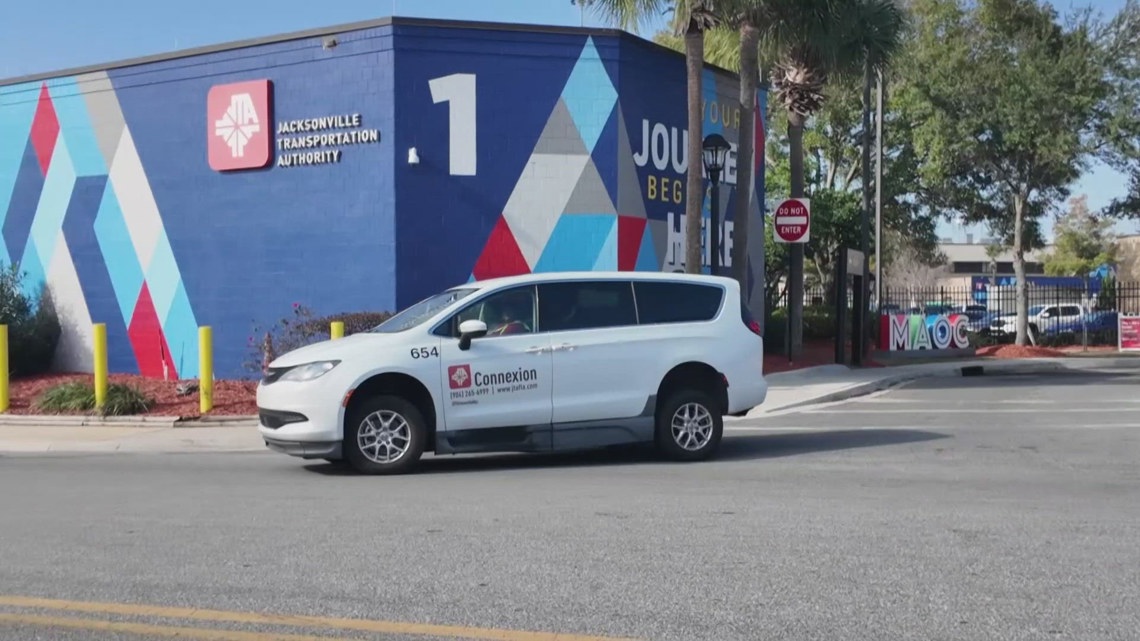
Records show that the Jacksonville Transportation Authority faces a nearly $19 million budget shortfall in 2025 from Navi and Connexion services.
JACKSONVILLE, Fla. — Jacksonville city councilman Jimmy Pelosi is set to host a meeting on Tuesday to discuss options to help keep the Jacksonville Transportation Authority’s Connexion Plus service running.
Connexion Plus is a private paratransit service, like an Uber for people with disabilities.
In January, JTA announced it would be ending the service due to the high cost, but later reinstated the service with planned higher fares. The question now is this: how is JTA going to pay for the Connexion Plus service to continue and how are they going to pay for the service to continue?
About 8,000 customers with disabilities used JTA’s Connexion service in 2025, nearly half of those taking advantage of Connexion Plus, the private ride service for customers with disabilities, including Cheryl Potrzuski’s daughter, to get to work.
“People with disabilities and our seniors, I feel, are being overlooked for other projects. I’m trying to understand and comprehend the checks and balances,” said Potrzuski.
After Connexion Plus was in jeopardy of ending due to its high cost, some are questioning the budget.
First Coast News reviewed the 2026 fiscal year budget.
The total operating budget comes out to about $185.4 million. Most of it, 79% from fixed route buses and about 12% from Connexion. That budget was put in place with the plan to end Connexion Plus in 2026.
The price tag of Connexion Plus is projected to top $8 million in 2026; JTA only budgeted $2.4 million.
“The average trip is about $40 to the JTA. We receive a fare of $6, so you can see there’s a big delta there,” said JTA CEO Nat Ford.
JTA absorbs more than 75% of the cost to riders. Connexion Plus is contracted out to a third-party company. Riders, though, say they can’t afford to pay a higher fare for the service, but demand continues to rise.
On top of that, the Jacksonville city auditor shared, during it’s January finance committee meeting, JTA had a nearly $19 million budget shortfall in 2025. About half of that related to the Connexion program and about $7 million for the Navi service.
This – all as the JTA implements a six-month pilot program reducing fares for fixed-route and connexion services… And offering free rides for the navi to help increase ridership.
Some customers say operating autonomous vehicles shouldn’t be at the expense of Connexion Plus customers who need to get to work and doctor’s appointments on time.
“The people that they are offering these free rides to. I’m gonna guess that they are able to drive down there. They’re able to do the things that they need to do. The people that I’m associated with, which is mostly the disabled community, our kids will never drive. They will never hold a full-time job. We want them to be out in the community holding a part-time job, going and visiting friends and family. With the cost increased [proposed for Connexion Plus], there is no way,” said Potrzuski.
So, how many people are actually using the Navi right now? Since it’s free, JTA said it can measure the number of trips, but it would be difficult to share exactly how many riders have used it recently.
Last September, it recorded about 128 daily riders, compared to Connexion Plus serving nearly 4,000 people in 2025.
JTA will have to either use reserves to cover the cost or ask the city council for more money.
As for how much money the JTA makes, the operating cost is budgeted to equal the revenue it expects to make from fares. Other costs are dependent on grants and taxes.
City councilman Jimmy Peluso scheduled a meeting at City Hall on Tuesday at 2:30 p.m. to discuss different options to see what the city can do to help keep Connexion Plus going.