
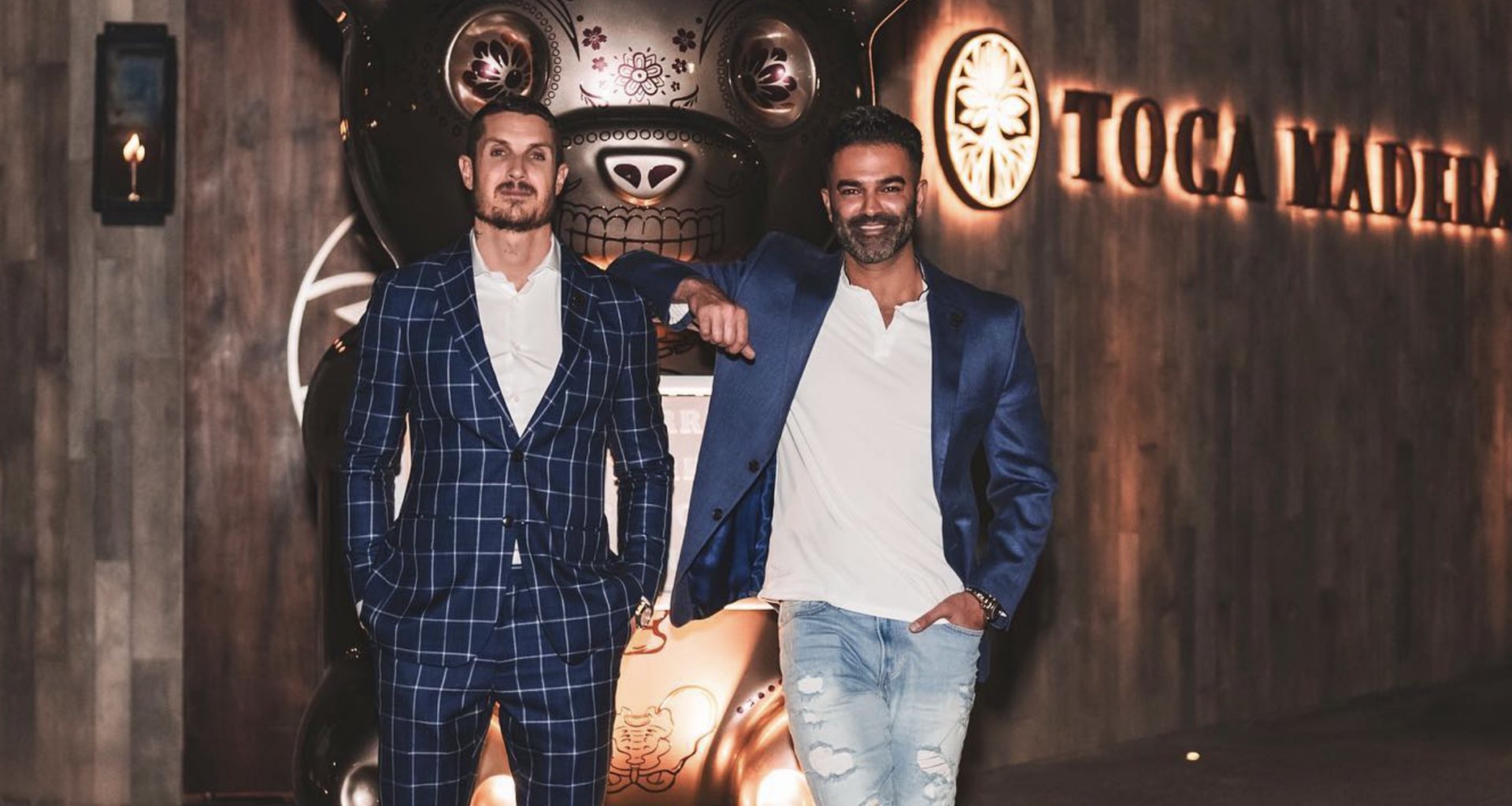
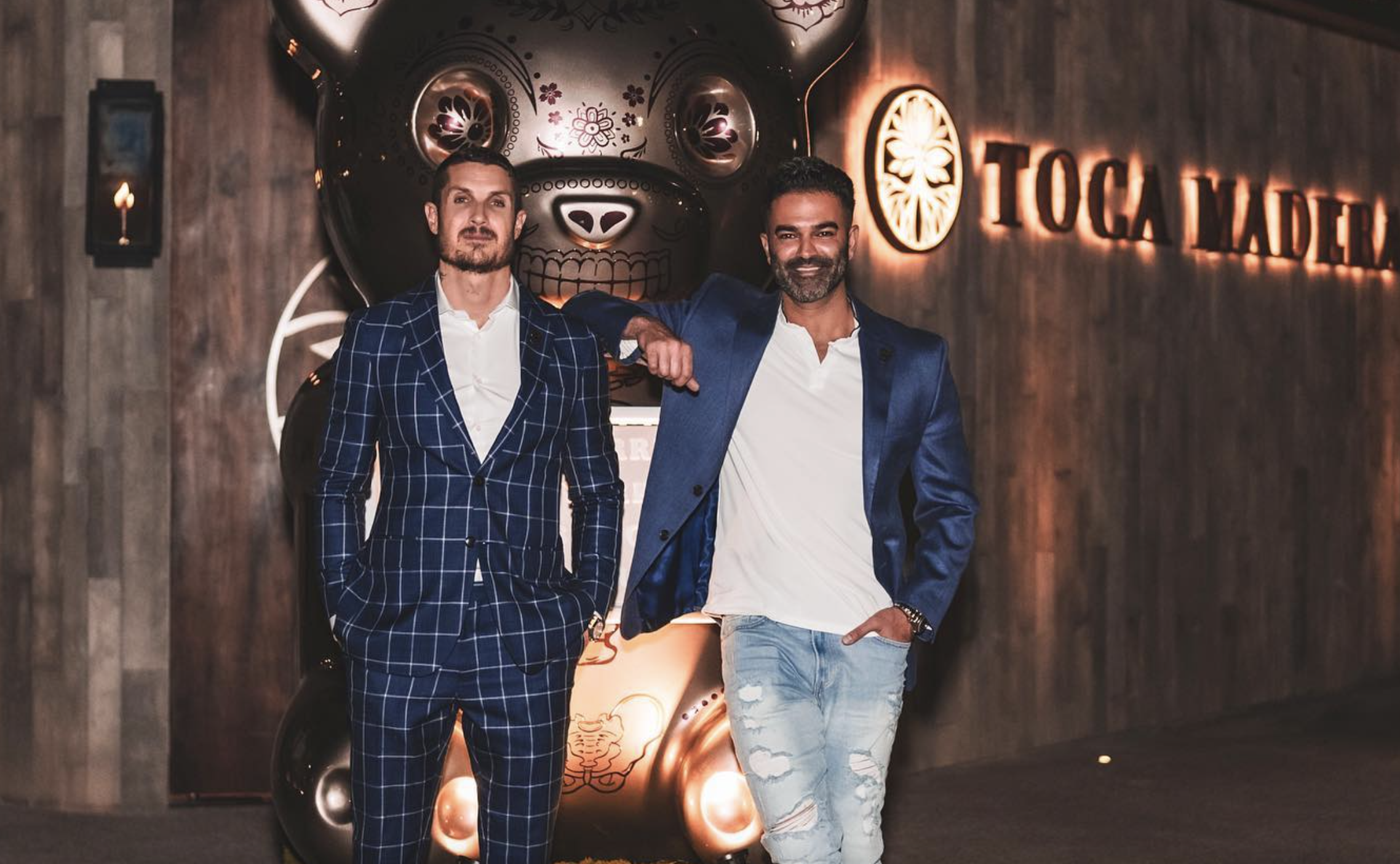
From left: Tosh Berman and Michael Tanha of Noble 33, the hospitality group behind Sparrow Italia in Wynwood and Toca Madera in Las Vegas and Scottsdale
Miami-based restaurant owners behind a Wynwood hotspot are facing a federal lawsuit alleging investor fraud and misuse of company funds, including the alleged use of investor money to fly in OnlyFans models to Miami restaurant openings.
A complaint filed January 30, 2026, in the U.S. District Court for the District of Arizona accuses Toca Madera Scottsdale LLC and related entities (Noble 33, a high-end hospitality group) of violating the federal Racketeer Influenced and Corrupt Organizations Act (RICO), along with claims of securities fraud and breach of fiduciary duty.
According to the filing, investors allege they poured more than $2 million into the restaurant group, only to see their money allegedly diverted to luxury cars, private flights, high-end real estate, and airfare for OnlyFans models to attend restaurant openings, while being provided with financial reports that plaintiffs claim were misleading or false.
The lawsuit names Noble 33 founders Tosh Berman and Michael Tanha, along with the group’s CFO, Mahdiar Karamooz, as defendants. The filing has drawn attention in South Florida because the Miami-based group owns Sparrow Italia, has just closed Casa Madera Miami, and has promoted plans to open a Toca Madera location in Brickell, though it remains unclear whether that project is still moving forward.
 The “Flashy Ways” cocktail from Sparrow Italia is one of the many inventive cocktails on the menu.
Lavish Spending Alleged in Investor Lawsuit
According to the complaint, investors allege that company funds were diverted for personal use rather than restaurant operations. The filing cites expenditures including engagement rings, luxury sports cars, private flights, a multimillion-dollar Miami home purchased through a third party, and airfare for OnlyFans models to attend restaurant openings. Plaintiffs also allege they were provided with misleading or false financial reports that obscured how investor money was being spent.
Court documents reviewed by Complex and the New York Post allege that defendants Karamooz, Berman, and Tanha diverted cash from investor-backed entities associated with Casa Madera and related restaurants in Arizona, Nevada, and Florida, leaving the businesses short of working capital. The complaint characterizes the conduct as a coordinated scheme to defraud investors while funding what plaintiffs describe as an extravagant personal lifestyle.
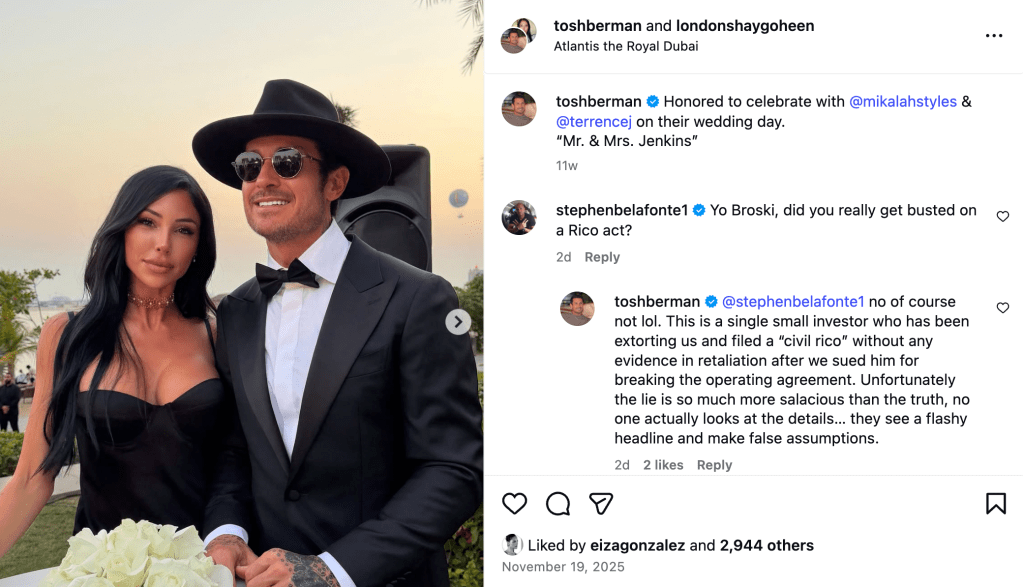 Comments beneath a photo of Tosh Berman posted on his personal Instagram account appear to show Berman denying the allegations
Screenshot via Instagram/@toshberman
Super Bowl Money, Luxury Homes, and Travel Cited
The lawsuit alleges that Berman and Tanha used investor funds to purchase a $5 million Miami home, an Aspen-area ranch, and luxury vehicles, including a white Ferrari and a Maybach SUV, and to fund extensive international travel to Europe, Australia, and Dubai. Karamooz is accused of falsifying financial records to conceal the alleged spending after becoming aware of it.
Additional claims include the alleged retention of approximately $3 million from inKind, a company that pays restaurants to promote discounted dining offers, instead of using the money to cover losses tied to those promotions. The complaint also alleges that revenue from private buyouts of Toca Madera Las Vegas during Super Bowls LVII and LVIII was misrepresented to investors, including a 2023 event in which plaintiffs claim $1.3 million was generated, but only $600,000 was disclosed.
Owners Push Back
According to the filing, disputes escalated after investors sought detailed financial records in mid-2024 and reported receiving incomplete disclosures. The conflict ultimately led to the lawsuit filed last week.
An attorney for the defendants denied the allegations. “These are ridiculous claims, asserted by a single small investor,” said Brian Timmons of Quinn Emanuel, who represents Berman, Tanha, and Karamooz, in a statement shared with Complex. He characterized the suit as retaliatory and said the claims are meritless and will be addressed through the legal process.
The Case Remains Ongoing
Court records show the case remains in its earliest procedural phase.
RICO claims are rare in the restaurant and hospitality industry and are more commonly associated with organized crime or large-scale fraud. Legal experts caution that the presence of a RICO claim does not mean the allegations will ultimately succeed.
“A RICO filing is an allegation, not a finding,” says Caleb Mason, a Los Angeles-based defense attorney at Werksman Jackson & Quinn, who is not involved in the case. “It reflects that a plaintiff has met a very low legal threshold to move forward, not that wrongdoing has been proven.”
“Anyone can bring a civil RICO claim in federal court; they need to prove it, but it’s when the government brings criminal RICO charges that people are likely going to jail,” civil defense attorney Russell M. Pfeifer tells New Times, a partner at Wilson Elser in Miami who is also not involved in the case.
Mason noted that RICO is sometimes used aggressively at the outset of complex disputes because it allows plaintiffs to group multiple alleged acts together. “But courts are often skeptical of trying to transform an entire lawful enterprise into a criminal organization,” Mason, who previously served as a federal prosecutor, added.
Why Noble 33 is a Big Deal in Miami
The lawsuit arrives amid renewed scrutiny of the group’s recent track record in Miami.
Casa Madera Miami, a sister concept to Toca Madera, opened during Art Basel in December 2024, one of the city’s most high-profile and costly launch windows. The restaurant featured an expansive, luxury dining room build-out that industry sources estimated cost millions of dollars. However, the restaurant closed by July 2025, less than a year after opening, without a public explanation for the abrupt shutdown.
While no allegations in the lawsuit specifically reference Casa Madera Miami, the swift closure has raised questions locally, given the scale of the investment. By contrast, the group’s Sparrow Italia location in Wynwood has remained open and has been widely regarded as a commercial success for its Italian fare and entertainment.
While the Miami Toca Madera location has yet to open and is not accused in the lawsuit, the case places renewed scrutiny on the group behind the brand as it continues to promote future expansion. Plaintiffs are seeking a jury trial, trebled damages under RICO, punitive damages, attorney’s fees, and a constructive trust over assets tied to the alleged conduct.
The case is expected to face early legal challenges in the coming months. New Times will continue to follow its developments.