
Despite an unflattering audit that had exposed questionable spending, Visit Orlando won a renewed contract Tuesday from Orange County that likely ensures the tourism-promotion agency will continue receiving big piles of public money to spend on luring visitors.
The board voted 5-2 to accept a document that underwent extensive late changes and finally was sent by email at 11:13 p.m. Monday, after being signed earlier in the evening.
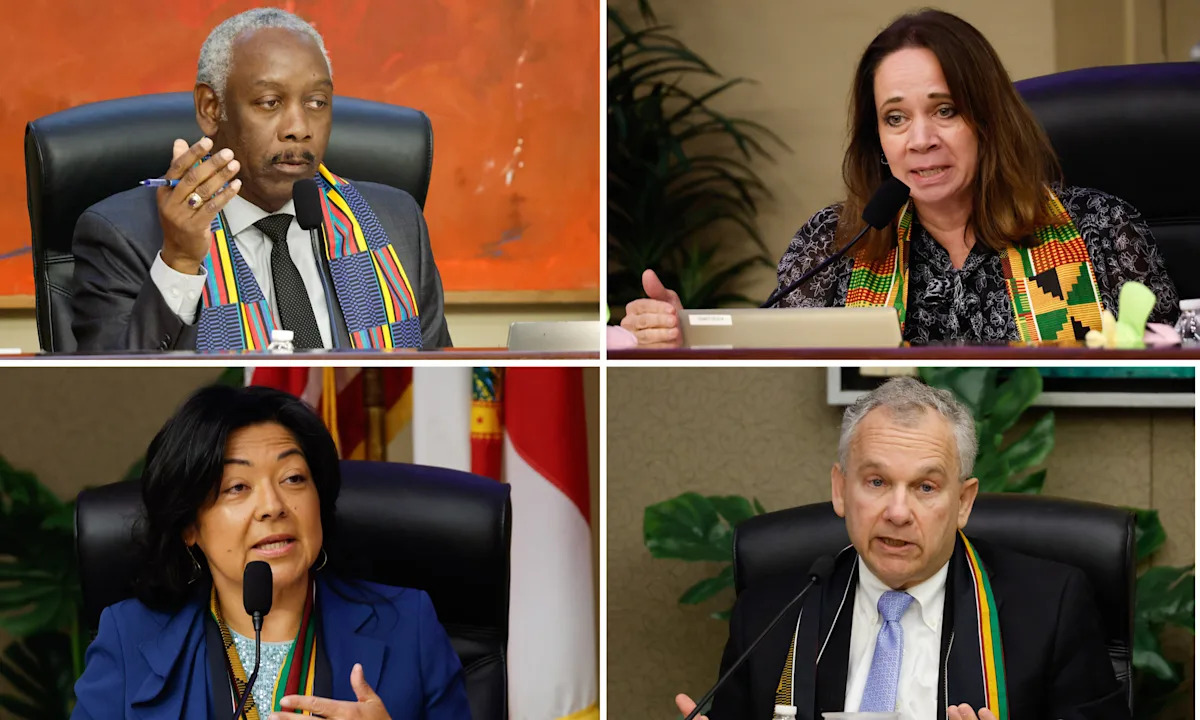
Commissioners Mayra Uribe and Kelly Martinez Semrad, the two “no” votes, grumbled about the late-hour delivery of the final draft, arguing they hadn’t had sufficient time to fully study terms imposing new restrictions on an agency that received more than $100 million in tourist-tax dollars in each of the last two years. The contract was first signed in 2019.
Frustrated, both said they had repeatedly sought earlier details of the changes.
But Comptroller Phil Diamond told the board the amended agreement addressed the findings of his auditing team, whose critical review of some Visit Orlando accounting and spending practices sparked the board’s discussion.
Under the new pact, Visit Orlando accepted new rules governing the expenditure of about $11 million it had previously marked as private funds to spend as its leaders wished.
Revenues from Orange County’s Tourist Development Tax, or TDT, are more tightly restricted by state law than are private funds, which are paid or donated to Visit Orlando by theme parks and the agency’s other members. Those private funds are just a small portion of Visit Orlando’s total kitty.
“Eleven million dollars is a lot of money,” Diamond said when Orange County Mayor Jerry Demings asked if he was satisfied the agreement will provide the accountability and transparency his auditors had recommended. “I think the taxpayers have every right not just to want but to expect that they have the ability to look at those funds and to see how they’re spent. I also think that the agreement addresses the audit findings we had.”
Under the contract, Visit Orlando will still receive 30 cents of every TDT dollar the county collects.
The new pact also expressly prohibits Visit Orlando or its representatives from lobbying without the county commission’s consent.
Casandra Matej, president and CEO of Visit Orlando, said the agency approached contract talks with “a spirit of collaboration.”
“We have now clarified our agreement and are happy to be aligned with the county and comptroller and are ready to get back to business,” she said after the vote. “Our team at Visit Orlando has one big thing in common – we love this community and are immensely proud of the work we do to drive visitation to what is number one most visited destination in this country.”
During the Tuesday meeting, a slew of supporters lauded Visit Orlando’s work, crediting the agency with helping to bring 75.3 million visitors to Central Florida in 2024, a figure that local officials say makes the region the nation’s top tourism destination. The 6% TDT surcharge on hotel rooms and other short-term lodging raised $389.9 million in calendar year 2025, the most ever for the tax which was first levied in 1987.
The backers included a half dozen people who serve on Visit Orlando boards and others who work in the tourism industry.
“Visit Orlando’s market investment is not merely promotional,” Maria Triscari, CEO of the international Drive Resort Area Chamber of Commerce, told commissioners during a public comment period. “It’s foundational to the prosperity of Central Florida as a result of deliberate, data-driven and globally focused marketing strategy that has positioned our region as a premiere destination.”
Uribe also complimented Visit Orlando’s work, saying the quality of the agency’s performance was never in doubt.
“What we want to make sure is we’re transparent with the tax dollars,” Uribe said. “Our only question here, and our job is, where’s the money? How’s it being spent? And let’s make sure it’s being spent correctly or classified correctly. That’s all I’m looking.”