
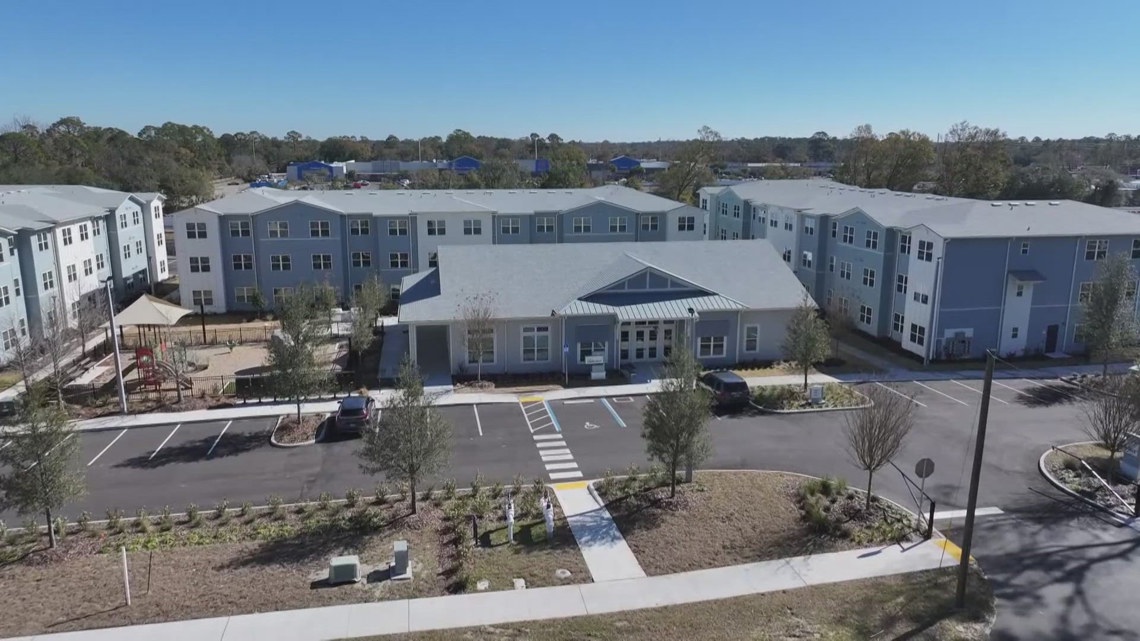
A new Rent Café study shows the First Coast added nearly 2,000 affordable housing units between 2020 and 2024, but experts say more are needed.
JACKSONVILLE, Fla. — A new study from Rent Café shows affordable housing construction has increased in the Jacksonville metro area over the past several years, but experts say many renters are still paying more than they can afford.
According to the study, the Jacksonville metro completed 1,832 fully affordable apartment units between 2020 and 2024. That accounts for about 7 percent of all new apartments built during that period.
In 2024 alone, 534 affordable housing units came onto the market, the highest single-year total for the metro in the past decade.
“We’re starting to see the, the urgency of affordability because that’s really where the demand is,” said Doug Ressler, manager of business intelligence with Yardi Matrix. They’re the company behind the Rent Café study.
Affordable housing is typically defined using guidelines from the U.S. Department of Housing and Urban Development.
“HUD goes out and sets an area median income,” Ressler said. “They set it for families of, 2, 3, 4, that type of thing, and then they say that in order to be affordable, you should pay no more than 30% of your area median income for housing.”
For Jacksonville renters, that median income is calculated using earnings from Duval, St. Johns, Nassau and Clay counties. That pushes the area median income to $102,500, making it harder for some local workers to qualify for income-restricted housing.
“So you have this middle income, right, which are your police officers, your teachers, they are very challenged to find rents that won’t allow them to be cost burdened because they make too much money, right, to live in these 500 new affordable units because they’re income based,” said Carrie Davis, president and CEO of Wealth Watchers. “Now they have to go into the open market, and while there’s a significant number of new apartment communities being built across the city, they’re definitely not affordable.”
Wealth Watchers operates C.B. Dailey Villas, a 24-unit affordable housing complex on Jacksonville’s Eastside.
“Some of our units are $800 a month, so that means the individual has to gross at least $2400 a month in order to live here,” Davis said.
She said renters looking for lower-cost options are more likely to find them in Jacksonville’s urban core and parts of Arlington, but affordability remains a challenge across the city.
“Right now the median price of a one-bedroom apartment is $1300,” Davis said. “So if we go by that 30% rule, right, that means that individual has to gross almost $48,000 to not have a cost burden when it comes to housing.”
Experts say that while the growth in affordable housing is a step in the right direction, the number of cost-burdened households in Jacksonville shows the need for additional options, particularly for middle-income workers who do not qualify for income-restricted units but still struggle to keep up with rising rents.
The City of Jacksonville launched a dashboard in 2025 to track construction and other affordable housing metrics across Duval County.