
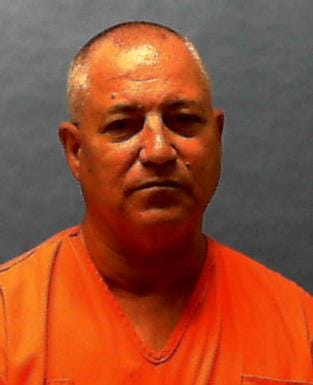
Florida has executed a death row inmate who became a murderer at 16 and killed two others after he was released from prison nearly two decades early.
Ronald Heath, 64, was executed by lethal injection on Tuesday, Feb. 10, for the murder of a 30-year-old traveling salesman named Michael Sheridan in 1989. He was also convicted of killing an 18-year-old man in 1977, and prosecutors say he fatally shot a 26-year-old man during a robbery just days after Sheridan’s murder.
“I’m sorry. That’s all I can say,” were Heath’s last words, reported a news media witness with the Associated Press.
Heath was pronounced dead at 6:12 p.m. ET.
Heath’s execution was the second in the U.S. this year and the first in Florida, which put 19 inmates to death in 2025, a state record far surpassing any other state that year. The states that executed the second largest number of inmates in 2025 were Texas, Alabama, and South Carolina, each with five.
Here’s what to know.
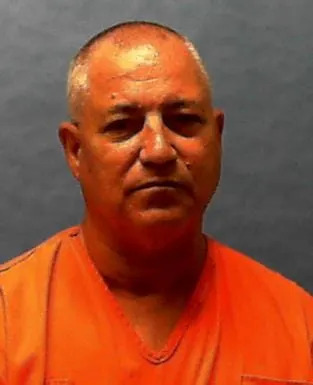
Ronald Heath is pictured.
Ronald Heath’s crimes
Ronald Heath’s first killing came when he was just 16 years old in Jacksonville. He confessed to police that on Dec. 17, 1977, he repeatedly stabbed and bludgeoned 18-year-old Michael Green for making unwanted sexual advances − a claim the older teen’s family refuted.
The violence of the crime coming from someone so young shocked the courtroom during trial, with prosecutor Mike Obringer telling jurors that it was “more a mutilation than a murder,” according to an archived news story in the Jacksonville Journal.
Heath pleaded guilty to second-degree murder and was sentenced to 30 years in prison. But he was released nearly 20 years early, setting the stage for a violent crime spree.
On May 24, 1989, Heath and his younger brother Kenneth were hanging out at a bar in Gainesville, Florida, when they met a traveling salesman from Atlanta named Michael Sheridan. The brothers befriended Sheridan and suggested they leave the bar to smoke some marijuana, according to court records.
The brothers then drove Sheridan to a remote location, where Ronald ordered Kenneth to shoot Sheridan. Bleeding from a chest wound and still alive, Ronald Heath then kicked Sheridan, stabbed him in the neck and then tried to slit his throat, though the knife was too dull, court records say. That’s when he ordered his younger brother to finish it. Kenneth shot Sheridan twice in the head, court records say.
The brothers dumped Sheridan’s body, which wasn’t found for six days, and went on a shopping spree at a local mall.
Two days after Sheridan’s murder, the brothers met 26-year-old Anthony Hammett at a bar in nearby Arlington. They drove him to another location, shot him in the back as he ran away, and dumped his body, according to archived news reports.
Hammett was killed just two days before his wedding day and was the father of a 15-month-old son, his father told reporters.
The Heath brothers were tried first for Sheridan’s murder. Kenneth agreed to testify against Ronald and, in exchange, got life in prison. Even though Kenneth was the one to shoot Sheridan, both the jury and the judge accepted the prosecution’s argument that Ronald was the domineering brother and had planned and directed the killing.
“In matters of murder and robbery, Ronald shows no weaknesses,” Florida Judge Robert Cates said when affirming a jury’s 10-2 decision to sentence Heath to death.
Though Ronald Heath was charged with murdering Hammett, prosecutors ended up dropping the prosecution when Kenneth changed his mind and decided not to testify against his brother again, saying his life had been threatened. Hammett’s loved ones were angry with prosecutors for dropping the case, with his father saying it felt like no one cared about his son’s murder.
He told the Florida Times-Union, part of the USA TODAY Network: “My son didn’t get a chance, so at least let them suffer.”
Michael Sheridan’s family witnesses execution
Among the witnesses to Heath’s execution were Sheridan’s brother and sister, Thomas and Nancy Sheridan of upstate New York, where the siblings grew up.
They told WSYR-TV that they fought for the execution to be carried out for decades, including flooding the Florida governor’s office with calls and letters. One thing Thomas Sheridan always emphasized in his communications, he told the station, is the number of Heath’s victims.
“Heath was a serial killer and that was the thing that I pushed for, very hard with the governor’s office,” he said.
He and his sister recalled how their brother was well-liked and trusting. “People gravitated to him and he took people at their word, at their face value, and I think that was leveraged against him that night,” Thomas Sheridan said.
The siblings were looking forward to the end of their fight for justice, with Thomas Sheridan saying, “His ultimate judgment is before God, and I mean this sincerely, I’m just glad I had a hand in it.”
When is the next execution?
The next execution in the U.S. will be this week. Oklahoma is executing Kendrick Simpson by lethal injection on Thursday, Feb. 12, for the murder of two men in a drive-by shooting in Oklahoma City in 2006.
Amanda Lee Myers is a senior crime reporter who covers cold case investigations and the death penalty for USA TODAY. Follow her on X at @amandaleeusat.
This article originally appeared on USA TODAY: Florida executes Ronald Heath in traveling salesman’s murder