
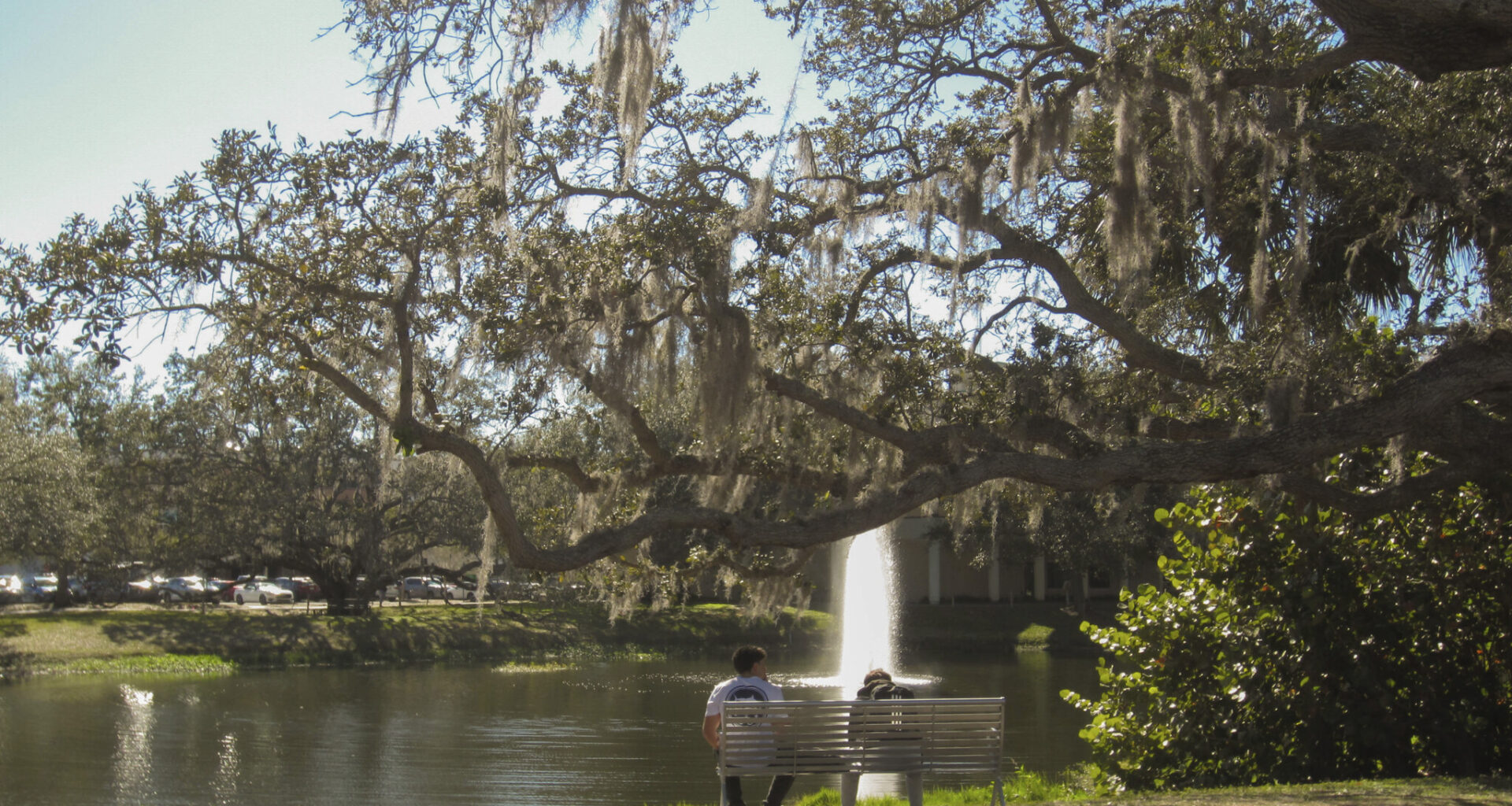
 In a digital age keyed in on looking back, the best thing a college student can do is to be present. ORACLE PHOTO / CAROLINA MOLERO ROCA
Every day, I scroll away five and a half hours of my life on my phone – between TikTok, Instagram and other social media apps.
Multiple days of my year vanish in what feels like an instant, staring into a box of light that gives me bits of gratification in return.
In recent weeks, my hours have been spent looking back on decade-old memories from when I was in fifth grade in 2016.
As 2026 began, a trend focused on looking back a decade caught on, with users posting photos from that year declaring “2026 is the new 2016.”
The trend pushed me to acknowledge the need for presence in my own daily life, something I didn’t feel I struggled with as a kid.
Like many people my age, I find my memories of 2016 get better every year. The time spent with a whirring fidget spinner or opening up Pokémon Go seems ancient.
Although my head is filled with so many good memories of events dug up from an internet trend, I couldn’t help but feel I should be upset that 2016 is gone.
But I couldn’t place my finger on why.
So I spent time thinking back to my routines as a kid — everyday rituals like walking from class to class or tossing a football with a friend.
Then what I missed dawned upon me — the feelings I associate with my childhood were there because I took the time to be present with them.
Although it can’t be exactly the same, I can recreate many of those feelings at USF simply by focusing on being present in my life during college.
Related: OPINION: Why USF should require philosophy for all students
I found that when I looked back on my childhood, I spent moments interacting with the world around me rather than observing it passively.
I spent the time it took walking to class actually digesting the material from my previous class, instead of drowning out my thoughts with music.
And then, like many my age, my phone took over.
By high school, the once bustling halls seemed quieter. And so do those memories, because I spent those moments ignoring the world around me instead of interacting with it.
Many spent their time listening to music or on their phones instead of interacting in the real world — a routine I had maintained through college without as much as a second thought until recently.
After taking a step back, I realized my phone took my mind out of moments I could have embraced — all because I felt the need to listen to songs I could have heard any time.
The inclination to drown out my thoughts pulled me away from experiences with friends I could only be a part of once, if only I had been more present.
So I regulate my phone usage now, making sure to spend time after a long day walking across campus with nothing but my thoughts and the pathway ahead of me. It’s peaceful to reflect.
More than that, reflecting on my days means acknowledging the events that happened within them.
Related: OPINION: Our lives are too curated. It’s time to develop personal taste
One way I try to stay in the moment is by journaling.
Spending time writing down thoughts about mundane events forces me to be part of them, rather than spending time on my phone looking at experiences I wish I had had.
Journaling forces me off my phone, placing me face-to-face with the same pen and notebook every night, confronting my own day in a way I usually don’t have to.
It also provides a glimpse into my mind whenever I want it, making memories more vivid.
Being present in the day looks different for most people and is an ongoing battle, but in a world where the day-to-day passes quickly, it’s important to participate in life as it happens.
As a kid, my father always told me to be aware of time — lamenting that it passes faster as you get older. I never really understood him, figuring I was the exception.
But maybe I had a respect for the present 10-year-olds don’t typically have. I understand now.