
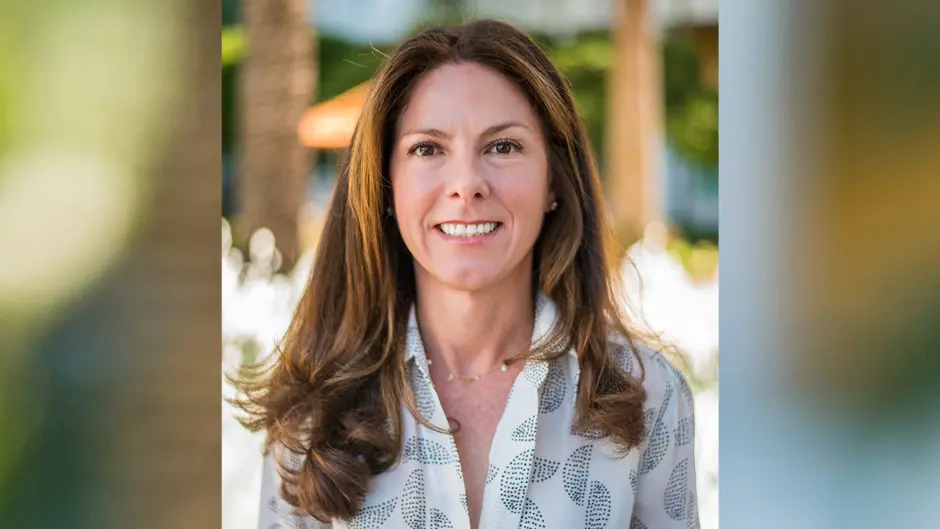
The University of Miami Institute for Individual and Family Counseling (IIFC), which is part of the School of Education and Human Development, has a two-pronged mission.
“We serve as a training hub for our counseling students pursuing master’s and Ph.D.s,” said Maite P. Mena, an experienced licensed clinical psychologist who is the IIFC director. “We tie that to being able to provide affordable, accessible, high-quality counseling in an inclusive and respectful environment to our diverse local community.”
The institute offers counseling to families and individuals, in English or Spanish, on a sliding scale model according to their income. The maximum someone would pay is $50 per session, said Mena.
The clients range in age from 6 to 75 years old. Mena said they come to receive treatment for a wide range of mental health issues, including depression, anxiety, relationship issues, and navigating life transitions such as grief, career changes, and developmental growth.
Most of the students interning at IIFC are pursuing their master’s in mental health counseling. It is obligatory that they complete 700 hours a year, 280 of which are spent working directly with clients.
Gabriela Sanchez is studying to get her master’s in mental health counseling and hopes to work with children once she graduates.

Gabriela Sanchez
Sanchez said she was attracted to the program because it is community-based and provides counseling to a wide swath of the population. Many are people who normally would not be drawn to therapy, she said.
“This program is so special because of the population that we reach,” she said. “We have clients that are 6 years old, older clients, Hispanics, college students, and many people at different stages in their lives.”
She said the interaction with the clients has made her more conscious of her own capabilities. She has also learned what kind of intervention or treatment will work best with an individual.
She uses play therapy with young children to encourage them to talk while doing a fun activity.
“I also try to introduce humor in the sessions to make them open up,” said Sanchez. “I try to be myself.”
Therapy sessions are recorded and the students then review the recording with their counselors to analyze their performance as well as plan what type of treatment or intervention should be implemented. The recordings are erased at the end of the semester to make sure that there are no privacy issues.
“We are bringing everything they learn in the classroom to life,” said Mena.
For Morgan Reilly, another second-year student pursuing a master’s in mental health counseling, working at IIFC has been a way to learn how to work with youth, a practice she hopes to pursue after she graduates.
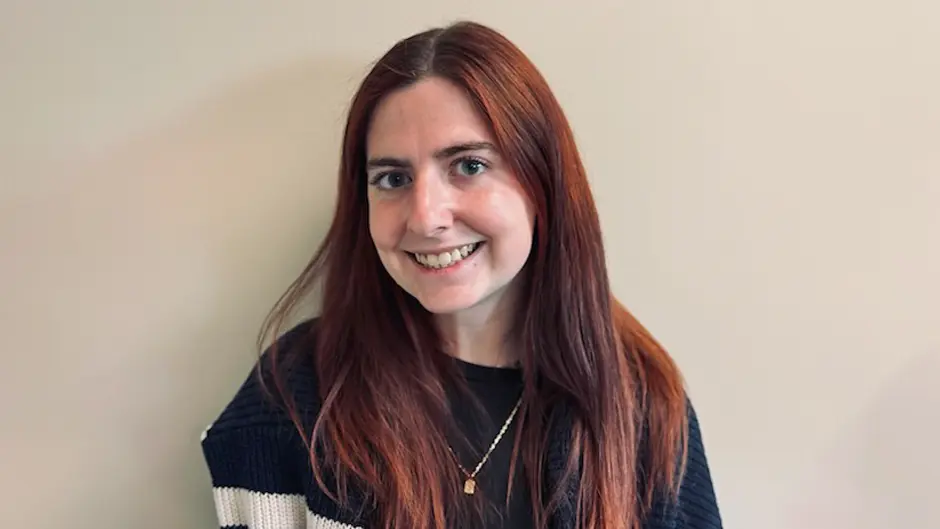
Morgan Reilly
Many of her adolescent clients exhibit bouts of anxiety, a growing trend among adolescents in the United States. She has learned, with the help of her supervisors, to implement cognitive behavioral therapy exercises, in which the negative thoughts and emotions are countered with different ways of looking at the problem. She also helps them with exercises in mindfulness, including guided breathing exercises to quelch the anxiety.
“I ask them to be more conscious of when they are breathing and how they are breathing, so they can ground themselves,” she said.
The institute was closed for two years after COVID-19 and reopened last August, said Mena. They are always open to accepting new clients.
Individuals can reach the IIFC by calling the institute directly at (305) 284-6949 or via the website, where they can complete an online form.