
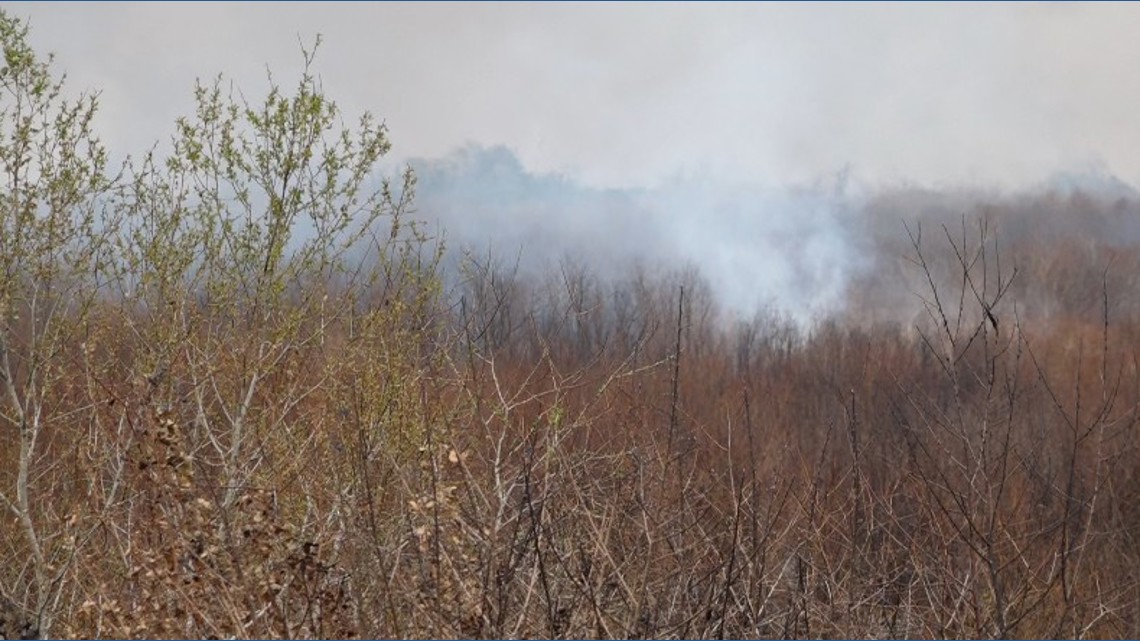
Officials point to worsening drought conditions and dry swamps that would normally hold water this time of year.
LAKELAND, Fla. — Fire officials across the Tampa Bay area are raising alarms as wildfire activity increases far earlier than normal, fueled by dry conditions, lingering storm debris, and a lack of meaningful rainfall.
The Florida Forest Service says conditions are beginning to resemble 2011 — the state’s last major fire season — and the concern is growing as crews respond to more fires, and larger ones, by the day.
“We are seeing a lot of fires earlier than we are used to,” said Todd Chlanda with the Florida Forest Service. “We are not seeing the precipitation that we need to help with these fires.”
Over the past week alone, firefighters have seen a sharp rise in call volume. Locally, crews responded to two fires Thursday, two more Friday, six on Sunday, and six again Monday. Officials say not only are fires becoming more frequent — they’re also growing faster.
“Just because the conditions are so conducive to burning,” Chlanda said.
Officials point to worsening drought conditions and dry swamps that would normally hold water this time of year. The region also missed out on tropical moisture last year, leaving vegetation stressed and vulnerable.
“So far, we’ve been fortunate,” Chlanda said. “We’re not seeing a lot of strong winds.” But he warns that may soon change.
“We are at the pivotal time in the weather where we are going to start seeing some of those increasing wind changes,” he said. “And we’re having to prepare a lot earlier this year than we have before.”
Another major concern is fire fuel — debris left behind from hurricanes over the past several years that never fully decomposed.
“Just because we didn’t have a hurricane last year doesn’t mean that we don’t have debris on the ground,” Chlanda said. “The vegetation is still there.”
Fire officials say even what looks like a perfect weather day can be dangerous.
“A nice sunny day, light wind, 70 or 80 degrees — people think that’s a great day,” Chlanda said. “And it is, but usually those conditions with lower humidity are not a great day for us. Because we’re running fires.”
Forestry crews measure how quickly debris dries out — and right now, they say conditions are extreme. Pine needles, considered “one-hour fuels,” can ignite just an hour after rain. Larger branches, known as “thousand-hour fuels,” are now dry enough to burn — a sign officials say underscores how severe conditions have become.
With the risk rising, the state has reduced burn authorizations and is urging residents to take prevention seriously.
“The best thing people can do is clean up around your home,” Chlanda said. “Raking leaves and pine needles, removing them from around structures.”
Officials also urge caution with outdoor activities, vehicles parked in tall grass, and equipment that could spark a fire.
“Pay attention to the weather,” Chlanda said. “Don’t go out and burn. There’s a better time to burn — and right now is not that time.”
While some rain is in the forecast, fire officials say it won’t be enough to break the drought.
“It’s going to take widespread, substantial, long-term precipitation,” Chlanda said.
Unless that happens, the forecast is for wildfire activity across Florida to remain above average through May.
For more wildfire safety tips, visit Be Wild Fire Ready.