
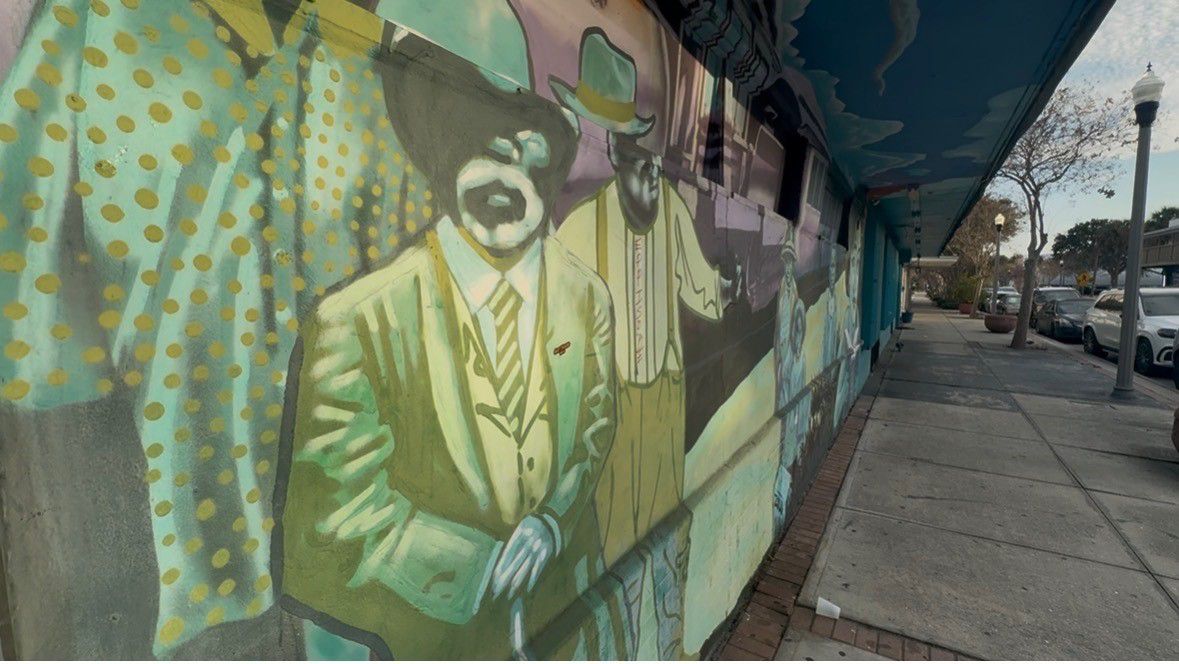
ST. PETERSBURG, Fla. — Before the end of segregation, there were two St. Petes: a white one and a Black one.
What You Need To Know
Segregation and Jim Crow laws restricted where the Black community could go in St. Pete
The Black community created a mostly self-contained community around 22nd Street South
It offered houses, businesses, schools, healthcare and entertainment
Groups now strive to preserve the history of that area
Laws restricted Black residents from going to certain portions of the city except for work, limiting them to designated areas and neighborhoods.
The most famous of those neighborhoods is the one centered around 22nd Street South, often called “The Deuces.”
“It was more than a street. It was an ecosystem. It was our ecosystem,” said Latorra Bowles, executive director of Deuces Live. “It was the only place African Americans thrived.”
It was also a self-contained area that tried to cover all facets of life.
Housing
The neighborhood offered housing options for African Americans, though early housing was built without formal planning. In 1941, the Jordan Park Housing Complex opened. It incorporated 446 apartments, the state’s largest public housing endeavor to that time.
“He knew African Americans needed decent and affordable housing,” said Basha Jordan Jr., whose grandfather, Elder Jordan Sr., donated the land for the project. The housing complex is named in Jordan’s honor.
Businesses
At its peak, more than 100 businesses lined 22nd Street South and some of the streets that ran parallel and perpendicular.
“Everything we need is in the corridor,” Bowles said. “You have your small businesses, you have your restaurants, you have your hotels, you have your clubs.”
Churches
Numerous churches lined the streets in the neighborhood, especially along 9th Avenue South, which intersected with 22nd Street South. The city notes that in 1939, 19 of the city’s 123 churches were located in the 22nd Street neighborhood.
Schools
Jordan Park Elementary opened in 1925, a segregated school located on 9th Avenue South. Gibbs High School, the first all-Black high school in St. Pete, opened in 1927.
Healthcare
Mercy Hospital was established in 1923, one of the few healthcare institutions that accepted Black patients during the segregation era. Jim Crow laws precluded some hospitals from treating Black people, while prejudice stood in the way as well.
Entertainment
The Royal Theater opened in 1948, one of just two theaters that African Americans could attend in St. Pete.
Down the street, the Manhattan Casino Hall had launched in 1925. It was the focal point of entertainment, socializing, and music in the neighborhood. It was even a well-known stop on the Chitlin’ Circuit, a network of performance venues safe for African Americans to play during the segregation era.
“This was a place where African Americans could come, feel at peace, feel human, in the midst of segregation and racism that was running rampant in the city,” Jordan said, sitting underneath a statue of his grandfather that stands on 22nd Street South.
Deuces Live is attempting to “preserve, promote and revitalize” this corridor, preserving its history while promoting a rich future.
“It’s extremely important to preserve the history of this area because if we don’t tell the story, it will be rewritten or untold,” Bowles said. “If we don’t tell our story, no one will.”