
Charlotte County’s interests are at odds with several proposed federal policy changes, from disaster funding formulas to offshore drilling and veterans health care access.
On Feb. 10, county commissioners received an update from Washington, D.C., lobbyist Greg Burns of Thorn Run Partners, who outlined both positive developments and potential challenges ahead.
Burns began with welcome news: The Federal Emergency Management Agency released $37 million in reimbursements to Charlotte County for damages sustained during Hurricane Ian. The county also is awaiting more than $60 million in hazard mitigation grant funds for 23 projects aimed at strengthening infrastructure and reducing future storm risk.


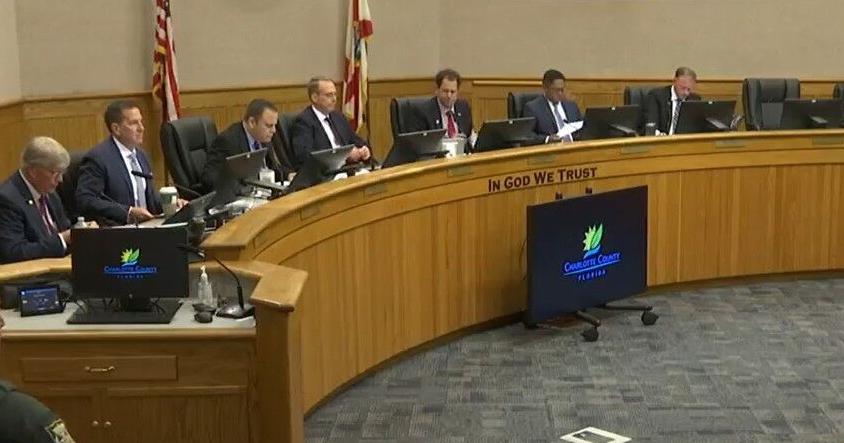
Greg Burns of Thorn Run Partners provides a federal policy update to Charlotte County commissioners. Burns detailed $37 million in Federal Emergency Management Agency reimbursements for Hurricane Ian and warned of potential changes to disaster funding formulas.
Charlotte County government
However, Burns cautioned that proposed changes in Washington could significantly affect future disaster reimbursements. Currently, FEMA assesses damage thresholds using a multiplier of $1.89 per capita in a given state. Over the years, including during the Obama administration, some federal officials have proposed raising that multiplier to $7.56.
If adopted, the higher threshold would make it more difficult for states and local governments to qualify for federal disaster assistance, Burns said, potentially reducing reimbursement levels for communities, such as Charlotte County, after major storms.
The issue has resurfaced in recent discussions in Washington, with some advocating for increasing the multiplier to $7.56.
Burns also addressed reports that White House officials are considering changes to FEMA’s structure or even dismantling the agency. He told commissioners that there is bipartisan support in Congress for strengthening FEMA rather than weakening it.
Beyond disaster policy, Burns said federal funding for recreational facilities and beach renourishment projects is facing potential cuts. He said Sens. Ashley Moody and Rick Scott are pushing back against those reductions.
Offshore drilling proposals are another flashpoint. Burns said state legislators are unified in opposing federal efforts to expand drilling in the eastern Gulf and off Florida’s coast.
Coastal county officials, including those in Charlotte County, have argued that offshore drilling would negatively affect tourism and raise concerns among residents and those in the fishing and marine industries. Burns said a proposed five-year federal plan would offer new drilling leases.
He told commissioners that Moody has introduced legislation to maintain the current moratorium on drilling in the eastern Gulf. State lawmakers have pointed to the 2010 explosion of BP’s Deepwater Horizon oil drilling platform, which released an estimated 134 million gallons of oil into the Gulf, as an example of the environmental risks associated with offshore drilling.
The discussion also turned to veterans health care services. Burns said the state has agreed to support transportation funding to help Charlotte County veterans travel to a new veterans clinic in North Port.
Some commissioners, however, voiced frustration over the decision by the Department of Veterans Affairs to build the new clinic outside Charlotte County.
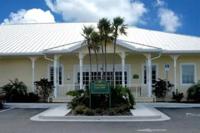
The Port Charlotte Outpatient Clinic serves veterans in Charlotte County. Commissioners are exploring options to keep the clinic open amid plans to shift services to a new facility in North Port.
Charlotte County government
Commissioner Bill Truex said he wants the county to maintain the Port Charlotte Outpatient Clinic and would like to explore keeping it open several days a week.
Commissioner Stephen R. Deutsch said the county was “completely bypassed” and that no state officials consulted with local leaders before the decision was made to move the clinic to southern Sarasota County.
Deutsch said there are about 40,000 veterans in Charlotte County and noted that a local landowner had offered property at no cost for the construction of a new or expanded VA clinic within the county.

Commissioner Stephen R. Deutsch speaks during the Feb. 10 Charlotte County Commission meeting. Deutsch said the county was “completely bypassed” in the decision to move veterans clinic services to North Port.
Charlotte County government
He said the Veterans Administration had previously discussed expanding the Port Charlotte clinic and that he had followed the project’s progress before learning that the decision had shifted to relocating services.
Deutsch said local officials and county representatives were “completely ignored.”
Commissioner Ken Doherty agreed that the issue should remain on the county’s legislative agenda. He said he supports efforts to keep the Port Charlotte clinic open, even if only on a limited schedule.
As federal policy debates continue in Washington, county leaders signaled they intend to remain engaged on disaster funding, offshore drilling and veterans services to protect local interests.