
Florida’s housing slowdown has turned into a full-blown fall in Punta Gorda, where the once-booming Gulf Coast enclave is now leading the state in plummeting home values.
New data from Realtor.com shows the median home price in Punta Gorda dropped 7.97% between January 2025 and January 2026 — erasing $26,624 in value in just 12 months. Across Florida, homeowners lost a median $10,157 over the same period, with nine metro areas posting five-figure declines.
In a town long prized for its brick-lined streets, canal-front homes and laid-back marina lifestyle, “High inventory and fewer buyers are what is depressing the market there,” Omer Reiner, a realtor and president of FL Cash Home Buyers, LLC told the Daily Mail in an interview.
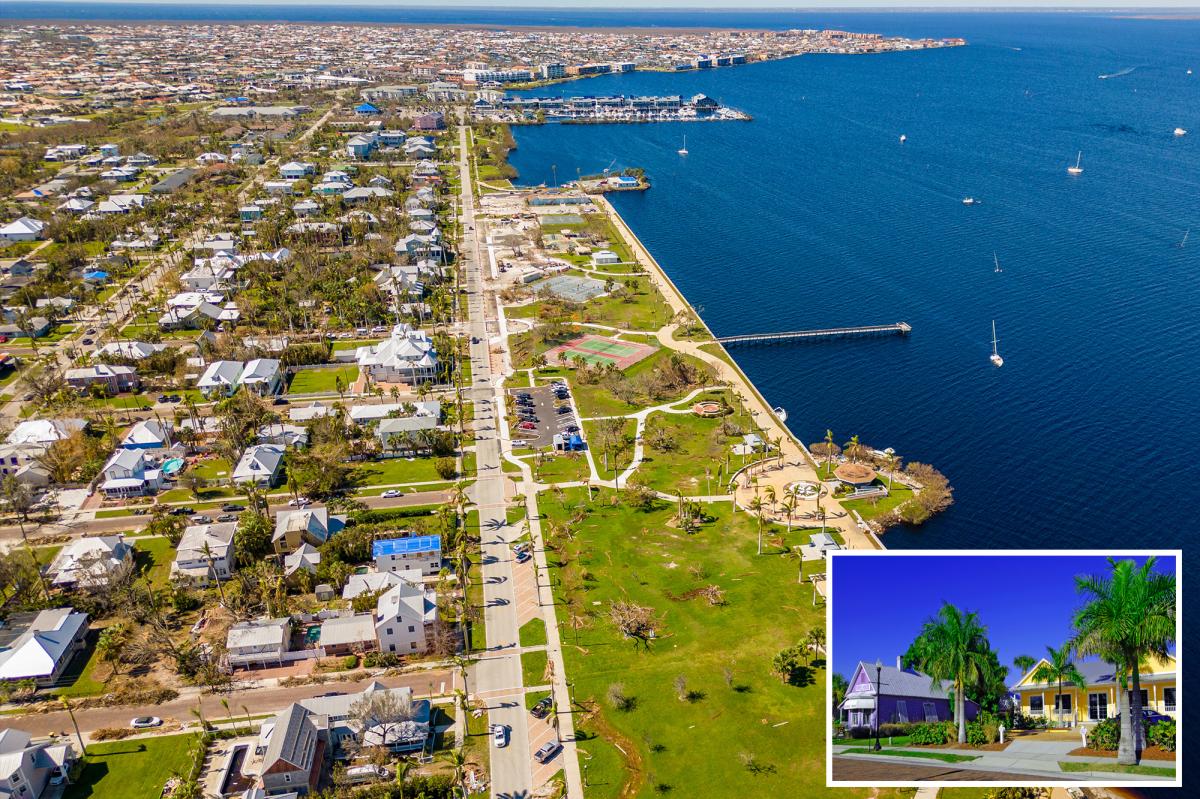
Punta Gorda has emerged as the epicenter of Florida’s housing downturn, with home values plunging nearly 8 percent over the past year and wiping out roughly $26,600 from the median property price between January 2025 and January 2026, according to Realtor.com data. Felix Mizioznikov – stock.adobe.com
Reiner noted that Punta Gorda sits “about halfway between Sarasota and Fort Myers,” adding that “the town is experiencing an influx of new residents. It is still a smallish town, with about 20,000 residents, known for a slower pace.”
But the population bump hasn’t translated into bidding wars.
“That said, the housing market is seeing a steady drop in listing prices and longer time on the market, starting in the last half of 2025. Even with population growth, homes just aren’t moving quickly, and that gives a smaller pool of buyers the advantage,” he said.
Insurance costs are compounding the pressure.
“With all of the weather disasters over the past several years in Florida, and the increased cost of construction materials, finding affordable home insurance is nearly impossible,” Reiner said. “It’s scaring off people who might have been casually looking in the area.”
Once a pandemic-era darling for retirees and bargain-hunting buyers priced out of Naples and Sarasota, the small waterfront city is now grappling with swelling inventory, stalled sales and widespread price cuts. Felix Mizioznikov – stock.adobe.com
The reversal has been swift. During the pandemic-era frenzy, sellers in Punta Gorda were walking away with profits averaging about 88% over what they originally paid. Now that figure has shrunk to roughly 58%, dramatically narrowing the cushion for homeowners — particularly those who bought closer to peak pricing.
Chen Zhao, a Redfin economist, said the market’s outsized appreciation made it especially vulnerable when demand cooled.
“As inventory increased and buyers pulled back mid-year, median prices fell more noticeably than in prior years,” Zhao told the outlet. “That created the appearance of lost equity, even though prices partially recovered by year’s end and remain well above pre-pandemic levels.”
More than 800 listings currently reflect reductions, including six-figure trims on luxury homes. Ulf – stock.adobe.com
On Realtor.com, more than 800 Punta Gorda listings currently show price reductions. Smaller condos may see trims of just a few thousand dollars, but luxury properties have faced cuts well into the six figures, including a five-bedroom estate reduced by $139,000 in an attempt to spark interest.
Derek Carlson, who oversees a brokerage network of more than 1,300 agents statewide, said Punta Gorda’s pandemic surge was fueled by its relative affordability compared to neighboring wealth hubs. The city is “surrounded by wealth,” he said, located between Naples, Marco Island and Sarasota, and became appealing because it was “budget-conscious” compared with its neighbors.
That dynamic, he explained, “ballooned the numbers,” attracting speculative buyers and developers. Now, “pandemic-era pricing is being flushed out,” with homes “getting back to the values that they should be,” after the area became “a little bit overpriced.”
Sellers who once pocketed profits of about 88 percent over their purchase price are now averaging closer to 58 percent, a sharp erosion in paper gains that trails only Ocala nationally. Dennis MacDonald – stock.adobe.com
Carlson described the current climate as a recalibration rather than a crash, driven by buyers who are “payment-focused,” with “less emotion than there was in the past.” The result: equity is thinning as “outrageous home values” and speculative bets unwind.
Punta Gorda is hardly alone. Cape Coral-Fort Myers, North Port-Bradenton-Sarasota, Naples-Marco Island and several other Florida metros have also posted notable price declines. Out of 29 Florida metros tracked, only four eked out modest gains — none exceeding $2,427.
Nationally, the imbalance between supply and demand is widening. In December, there were 47% more sellers than buyers across the US, the largest gap in a decade. Only five metro areas remained sellers’ markets, according to Redfin, with most of the strongest buyers’ markets clustered in the Sun Belt.
Realtors point to high insurance costs, overbuilding and cooling buyer demand as key pressures, with cash-heavy investors dominating a shrinking buyer pool. grenierb – stock.adobe.com
“The Sun Belt isn’t doomed, but it is going through a necessary reset,” Redfin chief economist Daryl Fairweather said. “These metros benefited enormously from pandemic-era migration and low rates, which encouraged rapid construction.” Now, she added, “inventory growth is outpacing buyer demand, tipping markets firmly in buyers’ favor.”
Joel Berner, senior economist at Realtor.com, said the broader weakness reflects an affordability crunch.
“High prices have kept buyers from being able to afford homes, and many have dropped out of the market, allowing listings to sit longer and prices to be cut,” Berner said.