
The arena continues to serve as a multi-purpose spectacle hub.
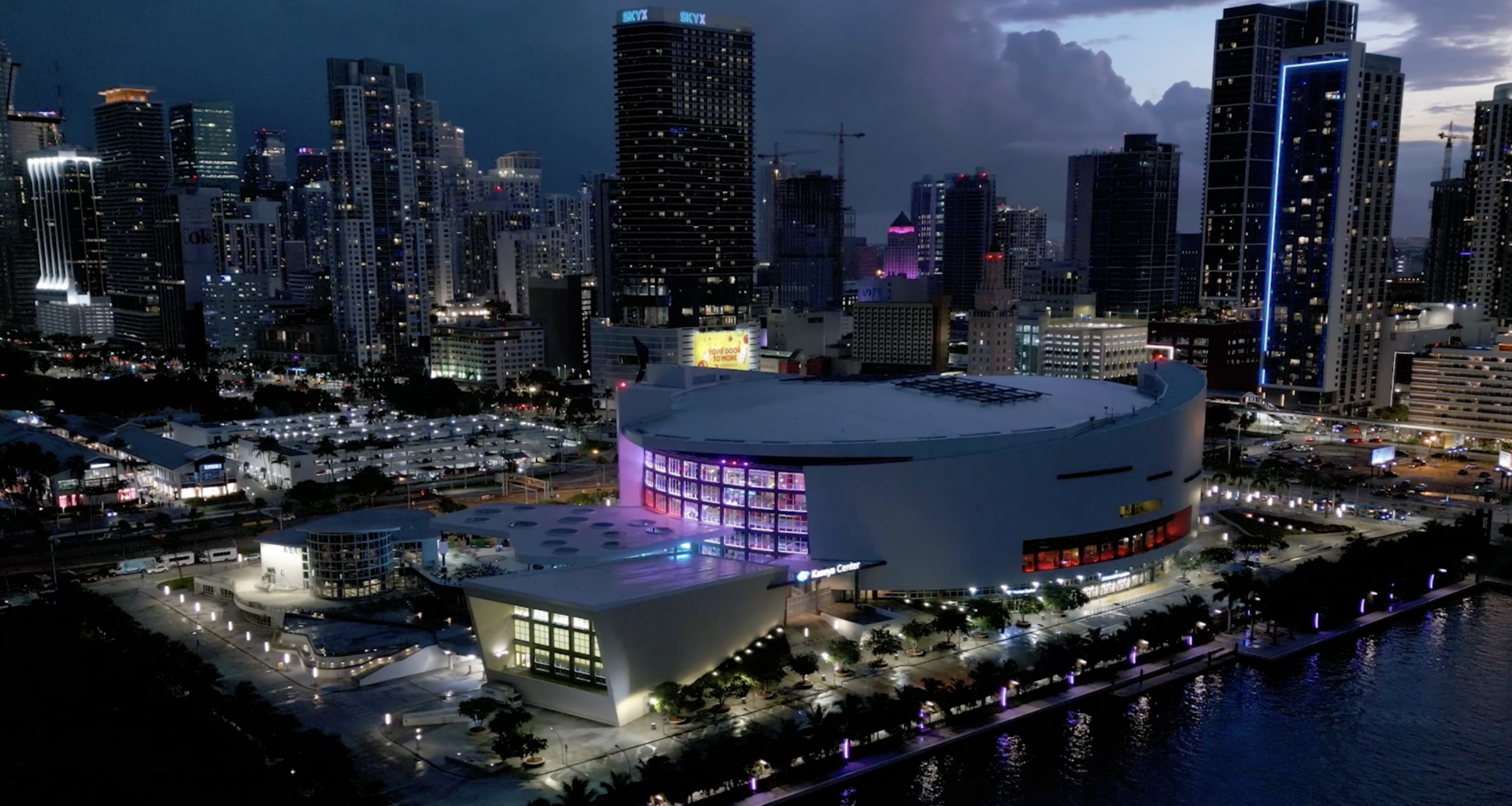
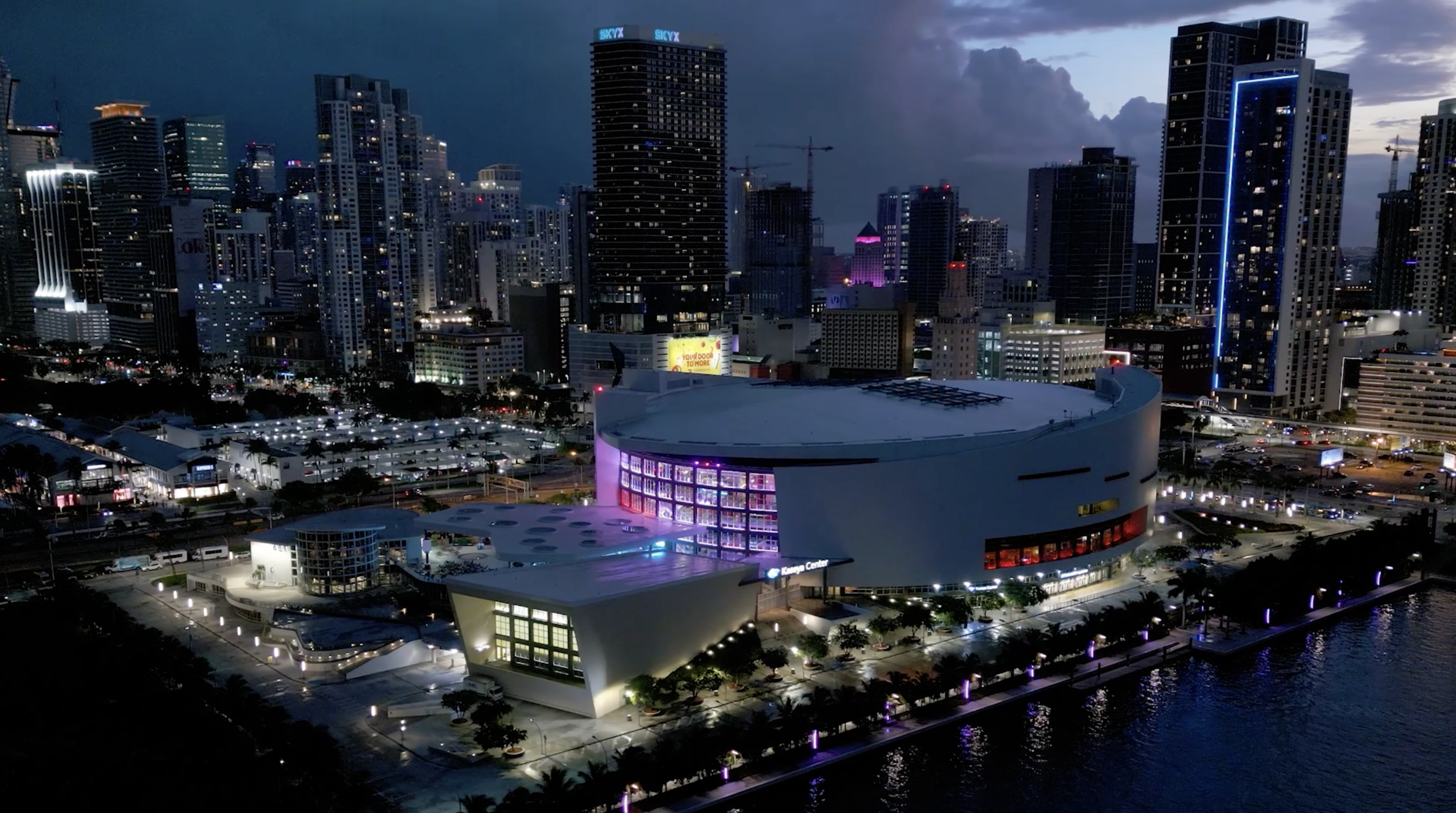
Screenshot via Kaseya Center video
Move over Madison Square Garden. According to Billboard, there’s another East Coast arena commanding global attention, and it’s none other than our home of the Miami Heat, the Kaseya Center, or the Triple A for those of us who never quite embraced the FTX era and everything past that.
Kaseya Center has officially been named Billboard’s Top East Coast Arena for 2026, solidifying its position as one of the most successful and influential live entertainment destinations in the country.
The recognition comes courtesy of Billboard’s 2026 Top Music Venues list, an annual ranking that spans intimate clubs, amphitheaters, international arenas, and festivals. This year, Kaseya finds itself in elite company alongside the American Airlines Center in Dallas, the Sphere in Las Vegas, and London’s O2 Arena, reinforcing Miami’s status as a must-stop city on the global touring circuit.
The honor follows another dominant year for the downtown waterfront venue. According to Billboard, Kaseya Center ranked as the 13th-highest-grossing venue in the United States, the number-one arena in Florida for the 11th consecutive year, and the 14th time in the past 15 years. That kind of consistency is not accidental. It reflects Miami’s growth as both a cultural capital and a financial engine for the live entertainment industry.
Billboard praised the venue in its official statement: “Kaseya Center is a staple on global tour routing. In the past year, the arena has hosted major acts like Dua Lipa, Lady Gaga, Maxwell and Katy Perry. The glass-and-steel structure houses a flexible interior that expands from 12,200 to 19,500 in capacity. With luxury suites, club seating, and panoramic bayfront views, it offers both spectacle and intimacy. Perfectly placed among financial district Brickell, the Design District, the arts-filled Wynwood neighborhood and Biscayne Bay, Kaseya anchors Miami’s nightlife and culture — a place where world tours meet waterfront glamour.”
The numbers back that up. One of the year’s biggest financial drivers was UFC 314, which generated an impressive $11.5 million in ticket sales alone. The arena also hosted three sold-out nights of Billie Eilish’s Hit Me Hard And Soft Tour, proving that Miami remains a high-demand market for top-tier touring acts.
 Billie Eilish performing at the Kaseya Center last year.
Photo by Getty Images for Live Nation – Arturo Holmes
And the lineup has been anything but narrow. From global Latin superstars like J Balvin, Rauw Alejandro, Christian Nodal, Gente de Zona and Kali Uchis, to pop juggernauts like Dua Lipa, Katy Perry and Lady Gaga, to hip-hop heavyweights such as Tyler, the Creator and NBA YoungBoy, Kaseya has positioned itself as a genre spanning powerhouse. Add in Adam Sandler, Andrea Bocelli, Theo Von, Benson Boone, Melendi, Bebeshito, MiamiBash, iHeartRadio Fiesta Latina, Y100’s Jingle Ball and major sporting events, and the venue’s versatility becomes undeniable.
It’s not just concerts, either. The arena continues to serve as a multi-purpose spectacle hub, hosting UFC and WWE events, boxing cards, and large-scale corporate gatherings like the American Business Forum, reinforcing its importance beyond music alone.
Behind the scenes, Billboard’s Top Music Venue honors are determined using Billboard Boxscore data, which tracks annual ticket sales, gross revenue, attendance, and number of reported shows. The rankings also factor in editorial recognition of cultural impact, notable bookings, and live music excellence, meaning this isn’t simply about raw dollars, but about influence.
Beyond the stage and the octagon, Kaseya has also leaned into Miami’s local flavor. Recent upgrades to its food and beverage program include bringing in beloved Wynwood burger spot Skinny Louie’s, while staples like 601 continue to elevate the in-house dining experience. It’s a subtle but meaningful shift, folding neighborhood culture into a venue that now stands at the very top of the East Coast arena landscape.
For a city that has long balanced beachside glamour with global ambition, this recognition feels less like a surprise and more like confirmation. Miami is no longer just a fun tour stop. It’s a pillar of the touring economy.