
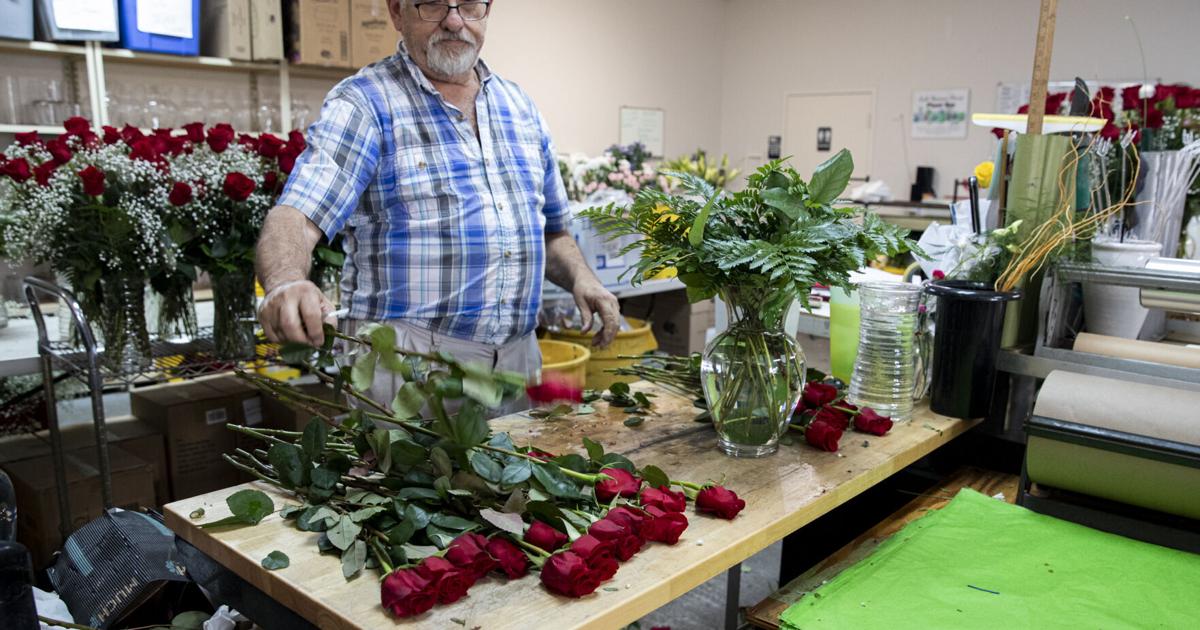
Like movie stars, blue jeans and key lime pie, some classics endure through the decades. The same is true for red roses on Valentine’s Day at Ruth Messmer Florist, where they remain the most popular arrangement each Feb. 14, as long as co-owner Jessica Gnagey can remember.
“It’s a dozen red roses,” said Gnagey, who grew up in the Fort Myers flower shop her grandmother opened in the early 1950s. “It’s always been a dozen red roses.”
Chocolates, a special dinner and jewelry also remain staples of romantic celebrations. Valentine’s Day is a massive retail event, second only to Christmas in consumer spending, according to the National Retail Federation. While classic gifts remain largely unchanged, rising prices over the past two decades help explain why the NRF is forecasting a record $29.1 billion in sales for Feb. 14, 2026.
Market research firm InvestorsObserver found the average cost of an “all out” Valentine’s Day celebration has increased 51%, or more than $262, over the past decade. That includes a card, chocolates, diamond earrings, a dozen roses and dinner for two, totaling about $774 in 2026, not including taxes or gratuities.
Inflation has been a primary driver of higher costs. Southwest Florida business owners also cite tariffs on cocoa and other goods, rising insurance premiums and increased operating expenses.

Jessica Gnagey, co-owner of Ruth Messmer Florist in Fort Myers, stands among Valentine’s Day arrangements at the shop her grandmother opened in the early 1950s. She says the dozen red roses remains a timeless favorite.
Evan Williams
At Messmer Florist, Gnagey and longtime employees estimate a dozen roses cost about $65 in 2006 and $75 by 2016. This year, they are $115, not including taxes or delivery.
At The Veranda in downtown Fort Myers, a fixture of romantic dining since the late 1970s, tradition also prevails.
“We try not to change many things that aren’t broken,” said Veranda General Manager Denny Genge. “We find something’s working and we stick with it and try to refine it so it’s excellent.”
The restaurant’s three-course prix-fixe Valentine’s Day menu, tuxedoed servers and historic dining rooms remain hallmarks. The dinner likely cost less than $55 per person in 2006, including appetizer, salad, entree and dessert, excluding drinks, tax and tip. It was $75 by 2016 and $100 per person this year.
Other Valentine’s favorites have risen more sharply, particularly chocolates. InvestorsObserver reported the average box of chocolates is up 236% over the past decade to about $51. That compares with increases of 66% for a dozen roses, 160% for dinner for two and 36% for diamond earrings.
Chocolate truffles and specialty candies line a display case at CW Fudge Factory. Chocolates are among the Valentine’s gifts that have seen some of the steepest price increases.
William Tidball
The nation’s tariff system has had an outsized impact on cocoa prices, said William Tidball, owner of CW Fudge Factory on Matlacha, where he has produced homemade chocolate fudge and candies since 2013.
“We would anticipate the desire for chocolate is still there,” Tidball said. “The challenge is the prices have gone up over the course of many, many years, and everyone has less discretionary income. So, what we’ve done is to focus on price points that anyone can afford.”
Prices at his shop range from $2 for individual candies to $60 for gift boxes, with fudge and chocolate turtles leading sales.
The average cost of diamond earrings has increased 36% in the U.S. since 2016 to $438 this year, InvestorsObserver found. Valentine’s cards are up 31% to $7.
At John Michael’s Diamond and Jewelry Studio in Cape Coral, owner Bob Lanzieri said lab-grown diamonds provide a lower-cost alternative for customers. Rising gold and silver prices are also affecting sales, with gold-plated and other options offering relief.
alentine-themed chocolates and treats are displayed at CW Fudge Factory on Matlacha. Shop owner William Tidball says cocoa prices and tariffs have increased production costs.
William Tidball
Gold was valued at more than $700 per ounce in 2006 and $1,300 in 2016. Recently, it surged past $5,000 per ounce.
“A chain that might have cost you $2,500 last year could cost upwards of $6,000 or $7,000,” Lanzieri said. “So, that’s putting a damper on Valentine’s Day, not for everybody, but [for some].”
Consumers mark the holiday in different ways. Lanzieri prefers a more elaborate approach. “Me, I spend money on Valentine’s Day, but I lavish my women,” he said. “I’m a very strong advocate for women. They should be lavished and taken care of and treated like the queens they are. That’s the way I feel about it.”
Tidball prefers something simpler: “a nice dinner at home, comfortable, watching a movie, put my feet up, eating good chocolate.”
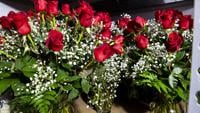
Red rose arrangements fill shelves at Ruth Messmer Florist in Fort Myers as Valentine’s Day approaches. Rising wholesale and shipping costs have pushed bouquet prices higher in recent years.
Evan Williams
A survey by the NRF and Prosper Insights & Analytics found that 45% of consumers do not celebrate Valentine’s Day. Those who do are expected to spend nearly $200 per person on average, up from $147 in 2016.
For some business owners, the holiday means another day at work. Genge hopes for a smooth evening service and satisfied diners. “A perfect one for me? Gosh, I don’t know,” he said. “I suppose having everything go nice and smooth at work and having a lot of happy customers. Of course, having my wife happy at home.”
Gnagey expects a familiar routine. “Then I pick up a to-go order at a restaurant that’s not too crazy, and then I eat dinner and then I go to sleep,” she said. “That’s my perfect Valentine’s Day in the flower industry.”