
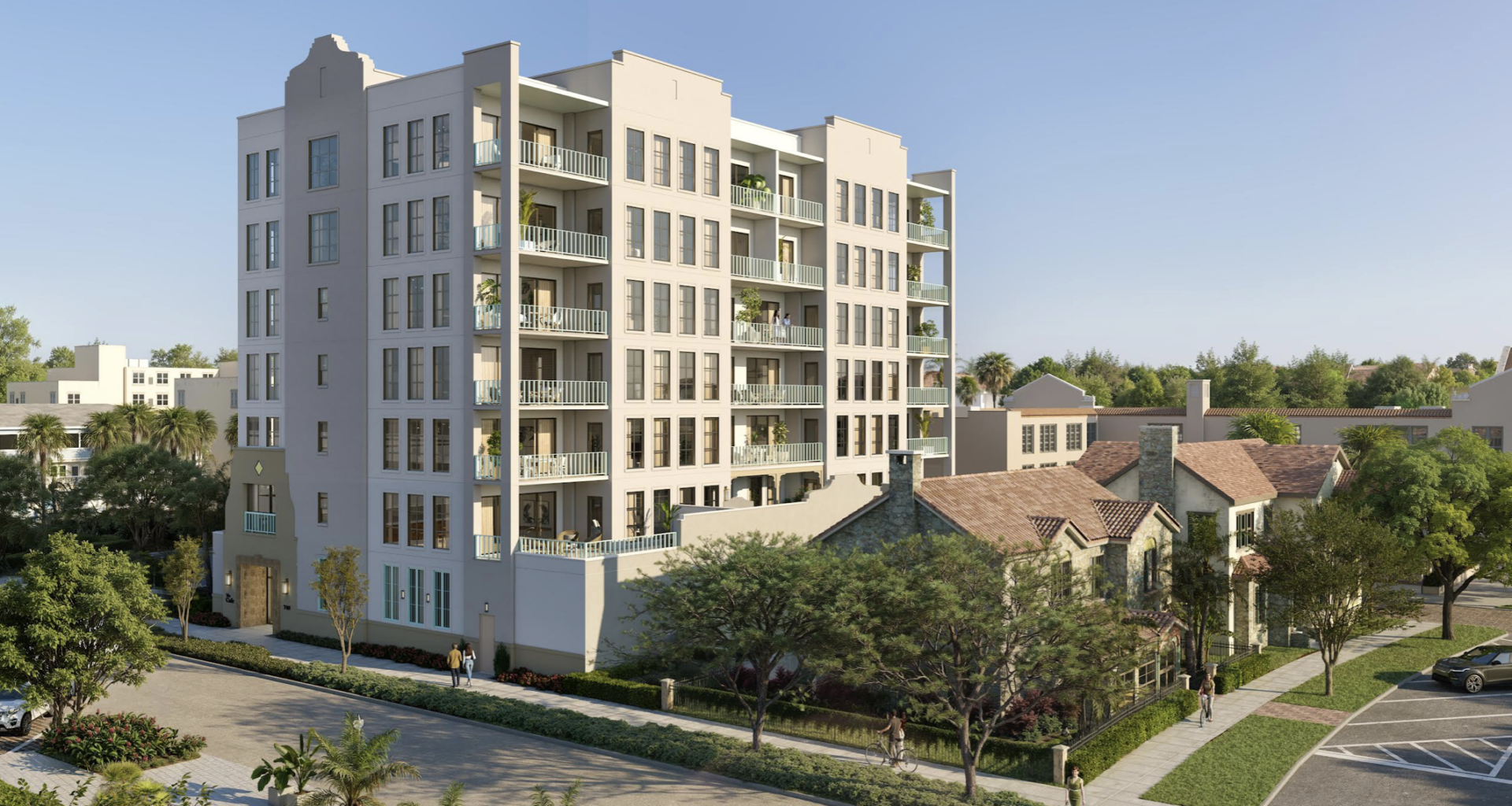
The Cade – a highly anticipated mid-rise residence – is now taking contract proposals for its 15 curated units that prioritize size over quantity, and weaves the story of one of St. Pete’s most iconic Cade Allen homes into a distinctly residential downtown living experience.
Developed by Backstreets Capital, The Cade was approved for development, anchored on Mirror Lake, under a firm condition that it preserves the historic Cade Allen home that faces the lake.
In a previous interview with the Catalyst, Will Conroy, president and founder of Backstreets Capital, had called the site a “Rubik’s Cube.”
Now that the design is complete and contracts are underway, Conroy elaborated on puzzling this project together: “It was about getting buy-in from various teams, from the architectural firms to the contractors. There was an element of storytelling first, making them understand the history and components of the project, where not one component could outweigh another.”
Storytelling indeed. Like a story, there’s deletions in the process. The garage of the original Cade Allen home on the site’s lakeside needed to be razed, but not without salvaging all its original granite from 1937, which will line the entryway of the new building, weaving the histories together.
“It’s important that people appreciate and understand how a building and place [like The Cade] fit in with what the city was and is now. For me, it was a no-brainer using the granite [from the old garage] in the new design.”
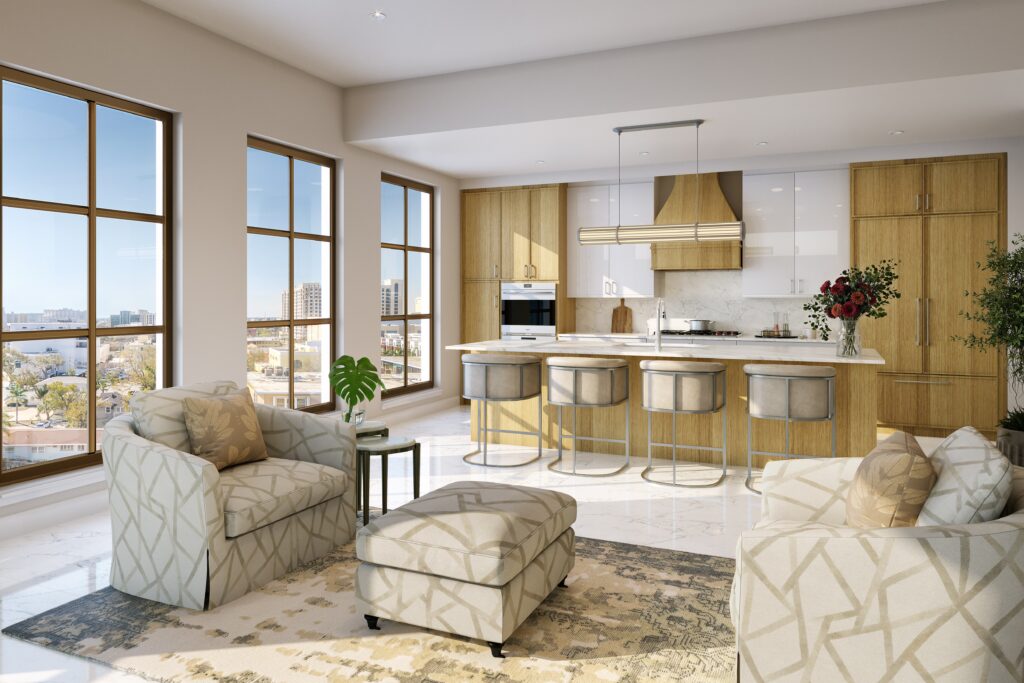
Penthouse kitchen
Though some changes to the “Rubik’s Cube” property were unavoidable. “The change I regret the most,” Conroy said. “We had to lose some of the trees at the site. That was one of those trade-offs.”
Conversely, Conroy was able to salvage the oak trees on the south side by diverting pipelines — a costly decision, but one worth the money, he added, and “the city, to their credit, supported it, even though it was more money.”
The Cade’s original design included 18 units, but was reduced to 15 to increase their sizes. The shift reflects market sentiments for purchasers seeking a more private, livable alternative to conventional condominium density — with three- and four-bedroom homes that exceed 2,100 square feet.
This is Conroy’s first development that also incorporates historic preservation. While the Cade Allen House is not formally listed on local or national historic registers, the city classifies it as a contributing structure of the downtown historic district — and it will be restored and converted back into a single-family residence before construction begins on the condominiums behind it.
When asked if he thinks he’s setting a precedent for future projects of this ilk, Conroy said, “I don’t want to burden myself with being a precedent setter. But here’s the ethos: we’re from here, my family is here. We begin every development with ‘will the city be proud of it when it’s all said and done?’ I know once the Cade is built, the city will be proud.”