
FORT PIERCE, Fla. (CBS12) — Beach erosion in Fort Pierce has reached a critical stage as an emergency sand dump at Jetty Park enters its third day. While crews have completed approximately 30% of the total sand haul, officials warn that a permanent solution to the vanishing shoreline is still years away.
The current crisis is a visual shock to many; where a wide beach stood just two years ago, water now laps at the doorsteps of island residents.
Coastal experts point to weather as the primary stressor driving this accelerated erosion. A series of unusually harsh winters, combined with strong winds and persistent wave action, has stripped the beach of its natural defenses.
“We’ve really had a really rough series of winters. The last three or four winters in a row,” said Andy Studt, Palm Beach County Coastal Manager. “We had multiple cold fronts come through and extended wave impacts from strong winds.”
See also: 6 killed in Florida cross-state murder; suspect also found dead
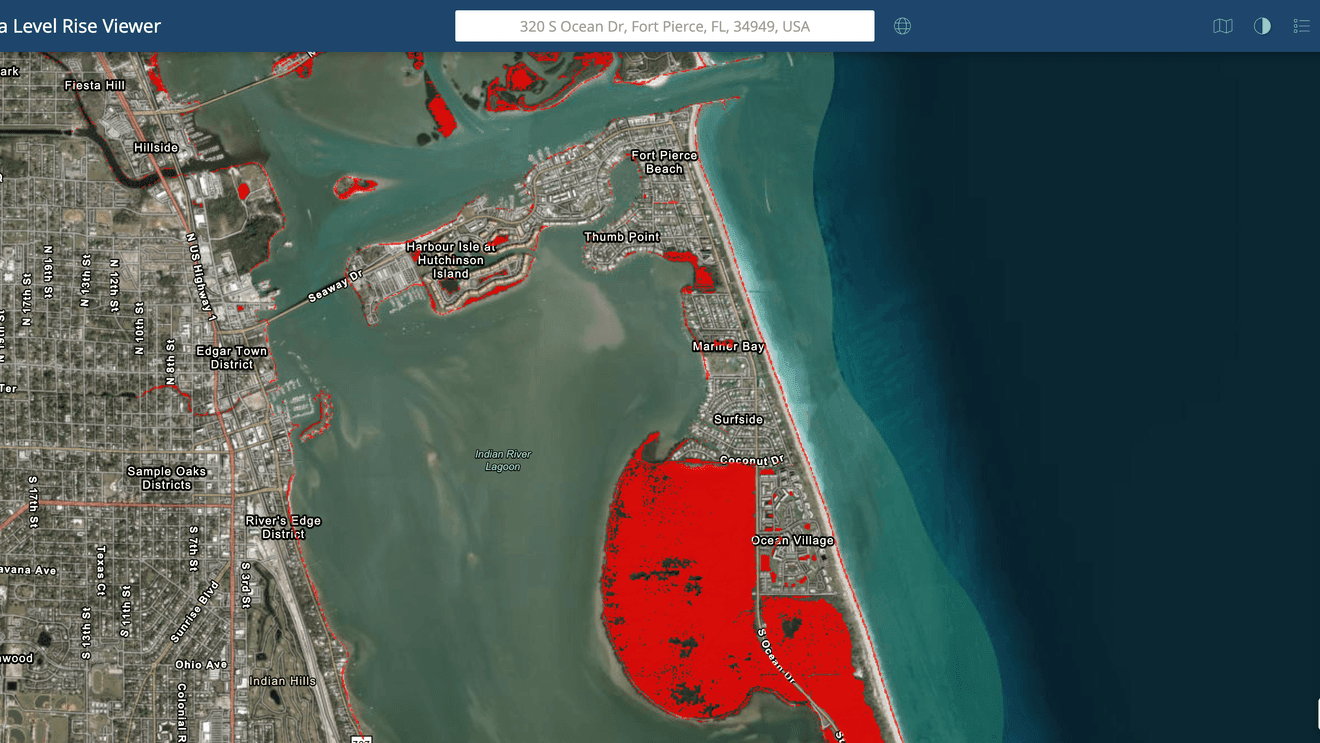
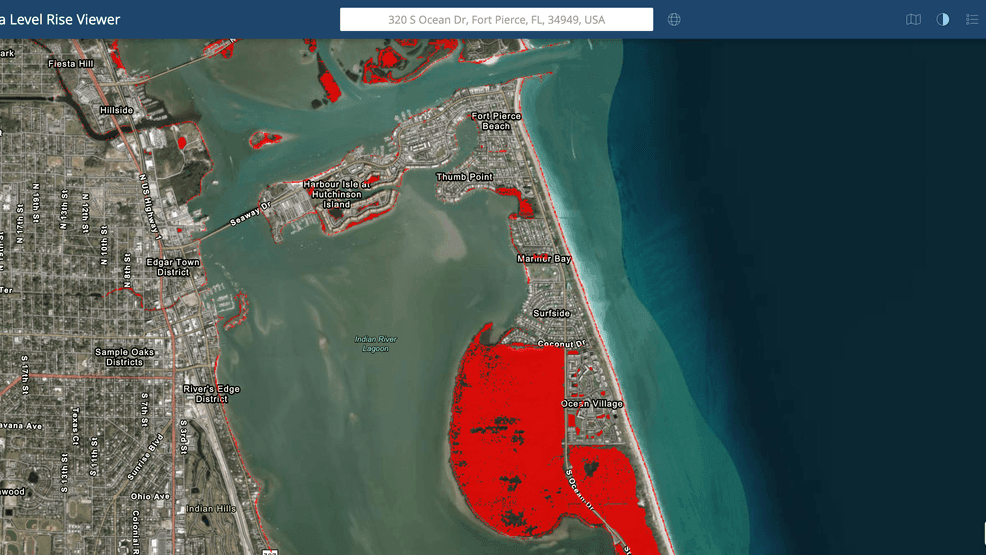 This is a flood map illustrating the high tide flood zones near South Beach, Fort Pierce (NOAA)
Typically, annual dredging and renourishment programs carry the beaches through the season. However, Fort Pierce City Commissioner Michael Broderick explained that a critical gap in maintenance occurred last year because of a lack of contractors.
“The reason we find ourselves in the conditions we’re in right now is that this renourishment program has been taking place annually for a number of years. Last year was skipped,” Broderick said. “The reason it was skipped is that the Army Corps of Engineers put the project out to bid three times, and nobody bid on the project.”
A more permanent fix is currently in the works: the installation of “T-groin” structures. These offshore structures would, in theory, slow wave activity and keep sand in place longer. However, these are not “plug-and-play” solutions.
Studt noted that federal funding and environmental concerns require rigorous, localized studies. “A very localized study has to happen to make sure that any impacts to nearshore or hard bottom or down-drift neighbors are going to be mitigated,” he said.
St. Lucie County officials estimate that if everything goes according to plan, T-groins could be installed in South Beach by 2030. In the meantime, the region remains dependent on costly sand dumps and dredging projects.