
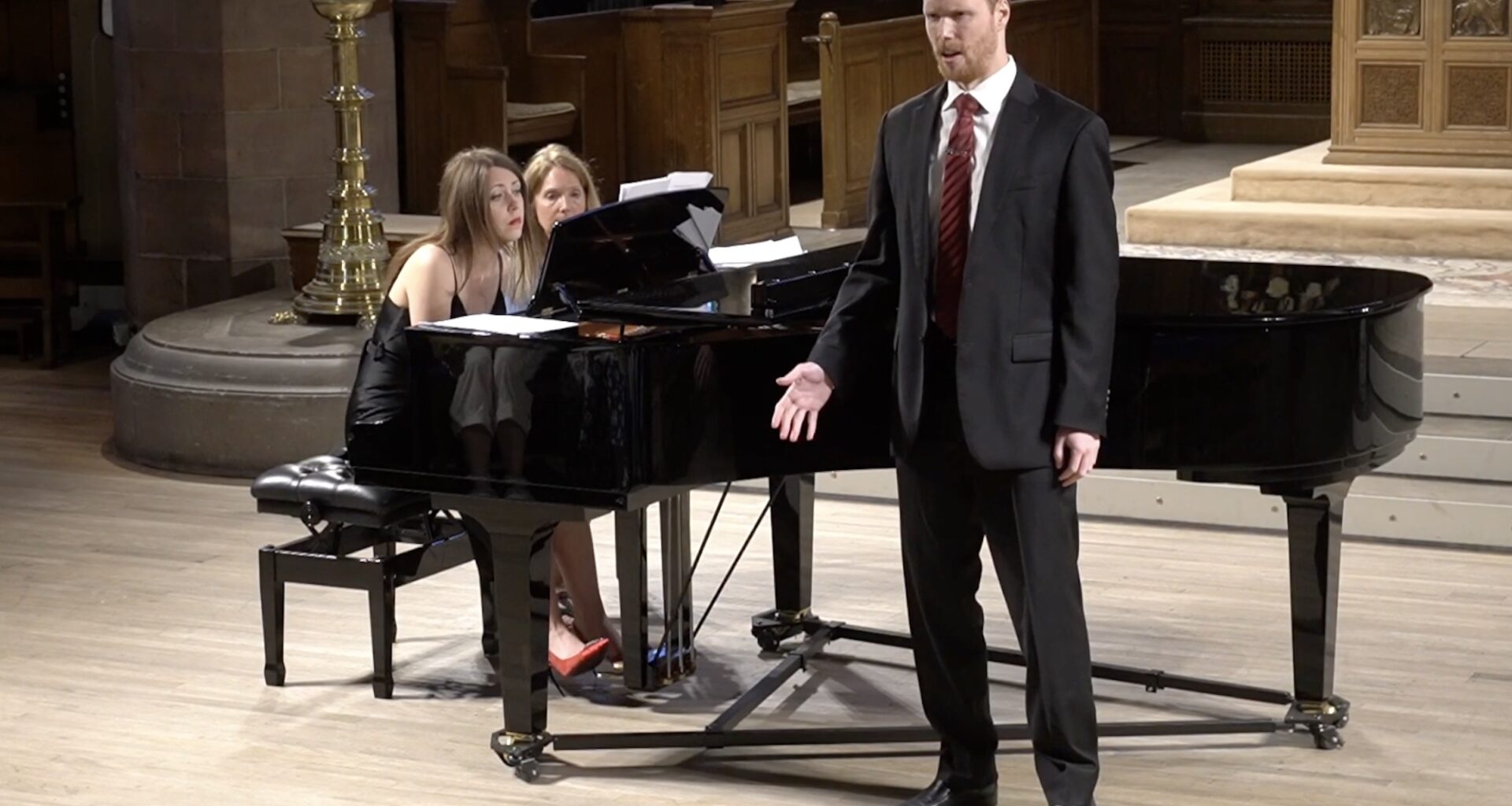
Opera may not be the mother of modern performing arts — in terms of Greek theater, which was up and running 1200 years before Jacopo Peri’s Euridice first blew the minds of Florence, Italy, audiences in 1600 — but it is definitely its coolest, most knowledgeable auntie. Consider: There is music, singing, set and costume design, acting across the emotional spectrum from comedy to tragedy, world-building, and essentially everything in between.
Now, thanks to the upcoming series by Mostly Baroque — an ensemble founded by Miami native Dr. David O. Hartman in 1997 to deliver “historically informed performance of the music of Bach, Handel and Vivaldi among other Baroque composers” — in the black box Carnival Studio Theater at the Adrienne Arsht Center this February 26 through March 1, Miami audiences will be able to experience this holistic, gloriously human art form in an intimate, immersive, and accessible setting.
“You really do step into another world,” Hartman tells New Times, promising an “exclusive series showcasing the full breadth of classical performance that audiences love” — opera, oratorio, orchestral, solo choir, solo recitals— “all within a three-concert experience.”
That experience is not merely diverse in performance. It is kaleidoscopic in its curatorial intent, encompassing everything from Bach’s Brandenburg Concertos, songs Jacques Ibert wrote for G.W. Pabst’s 1933 film version of Don Quixote, and Giovanni Battista Pergolesi’s saucy 1733 La Serva Padrona (translation: The Maid Turned Mistress) starring bass-baritone Johan Hartman and soprano Yi-Chun Sarah Tsai to the multicultural Miami Oratorio Society performing Black Spirituals by African American pioneering composer Florence Price and choruses from Handel’s Messiah, Gerald Finzi’s Shakespeare-inspired 1942 “Let Us Garlands Bring,” and more.
For Hartman, who now lives in Connecticut, the show is very much a homecoming.
In junior high, Hartman played in a forty-kid strong orchestra conducted by Dr. Robert Bobo, a legendary French horn player for the Miami Philharmonic, Fort Lauderdale Symphony, New York City Opera, and New York Philharmonic — quite a pedigree! “He was a real professional musician who held us to a high standard and believed in us,” Hartman says. “He made us want to play well.” He was introduced to Brandenburg Concerto — which will be performed at the Mostly Baroque series — and luxuriated in Handel’s Messiah at Miami Marine Stadium at age 12.
“It’s impossible to appreciate as a child, but the older I get, the more I realize how unusual it is to grow up surrounded by so much world-class art and music,” Hartman says. “I’m a huge Miami booster even if I don’t live there anymore.”
His professional life is rooted here as well: In the 1980s, Hartman helped form a string quartet that performed at concerts and private parties — sometimes competing around town for the same wedding receptions as a fledgling Miami Sound Machine led by Gloria Estefan. During his time with the Miami Symphony, he actually performed at the groundbreaking celebration for the Arsht Center. You can imagine his surprise when he returned after several years in Connecticut to tour potential venues for Mostly Baroque runs. “It was like, ‘Wow, this place is amazing,’” Hartman recalls. “‘We have to play here.’” That the performances would coincide with the twentieth anniversary season of the landmark only made the deal sweeter. “Our players are professionals — they’re always going to show up and do a good job,” he says. “But Arsht also has an undeniable cachet, so now they’ve got a little extra juice. They’re charged. We’re all very excited to do this.”
“What precisely is this?” you may be wondering. “And how does it differ from, say, the Florida Grand Opera?”
Well, a Baroque orchestra is, according to press materials, “more intimate in both size and sound than a modern symphonic orchestra, featuring violins, violas, celli, double bass, harpsichord, flute, oboe, and trumpet. The musicians perform on period instruments or faithful reproductions, using Baroque bows that produce a warmer, softer, and more nuanced tone than modern orchestral ones. This historically informed approach allows audiences to experience the music much as it would have been heard in the 18th century — with clarity, balance, and a natural expressiveness that highlights the beauty and detail of the compositions.”
Time travel, essentially, is for music lovers who appreciate nuance and detail.
“There are a lot of very fine works written for small ensembles,” Hartman explains. “Works that can be done with an orchestra, maybe of ten or 12, accompanied by four or five singers. And they’re very satisfying musically. So, we’ve got this huge range of work performed by artists who are mostly either from Miami or have spent most of their lives in Miami.” In fact, some of Hartman’s relationships with musicians date back more than forty years to both his junior high and University of Miami days. “These are longstanding relationships,” he says. “I may have many more gray hairs now than when we met, but we’re still performing music together at a very high level. I get a lot of personal satisfaction from that.”
Mostly Baroque. Thursday, February 26, to Sunday, March 1, at the Adrienne Arsht Center, 1300 Biscayne Blvd. Miami; 786-468-2000. Tickets cost $46 to $87 via arshtcenter.org.