
OVIEDO, Fla. — The cold snap is gone, but its effects are still evident across the agriculture industry. The damage from the freeze across the state could top $1 billion, according to the Florida Department of Agriculture and Consumer Services.
What You Need To Know
It could be months before the total damage to agriculture in Florida from the hard freeze is known, but it could top $1 billion, according to the Florida Department of Agriculture and Consumer Services
The UF/IFAS extension office in Orange County said tropical plants were hit hardest in Central Florida
Lukas Nursey brought as many of its tropical plants inside for the cold snap as possible to preserve what they could, and it worked
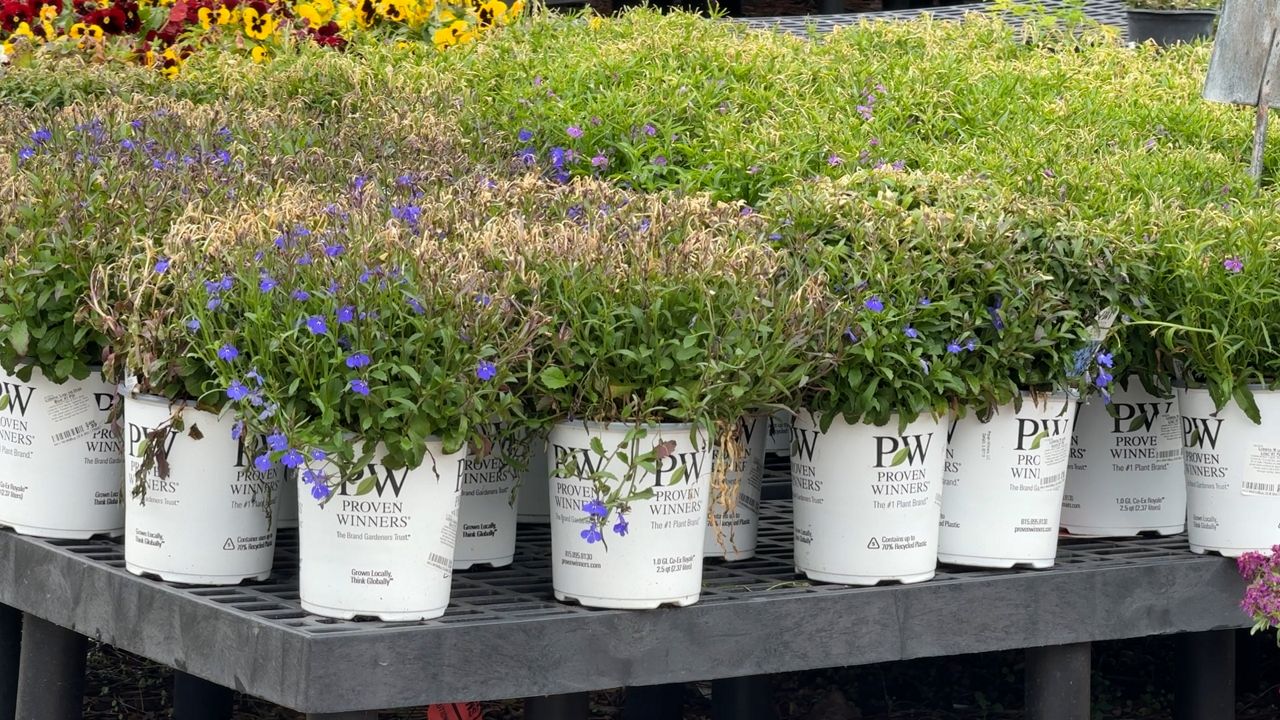
Nurseries across Central Florida lost some plants, but many are damaged and could still recover
At Lukas Nursery in Oviedo, staffers did the best they could to save plants. During the freeze, they covered what they could outside but others, like their mango trees, were lifted up on a forklift and brought inside overnight, then put back out in the sun for the day and back in overnight, repeatedly throughout the cold snap. It was a lot of work, but well worth it to see them thriving today.
“Little signs are evident everywhere you walk around here,” said Edna Kane, a sales manager at Lukas Nursery.
Plants of all kinds left outside took a hit.
“We only had so much indoor space,” Kane said.
Many were damaged, but they are not dead.
“They took a little hit to the tips of the plants, but underneath, you still see beautiful green so just a little cleaning up on these,” Kane said.
Other plants didn’t make it and have already been removed.
“If you have slimy, decaying plants, that will build up fungus, and we don’t want to add insult to injury and build fungus up as well,” Kane said.
Kane has worked at Lukas Nursery for 20 years, and she said this was the worst winter cold stretch she can remember.
“Some of the things that we could salvage, we have salvaged, but you know, we took a hit just like everybody else,” Kane said.
The freeze harmed plants from nurseries to farms.
“The impacts of the hard freeze on our landscape is undeniable,” said Hannah Eason, a commercial horticulture agent from the University of Florida/Institute of Food and Agricultural Sciences extension in Orange County. “A lot of our tropical plants that we have gotten very used to succeeding in Central Florida landscapes have really struggled in this recent hard freeze.”
Many plants and trees can still recover, so growers might not know the real impact until at least mid-March.
“In the case of some of our slower growers like our palms, we won’t know the real status of them until maybe many more months after, whether they are going to decline and fully recover,” Eason said.
She encourages all farmers and growers affected to report their losses to the farm service agency. That data helps them get more resources to rebound.
Commissioner of Agriculture Wilton Simpson said in a statement: “We’ve had staff out in the field surveying the situation on the ground, and it will be a few weeks, and possibly longer, until we know what the full impacts will be. This process can take some time, but we’re working to get full damage estimates as quickly as possible. However, we do know that the damage to Florida crops will be significant, possibly over $1 billion. Our farmers are resilient, and we believe they will continue to weather the storm.”