
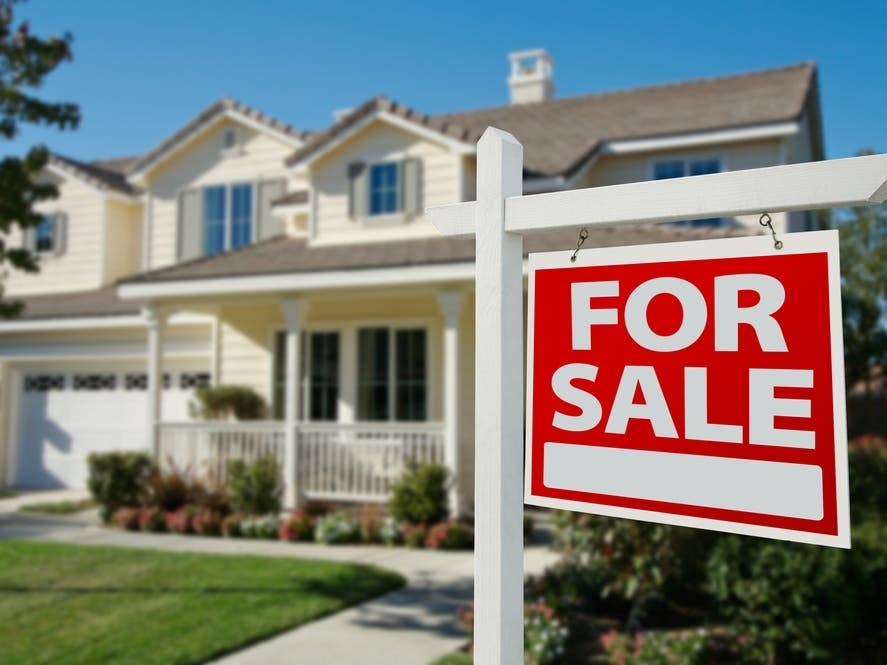
The housing market in 2026 is off to a sluggish start nationwide. However, experts are optimistic that a “reset” this year will help the market rebound from conditions that slowed home sales to their lowest pace in six years.
Pending home sales are down, and homes take over two months to sell; however, new listings are increasing, and agents expect falling costs to draw more buyers this spring, Redfin said in a new spring housing forecast. Agents are “cautiously optimistic” that the “great housing reset” is on the horizon, Redfin said.
While the Tampa-St. Petersburg market does not expect any notable shifts, other parts of the state will likely see gains and losses in some areas. In the Fort Lauderdale metro, the median sale price is expected to fall by 4.4 percent, while new listings will likely be down by 13.1 percent, more than any other metro in the country.
Find out what’s happening in St. Petefor free with the latest updates from Patch.
The Jacksonville area will also likely see a 10.1 percent drop in new listings, but could experience a 7.2 percent increase in pending sales. Finally, the West Palm Beach metro is also expected to see a 7.9 percent increase in pending sales, more than any other region of country.
Ben Ambroch, a Redfin Premier agent in Milwaukee, where home-sale prices are rising more than anywhere else in the country, expects 2026 to become more balanced over time.
Find out what’s happening in St. Petefor free with the latest updates from Patch.
“With each passing month, I see more sellers willing to forgo record-low rates and accept that it’s time to move,” he said in a news release. “That’s leading to more inventory, which is helping attract buyers. I’m seeing a steady stream of house hunters touring homes, though they are taking their time, requesting inspections, and negotiating with sellers.”
Redfin defines the “great housing reset” as a years-long period of gradual increases in home sales and normalization of prices as affordability gradually improves.
“It won’t be enough to make home buying affordable in the short run for Gen Zers and young families, who will be forced to make tradeoffs, from moving in with roommates or their parents to delaying having children,” Redfin said in its 2026 housing forecast released late last year.
According to the report, homes will languish on the market in coastal Florida, along with Texas, due partly to natural disasters and surging insurance costs and partly to pandemic-era remote workers moving back to where their office is located. People who need to sell may be forced to take a loss.
Nationwide, Redfin’s report said commuters will drive housing markets in New York City; the Midwest and Great Lakes are appealing due to affordability and lower risk of climate disasters; and small and mid-sized cities attract graduates with affordable rent and stable careers in skilled trades, as AI limits entry-level white-collar jobs.
Along with Long Island, the Hudson Valley, northern New Jersey and Fairfield, Connecticut, other housing markets expected to heat up in 2026 include Syracuse, New York; Cleveland; St. Louis; Minneapolis; and Madison, Wisconsin.
Home sales are expected to stagnate in areas at high risk of natural disasters, where insurance rates are high, and also in places where the return of remote workers has depressed real estate activity. Those markets include Nashville, Tennessee; San Antonio; Austin, Texas; Fort Lauderdale, Florida; West Palm Beach, Florida; and Miami.
Here’s a snapshot of the market forces Redfin said are affecting spring housing sales:
Home sales: The typical U.S. home sold in January spent 64 days on the market, the longest in six years and about a week longer than a year prior, Redfin said. Pending home sales dropped 3.3 percent year over year. One positive of the slow market is that it gives buyers negotiating power, as sellers outnumber them by a record margin.
Buyer behavior: Buyers are cautious, with some backing off entirely due to economic uncertainty, high housing costs and volatile job security as waves of layoffs hit workers. The weekly average mortgage rate of 6.1 percent is near its lowest level in three years, but it’s still double the rate’s pandemic low. At the same time, the median home-sale price is $379,950, up 1.2 percent from a year ago.
Higher prices: Economic uncertainty, high costs, and job insecurity due to waves of layoffs are making buyers cautious, causing some to withdraw. The median home-sale price is $379,950, up 1.2 percent year-over-year. The average mortgage rate is 6.1 percent, near a three-year low but double the pandemic low. While still high, costs are easing, improving affordability; the median monthly mortgage payment is $2,559, down nearly 5 percent year-over-year, and wages are up roughly 4 percent.
More homes on the market: New listings rose 1.1 percent year over year, the third straight week of increases after two straight months of declines, Redfin said.
Get more local news delivered straight to your inbox. Sign up for free Patch newsletters and alerts.