
It’s not breaking news: South Florida is expensive. For most local residents, it’s deeply unaffordable, from real estate to the grocery store.
But the extent of our housing affordability crisis is more disturbing than ever before. According to the latest research, the Miami metro area is ranked America’s least affordable for homebuyers. Fewer than one in 200 homes on the market are within reach for a typical Florida household. That’s right: One in 200, or 0.5%. Not surprisingly, more than 40% of Miami homeowners with mortgages are considered “cost-burdened,” meaning they spend at least 30% of their monthly income on housing.
 Margi Glavovic Nothard is the founder and design director of Glavovic Studio. (courtesy, Margi Glavovic Nothard)
Renters have it even worse. Miamians are the most rent-burdened people in America, with over three-quarters of South Floridians reporting difficulty paying for usual household expenses. Nearly 60% of renters in greater Miami are cost-burdened, while about a third are “severely cost-burdened,” spending at least half of their monthly income on housing. Even cities like New York, San Francisco and Los Angeles fare better.
The situation is not sustainable, and it was unsustainable five years ago. From state and local policymakers to nonprofit organizations, developers and architecture studios like my own, we all need to come together for our community in crisis. Wherever we may stand politically, the housing affordability issue should transcend partisan politics. People need real solutions, and they need them now.
Here is one: Adaptive reuse, which refers to the repurposing of an existing building for a new function like housing, rather than demolishing it. From old warehouses to vacant office buildings, there are thousands of buildings in Florida that could be reused for affordable housing units. This is generally cheaper than new development, with cost savings estimated at 12% to 15% relative to new structures.
As construction costs remain high, the cost-effectiveness of adaptive reuse is particularly appealing. That’s why we are seeing a wave of adaptive reuse projects across the country. The process delivered a record 25,000 apartments in 2024 — a 50% year-over-year increase and doubling 2022’s total.
In Florida, developers fortunately have access to the Live Local Act, allowing certain properties to be rezoned for affordable housing. Since its inception in 2023, the law has helped add over 3,000 affordable units across 23 properties in cities like Miami and Tampa. While it is not a silver bullet, with financing presenting a challenge along with retroactive code changes, Florida law does give us a comparative advantage that other states lack, so let’s use it.
Live Local benefits make it easier to pursue adaptive reuse projects, assuming we are actually serious about solving the problem. Entities like the Healthy Housing Foundation (HHF), a national leader in affordable housing, are taking the right steps to identify old sites and reimagine them, but they need more community support.
Florida colleges and universities have a role to play too. At Florida Atlantic University (FAU), students have developed a guidebook to help identify which kinds of existing vacant properties may be most viable for affordable housing projects, putting adaptive reuse into practice. FAU students are also unveiling comprehensive architectural designs on specific sites in South Florida, taking advantage of the Live Local Act to bring new ideas to the table.
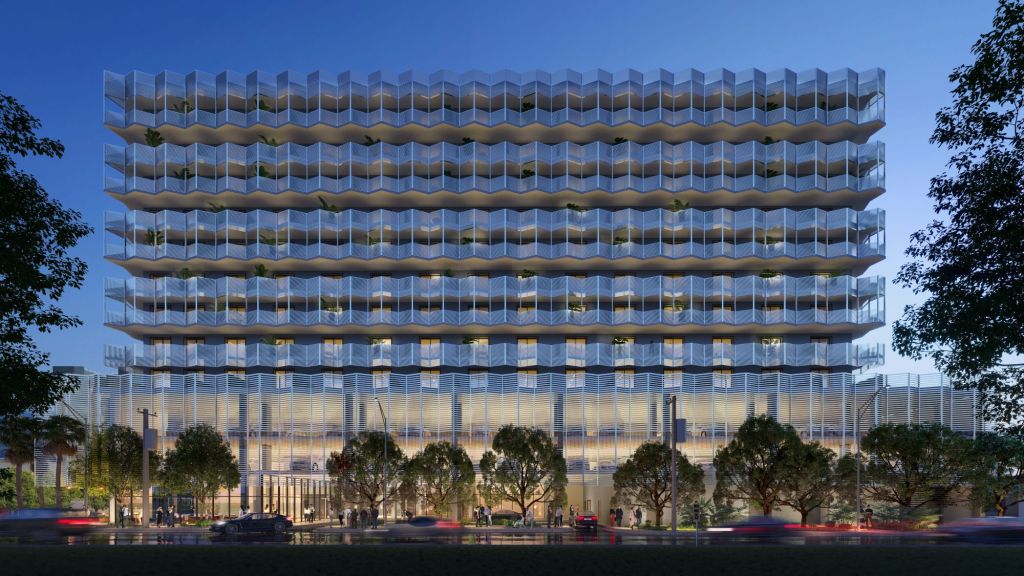
Adaptive reuse is only one piece of the puzzle. New construction remains essential, and we are seeing movement in Miami. The recent groundbreaking ceremony for Little River Plaza, which I helped design, means 250 affordable housing units will soon arrive in Miami. Serving residents at 60% area median income and below while also including a wide range of community amenities, Little River is hopefully a sign of much more to come.
Facing a housing affordability crisis as dire as ours, we have a lot of work to do. But we also have plenty of tools at our disposal for a more sustainable future. We just need to use them while there is still time.
Margi Glavovic Nothard serves as founder and design director at Glavovic Studio in Fort Lauderdale and Los Angeles, California.