
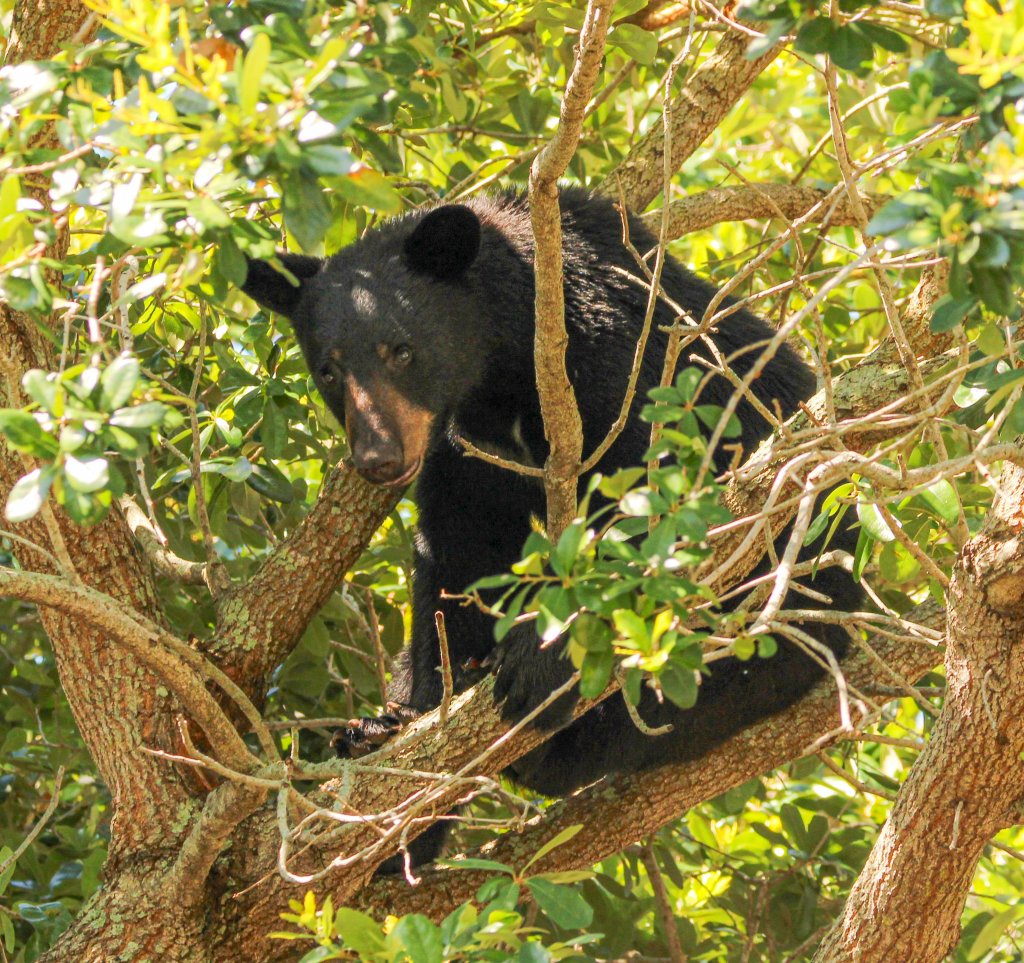
When the state Fish and Wildlife Conservation Commission approved the state’s first official black-bear hunt in a decade, many Floridians were heartsick — already mourning 172 bears the Florida Fish and Wildlife Conservation Commission designated for slaughter in a hunt scheduled for December.
But then they rallied, and fought back with a barrage of $5 bills that could protect dozens of those otherwise-doomed bears. A coalition of environmental groups started pooling money to buy entries into the lottery that would determine who got a permit to kill a bear.
Under the rules approved by the state for handing out permits, potential hunters could submit an application and a $5 fee, with the state conducting a lottery to determine who among those people got one of the coveted toe-tags (priced at $100 for Florida residents and $300 for out-of-state residents.) Of the 160,000 $5 applications, advocates are sure that at least 30,000 were submitted by non-hunters. Donors also chipped in money to defray the cost of helping winners who couldn’t afford their “spare a bear” permits.
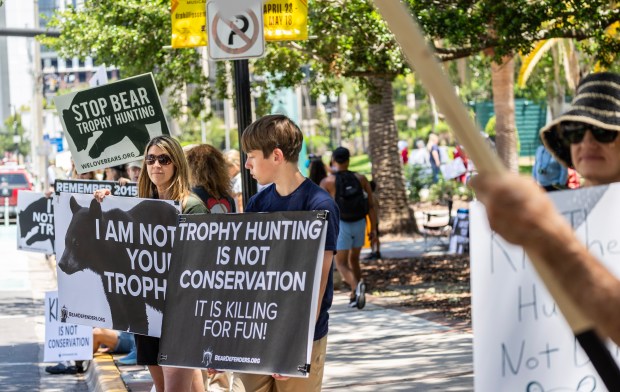 Animal Rights Foundation of Florida rally peacefully protesting against the Florida Fish and Wildlife Conservation Commission’s proposal to hunt the Florida black bear in Orlando, Fla., Saturday, May 17, 2025. (Willie J. Allen Jr./Orlando Sentinel)
Apopka resident Chuck O’Neal of the conservation organization Speak Up Wekiva said at least 39 permits so far have been won (and paid for) by people who have no intention of killing a bear. That doesn’t include like-minded people who decided to enter the contest on their own but don’t plan to join the hunt.
The official tally of spared bears can only grow. The state wrapped up a second-chance round Monday, with 24 permits awarded during the first round thrown back into the pot. And if there are still unclaimed permits left later this week, there will be a third drawing.
In the grand scheme of things, this might seem like a minor rebellion: At most, advocates can hope to save 25-30% of the bears that were to be killed this year. And under the policy adopted by the FWC, this hunt will reoccur yearly until official estimates of the bears’ numbers show a marked decline. Many advocates suspect that the FWC will use this year’s protest buys as a way to increase the quota of bears that can be killed next year.
We don’t see any way the commission can legitimately do that, and still maintain the pretense that the bear hunt is based on science. Admittedly, the available evidence for this year’s hunt was pretty skimpy, but wrapping the potential intentions of bear-saving non-hunters into any equation seems well-nigh impossible.
In the meantime, the fact that more than 30,000 Floridians were upset enough about this bear hunt to throw $5 into the pot, and take on the cost of a potential permit win, should say a lot to Florida’s elected officials. This is more than just a snapback — it’s an act of organized, coordinated mischief, meant to gum up the works of a state agency that was created to preserve wildlife but has lost its way.
It may not seem like much: 30,000 protest permits, in a state of 23.3 million. But it demonstrates that Floridians are paying attention, that many of them had the gumption to spend $5 to stop a cruel hunt — and and that some unknown number of this state’s residents still carry that flame of hope that they can make a difference against unjust acts of their government, one $5, one bear or one vote at a time.
The Orlando Sentinel Editorial Board consists of Opinion Editor Krys Fluker, Executive Editor Roger Simmons and Viewpoints Editor Jay Reddick. Contact us at insight@orlandosentinel.com