
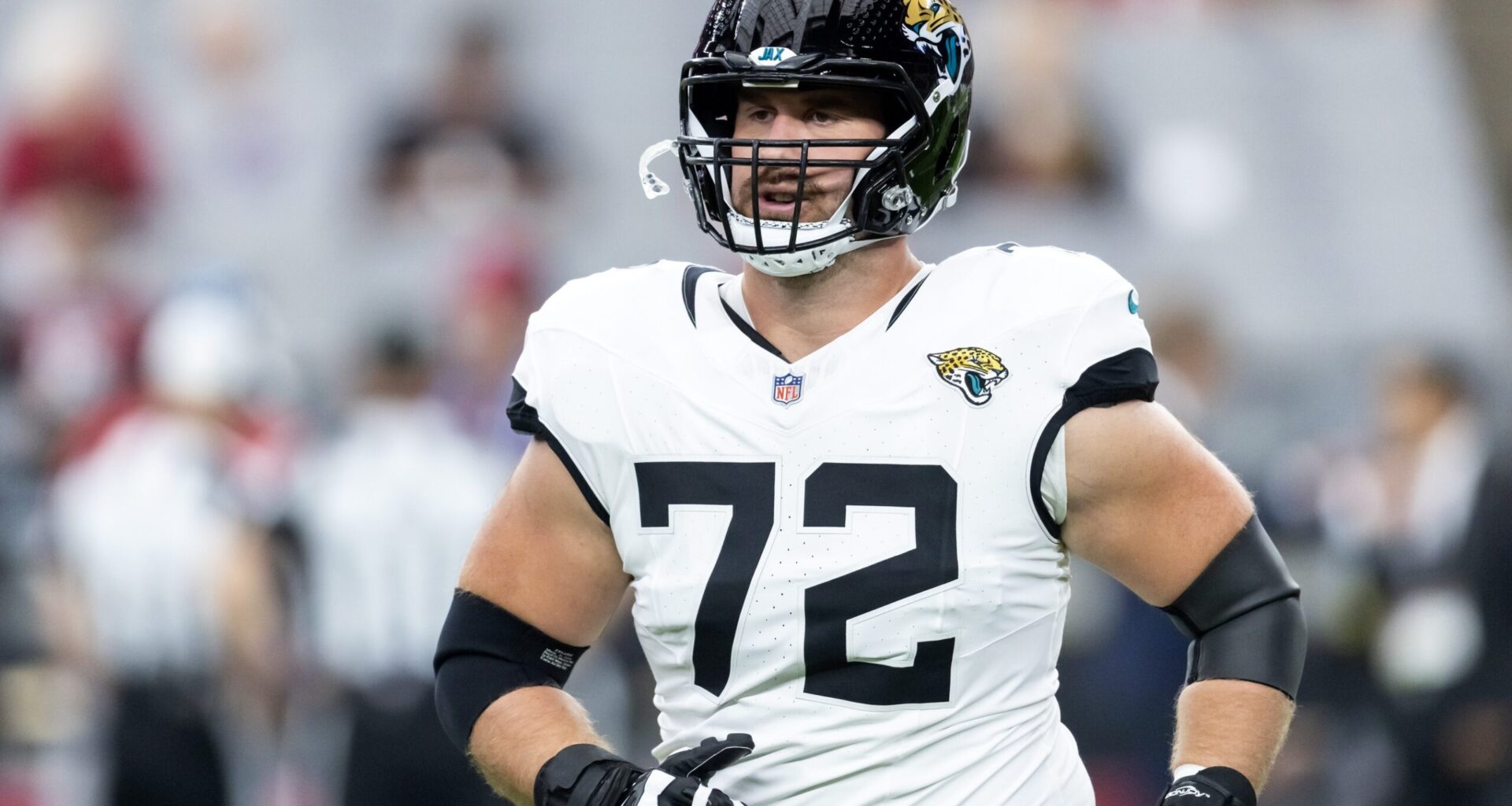
2021 second-round pick Walker Little signed a three-year, $45 million contract in December 2024. Just 14 months later, there are a lot of questions surrounding his future with the team. Pro Football Focus ranked Walker Little as one of the worst offensive linemen in football. Little finished the 2025 season 86th in sacks allowed, 85th in pressures allowed, and was graded 49th in run blocking. On top of Little’s struggles in pass protection and run blocking, he also committed seven penalties in just 15 games. Needless to say, Walker Little was a liability for the Jaguars.
Cole Van Lanen’s emergence as the Jaguars primary left tackle, as well as an excellent swing tackle, drastically improved the Jaguars performance in the trenches. Lanen’s stellar play landed him a three-year, $51 million contract in early January. With $30 million of guaranteed salary remaining between the two players through 2027, the decision surrounding Walker Little becomes very difficult.
At the end of the season press conference, general manager James Gladstone gave a resounding endorsement of the Jaguars entire offensive line. “Right now, we are in a position where everybody that played for us on the offensive line this season is coming back next season”, Gladstone said. While this could be a standard PR answer for the media, it may also relate to Little’s cap problems.
Jaguars Have an Expensive Decision to Make with Walker Little
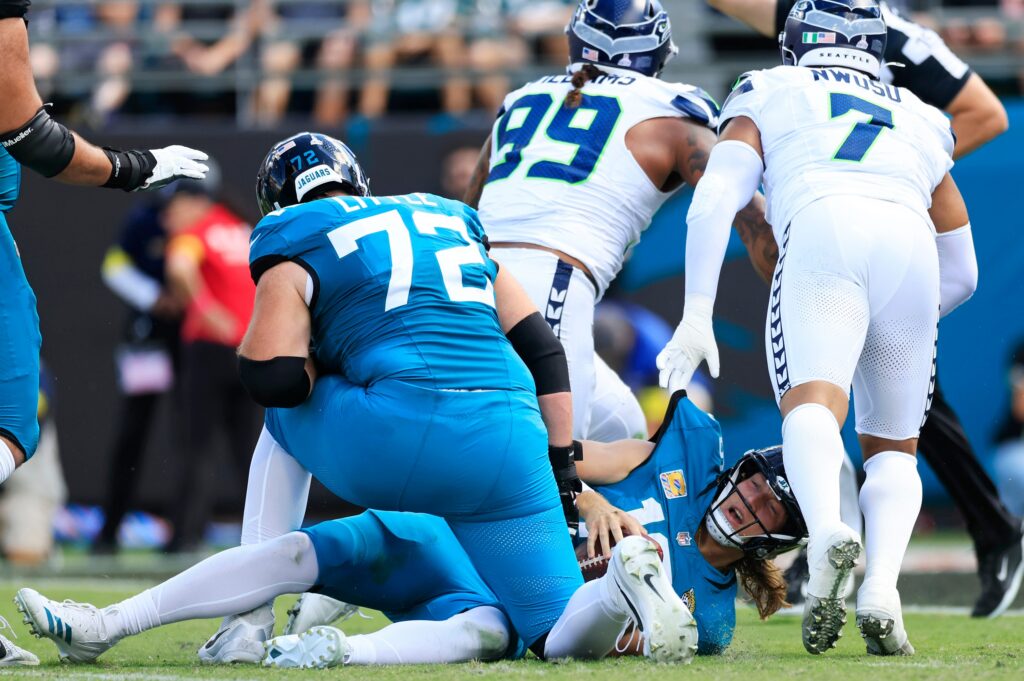 Jacksonville Jaguars quarterback Trevor Lawrence (16) is sacked by Seattle Seahawks linebacker Uchenna Nwosu (7) and defensive end Leonard Williams (99) as Jacksonville Jaguars offensive tackle Walker Little (72) helps him up during the second quarter of an NFL football matchup, Sunday, Oct. 12, 2025, at EverBank Stadium in Jacksonville, Fla. The Seahawks defeated the Jaguars 20-12. [Corey Perrine/Florida Times-Union]If the Jaguars were to cut Little before June 1, the Jaguars would have to pay $18.2 million in dead cap in 2026 while saving just $3.7 million, and a cut post June 1 would cost the Jaguars $13 million against the cap. Heading into 2026, the Jaguars have $42 million tied up in dead cap money, good for the third-highest total in the NFL. Adding another $13-18 million of dead cap money would severely hamper their chances of competing in 2026, relying on a draft where they do not have their own pick until late in the second round.
With the Jaguars set to be $9 million over the cap in 2026, the Jaguars will have to decide if they want to pay $14.5 million to a player, either on the bench or a liability on the field. While cutting Little will be expensive regardless of the timing, a trade would save considerably more money against the cap. If the Jaguars were to trade Little post June 1, they would only have to pay just $2.5 million in dead cap money while saving $11.9 million, and a trade pre June 1 would result in the Jaguars paying $7.2 million in dead cap money, while saving $7.2 million.
Due to Little’s extremely low value, this trade would almost certainly involve adding a draft pick in the deal. In return, the best-case scenario is receiving another low-value player or a late-round draft pick. While this trade has financial benefits, it is unlikely the Jaguars will make this move.
The decision regarding Little comes down to his trade value relative to his contract and the team’s free agency moves. If the Jaguars can find a suitor and are willing to attach the picks necessary to make the deal, this could help out their cap flexibility in the short and long term. The answer to the questions will be made at the start of free agency, with how willing the Jaguars are to be big spenders or restructure current contracts. No matter what the outcome is regarding Little’s future with the team, it will come at a cost on or off the field that the Jaguars must be willing to pay.