
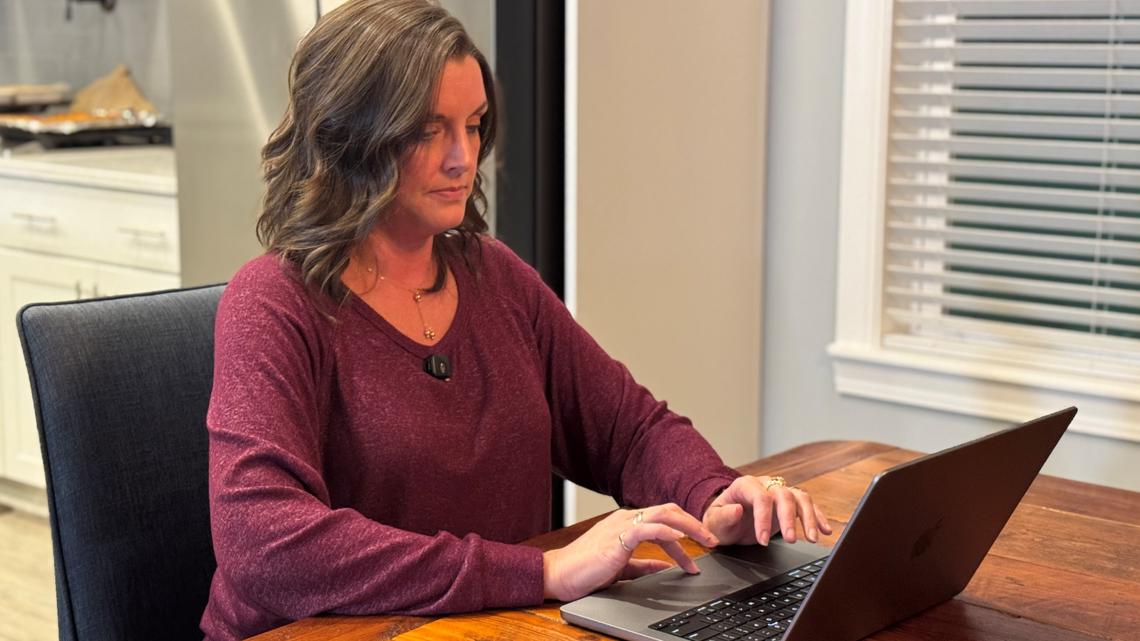
Across the country, Facebook and Instagram users have reported having their accounts erroneously disabled with limited ways to appeal.
JACKSONVILLE, Fla. — Two St. Johns County mothers say Meta wrongly disabled their Facebook and Instagram accounts, claiming they did not follow the company’s community standards on child sexual exploitation, abuse and nudity.
They say the allegations are false and the appeals process is flawed.
Jennifer Rivers said her social media pages were filled with family photos and positive posts.
“It’s all family, it’s pictures of my kids, it’s uplifting, positive, so I’m baffled.”
Aubrey Gwaltney said her content was similar.
“I don’t post things like that. I post positive, biblical, funny. You know, family.”
Both women said they were stunned when they tried to log on to their accounts and received a notice from Meta explaining why their accounts were disabled:
“Your account or activity on it doesn’t follow our community standards on child sexual exploitation, abuse, and nudity. No one can see or find your account, and you can’t use it. All your information will be permanently deleted.”
Rivers says that kind of serious accusation could damage someone’s reputation.
“It’s a very harsh accusation, and that’s alarming and could impact anybody who has a job or anything,” she says. “I mean, they have no way to show how they came across that.”
Gwaltney shares the sentiment, saying she was hurt and frustrated by the claim.
“I’m the last person to post anything explicit, sexual exploitations that they had accused me of. I took it very personally, and it hurt. I was frustrated.”
Both mothers say their accounts were disabled without warning, cutting them off from school groups and community connections. Both women tried submitting appeals to META shortly after.
Gwaltney said that after her account was shut down in November, her appeals were denied.
“Within an hour, they told me it was disabled and there was nothing I could do to appeal any further,” Gwaltney said. “It just left me speechless on what to do.”
Rivers says her account was first disabled in December; however, she appealed and her account was restored three days later. She says she received an apology email, with the company saying “they had made a mistake.”
But in February 2026, both her Facebook and Instagram accounts were disabled again for the same reason. This time, she was told she could not appeal. Rivers said the closure took away 15 years of photos, posts and connections.
“Everything that I’ve posted since I’ve had children and before I’ve had children is gone. All the memories … permanently deleted.”
The frustrating part is Rivers still doesn’t know what triggered the accusation.
“There’s no way for you to ask what did I do that started that? Like what am I being accused of? What did I post that alerted you to that? And there’s no way to ask anybody,” Rivers said. “They really need to dig a lot deeper into what’s triggering this specific reasoning, because you cannot go around accusing people of doing these types of things and not expect it to come back in a negative way towards them. I don’t think it’s an intentional thing. I think it’s a glitch, and it needs to be looked at.”
Similar complaints have surfaced nationwide, with users reporting accounts disabled over alleged child exploitation violations, violations of community standards and limited access to human review.
It happened to First Coast News Anchor Heather Crawford. Her account was disabled for an undisclosed violation of community standards in June and again in November. Both times her appeals, which required uploading a picture of her driver’s license and a scan of her face, were denied.
A Change.org petition calling on Meta to restore accounts, improve artificial intelligence systems and provide human customer support has more than 57,000 signatures.
Corynne McSherry, legal director for the Electronic Frontier Foundation, said her organization frequently hears from users locked out of their accounts.
“We don’t have numbers. It’s hard to really put numbers on it, but it is absolutely a persistent problem. We get contacted about this all the time.”
She said it can be difficult to reach a person during the appeals process.
“I don’t think there’s a reliable way to get hold of a human,” McSherry said. “All of the companies, for the most part, are highly automated. And they’re that way on purpose.”
She said decisions involving accounts being permanently disabled warrant more human oversight.
“It seems to me there really needs to be a human in the loop for that kind of decision because that’s more than just flagging a post that you’re concerned about. That’s actually cutting someone off from communicating.”
We’ve reached out to Meta multiple times since November with no response, but hours before our story was scheduled to air, a spokesperson returned our call. While she would not provide a statement, she did share a link explaining how Meta enforces its policies and said Meta launched a centralized support hub in December 2025. The company says it is continuing to invest in content enforcement systems so users are less likely to be affected by mistakes.
After having their accounts disabled for nearly two months, both Gwaltney and Crawford had their accounts restored within 48 hours of First Coast News emailing Meta for this story. Rivers’ account was restored within two hours of First Coast News speaking with a spokesperson at Meta.
“After being wrongly accused of violating community policy on Instagram (and subsequently Facebook), both of my accounts have been restored. While I’m glad I can access my posts and see the groups I follow for the kids’ activities, I will proceed with caution,” Rivers said. “Moving forward, I will no longer be posting anything on either of these sites. I don’t trust Meta or their integration with AI. There has been zero accountability or concern surrounding these harsh accusations.”
Over the past year, Meta says AI improvements have helped avoid disabling accounts by mistake, and when errors do occur, the company says the appeals process is now faster, simpler, and supported by AI to deliver quicker decisions.
McSherry says improvements are still needed.
Her message to Meta: “Clean up your appeals process and make it real. And you need to invest more in human review, particularly when it comes to disabling accounts.”
We reached out to the Attorney General’s Office in Florida and Georgia. Florida’s AG’s Office did not respond.
Georgia’s Attorney General’s Office said it is aware of the issue and supports efforts by social media platforms to protect the public, especially children, from illegal or otherwise harmful content.
“We also believe social media platforms should review an account lockout dispute in a timely manner. Those users who have exhausted efforts to resolve a matter may file a complaint with the Consumer Protection Division at www.consumer.ga.gov,” Shawn Conroy with the Georgia Attorney General’s Office, said.
In Florida, you can file a complaint online with the Consumer Protection Division.
You can also file a complaint with the Better Business Bureau.
“While BBB cannot require a company to reinstate an account, we can help facilitate communication and provide guidance on next steps,” Alma Galvan, Communications Manager with the BBB said. “Consumers should also go through the platform’s official appeal process and carefully follow the instructions provided in the account suspension notice.”
The BBB cautions users about third parties claiming they can restore accounts for a fee.
“We’ve seen reports of scammers targeting people whose accounts were disabled, promising recovery services and then taking payment without delivering results. There is no legitimate outside service that can guarantee account reinstatement,” Galvan said. “If someone is asked to pay money or share sensitive information to unlock an account, that’s a red flag and should be reported to BBB ScamTracker”
You can also file a complaint with the Federal Trade Commission. While the FTC doesn’t intervene in each individual complaint, it uses the complaints to help warn consumers about problems it is seeing in the marketplace.
Have you had your Facebook or Instagram account disabled and believe it was in error? We want to hear from you. Email hcrawford2@firstcoastnews.com.