

Florida’s House Bill 325 has captured national attention. The bill would allow nonviolent inmates with two years or less remaining on their sentences to enroll in CDL training and obtain a valid license before their release from prison.
The legislation’s stated goals are to confront chronic truck driver shortages and help reduce repeat offending through meaningful vocational preparation.
In the trucking industry, there are currently around 15,000 unfilled CDL positions in Florida alone.
The bill’s supporters, including industry leaders and vocational training providers, posits that opening the door for incarcerated individuals to earn a CDL responds pragmatically to labor demand while giving people who are nearing release a chance at stable employment.
A representative of a South Florida CDL school observed recently that quality training, not just a paper certification, is essential to ensure successful transitions into the workforce.
A Chance at Employment and a Way Out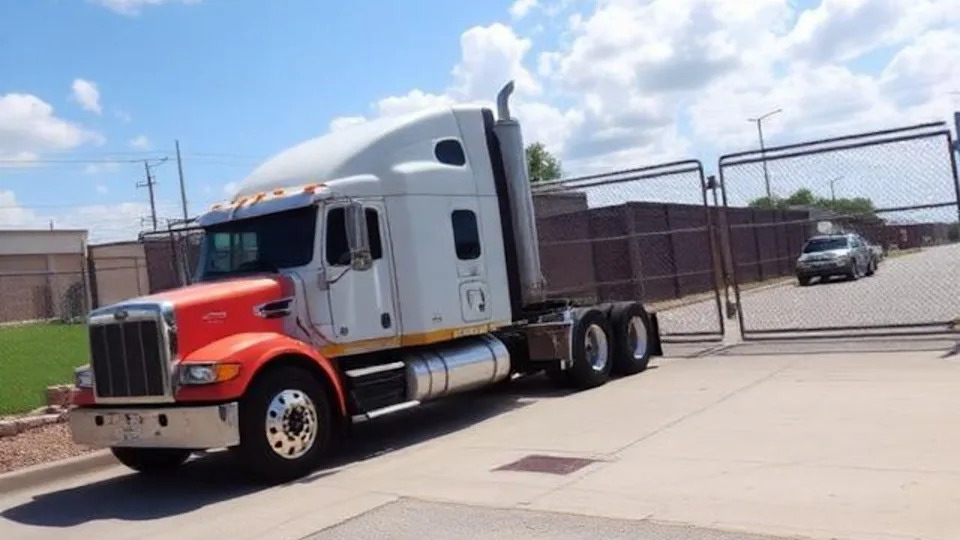
Computer rendering.
Vocational training behind bars is not new. Many states, including Alabama, California, and Florida itself, have operated some form of CDL or workforce program within prisons for years.
These programs have historically sought to give incarcerated people a skill set they can use immediately upon reentry into society.
In Central Florida, a Class B CDL initiative was launched recently that aims to reduce recidivism by providing hands‑on training to incarcerated individuals who otherwise might lack access to such options.
Proponents of House Bill 325 emphasize that studies show people with vocational certifications are significantly less likely to reoffend. By entering a field with strong demand and dependable pay, people who complete this training could become financially self‑sufficient and establish routines that support long‑term success outside of incarceration.
That juxtaposition is striking.
Florida’s House Bill 325 frames CDL training for inmates as rehabilitation and workforce development, while at the same time the administration is aggressively moving to restrict immigrant access to commercial trucking.
In effect, one policy opens doors for incarcerated citizens nearing release, while the other closes doors for immigrant drivers who already fill critical labor gaps.
The contrast highlights how authorities are using trucking policy as a tool of domestic reintegration and as a lever in immigration control — two very different narratives pulling on the same industry.
Questions of Safety and Readiness
Image Credit: Virrage Images/Shutterstock.
Not everyone is convinced the proposal is the way to go. Some trucking employers might note that, despite a real demand for CDL holders, there must be rigorous standards for who gets trained and how.
The quality of training providers matters greatly, because there are varying levels of preparation and skill among programs available across the country. This debate mirrors wider questions in reentry policy about balancing second chances with public safety and professional readiness.
Others might worry that simply earning a CDL does not guarantee a job. Without proper job placement and follow‑up support, the promise of stable employment may fall short. Workforce advocates argue for stronger post‑release support services, including connections to employers willing to hire former incarcerated people.
These conversations are crucial because barriers to employment remain high even for qualified job seekers with a CDL if past convictions or limited work experience create further obstacles.
While Florida’s proposed legislation emphasizes structured training, certification, and readiness before release, which theoretically enhances road safety by ensuring that new drivers enter the workforce with proper skills and oversight, it contrasts the administration’s push to strip immigrants of commercial driving privileges. This ultimately raises the same questions about workforce stability and safety assurance.
House Bill 325 frames trucking as a rehabilitative pathway — reducing recidivism by giving inmates a tangible career track — but immigrant drivers currently make up a significant portion of the trucking workforce. Removing them could create gaps that strain logistics networks.
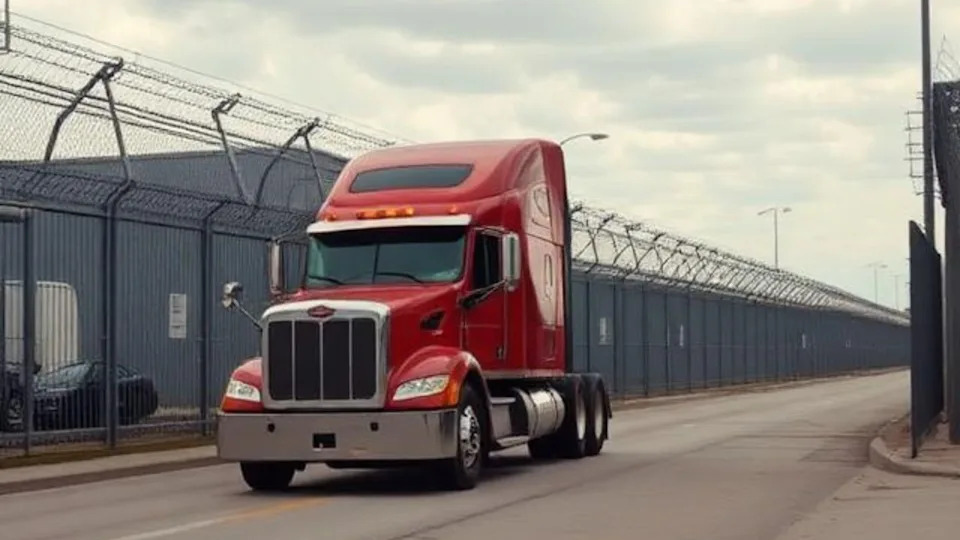
Computer rendering.
Those gaps might force companies to accelerate training pipelines or lower standards to meet demand, which could inadvertently affect safety outcomes.
So, critics might argue that while Florida’s policy is about expanding readiness through vocational preparation, the federal stance is about restricting access, even if it risks undermining the very safety and reliability the industry depends on.
The juxtaposition highlights two competing visions: one that treats trucking as a rehabilitative opportunity for citizens, and another that treats it as a privilege to be narrowed in the name of immigration control.
A Broader Shift in Policy Thinking
State by state, there is a growing trend toward reentry and workforce reintegration policies. Some states have also pursued legislation giving incarcerated people standard driver’s licenses or identification cards before release so that lack of credentials does not block access to housing, jobs, and everyday life.
This broader trend shows an evolving recognition that preparing people for civilian life while they are still in state custody may reduce recidivism and improve public safety outcomes.
Both sides of the aisle are watching this bill for what it could signal nationally. If it becomes law, Florida could be a laboratory for a system that combines criminal justice reform with workforce development in an industry that has struggled for talent for years.
What’s for sure is that House Bill 325 will continue to be debated in committee hearings and legislative sessions. Lawmakers will need to balance concerns about training quality, employer participation, and public safety with hopes of offering pathways to employment and supporting community stability.
There is no clear timeline yet for final action, but the attention the proposal has garnered suggests it may influence similar discussions within the state and beyond, as other states seek solutions to labor shortages and high incarceration costs.
Sources: The Florida Senate, CDLLife
Read More