
THONOTOSASSA – Jerry Wright lost half of his crop on his 40-acre strawberry farm, Passion Organics, when the temperatures dipped below freezing several nights in a row at the end of January and into the first week of February.
He estimated his financial loss is in excess of $700,000.
It’s one of the most catastrophic losses he’s seen in 40 years of strawberry farming in and around Plant City. It’s rivaled only by the winter of 1988-1989 when it was so cold over Christmas the electric grid became overwhelmed and many thousands of Tampa Electric and Florida Power customers lost power.
That winter he ran the sprinklers day and night for four days straight to protect his crop.
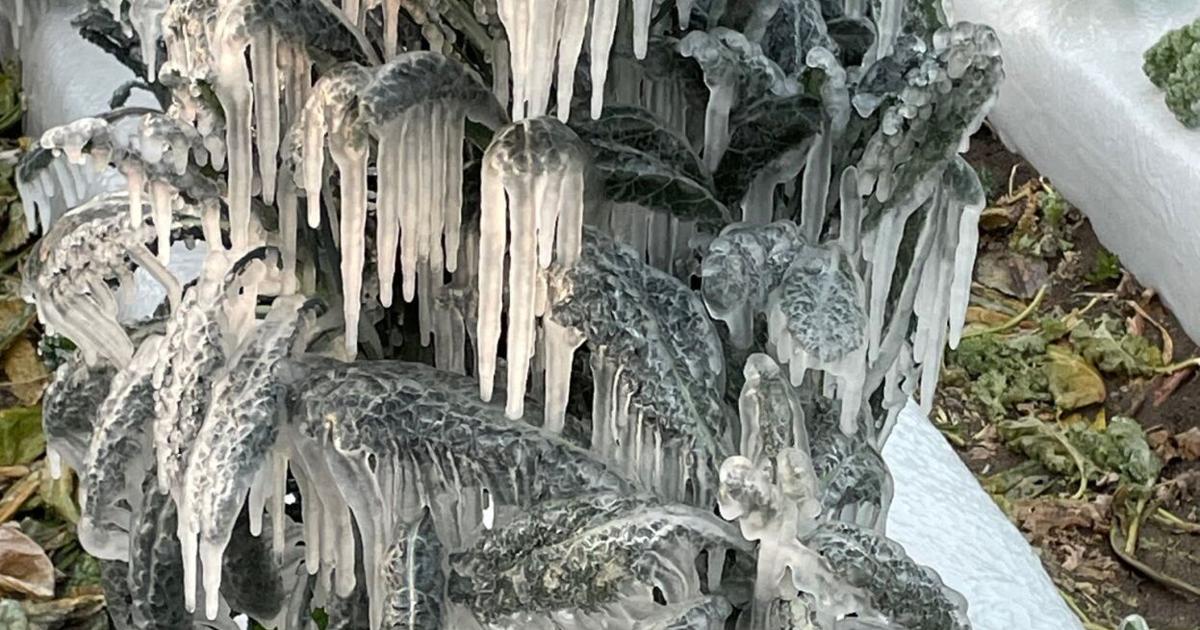
Berry and citrus farmers routinely spray their crops with water during freezing temperatures. A coating of ice insulates the plant and keeps the temperature underneath from dropping below 32 degrees, protecting the entire plant.
So what happened? Wind.
According to data from the National Weather Service, wind speeds at the Plant City Airport picked up in the late morning hours of Jan. 31, and were steady in the 20 mph range with gusts in the upper 30 mph range overnight and into the early morning hours of Feb. 1.
Temperatures that fell to freezing by 1 a.m. Feb. 1 were as low as 20 degrees overnight and didn’t rise above freezing until after 9 a.m.
The combination created a serious challenge for farmers like Wright, Clay Keel of Keel Farms and Royce Grant of Lutz Blueberry Farm. The sprinklers must run constantly, and the water must coat the plants evenly in order to prevent the temperature underneath the ice from dropping below 32 degrees.
That made for a long night for Wright and his crew. He and 10 of his employees walked up and down the rows all night long monitoring the sprinklers, knocking ice off them when they froze over and wouldn’t turn, unclogging lines filled with debris from the wells, and replacing broken sprinkler heads.
“I don’t go to bed,” he said. “I mean, all it takes is one mistake and it’s gone — everything you’ve worked for is gone.”
Grant and Keel both said they didn’t even bother turning the sprinklers on that night. They said icing blueberry plants in those winds will just make it worse.
“Definitely, you cannot freeze protect on blueberries at those winds because it’ll damage — once the ice forms, then you have sails on the plant, right?” Keel said. “And the wind will damage the plant, break branches and just basically destroy the plants.”
Grant agreed, saying, “It was useless … so we just have to take the hit.”
Keel didn’t water his strawberries that night either, because he couldn’t get enough water pressure to keep them coated properly.
Wright ultimately sacrificed a 2-acre section, turning the sprinklers off there in order to increase the water pressure to the rest of the field.
“The crew is going to go over (to that section) and every strawberry that’s on the bush, we’ll just take it off and throw it on the ground,” he said. “Because that way the plant itself will think, ‘OK, wait a minute, I don’t have any strawberries.’ If we leave the ones on there, it’ll think, ‘OK, I’ll keep feeding that strawberry,’ you know, still going. We take them all off — ‘Oh, wait a minute, there’s nothing left, let’s make some more.’”
That will take approximately six weeks. By then, his commercial market (i.e. grocery stores), which constitutes 95% of his business, will have evaporated.
“(The demand) will be too low to try and pick for the commercial market and that’s going to be the devastating part of it,” he said.
He added later: “I would go ahead and keep taking care of them, because we’ll have a U-pick market. You know, we have a viable thing to fall back on, where a lot of farms don’t. But even with our U-pick market this year we’re not going to pay our bills off.”
Keel and Grant, who both have U-pick operations, were able to water several other nights in order to minimize the damage.
“It’s still hard to quantify,” Keel said. “I think the blueberries are fine. I’m not seeing a lot of damage in the blueberries, which is good. It’s still pretty early in the season.”
As for the strawberries, they took significant damage because they weren’t able to freeze protect that one night.
“Any small fruit, especially, and the flowers that were on the strawberries that would have become fruit right now — it took a lot of damage,” Keel said.
“For us, if I needed to quantify dollars, it’s probably a few thousand dollars,” he said.
He’s hoping the plants recover in time for their annual Strawberry Bash, which is coming up Feb. 21-22.
Grant said that he can’t be certain, but he thinks he lost about $6,000 worth. He said he had a lot of flowers open already and once the flowers have bloomed, they’re vulnerable.
A retired fire fighter, he runs his U-pick farm on U.S. 41 with his wife, Brenda, and his father, Aubrey.
The elder Grant started it when he retired from the Tampa Fire Department in 1995, after 30 years.
Royce Grant said they keep running it because everyone loves it so much.
“When the kids come over from (Lutz Preparatory School), you ought to hear them, just the noise you’ll hear — you can’t see them sometimes because they’ll be way over there, but just the noises you’re hearing — they’re joyful.”
None of the three plan to raise prices to compensate for the loss. They just don’t want to. Wright runs the U-pick fields and the produce stand at his farm, where he also sells a variety of vegetables grown right there on the farm, Friday, Saturday and Sunday, for the pure joy of it.
He gestured out the window, where dozens of children played and fed the animals. “That’s all I need,” he said. “Look at all the happy kids running around here. That makes a difference.”
He predicted that strawberry prices in the grocery stores will “go through the roof” even as theirs, which he argued were already better at $4 per pound, will stay the same.
“We’re still making money at it,” he said. “We don’t have to gouge anybody. It’s not worth it. We could. But why?”
All three said the best thing their customers can do to support them during this time is “just keep coming.”
“My heart really goes out to those people that this is their livelihood,” Royce Grant said. “You know, like the strawberry farmers and all in Plant City. Because that’s — you work all year long to try to get a crop and it don’t take but one night to change everything. And all the farmers all across this country. We need to be thankful for them.”