
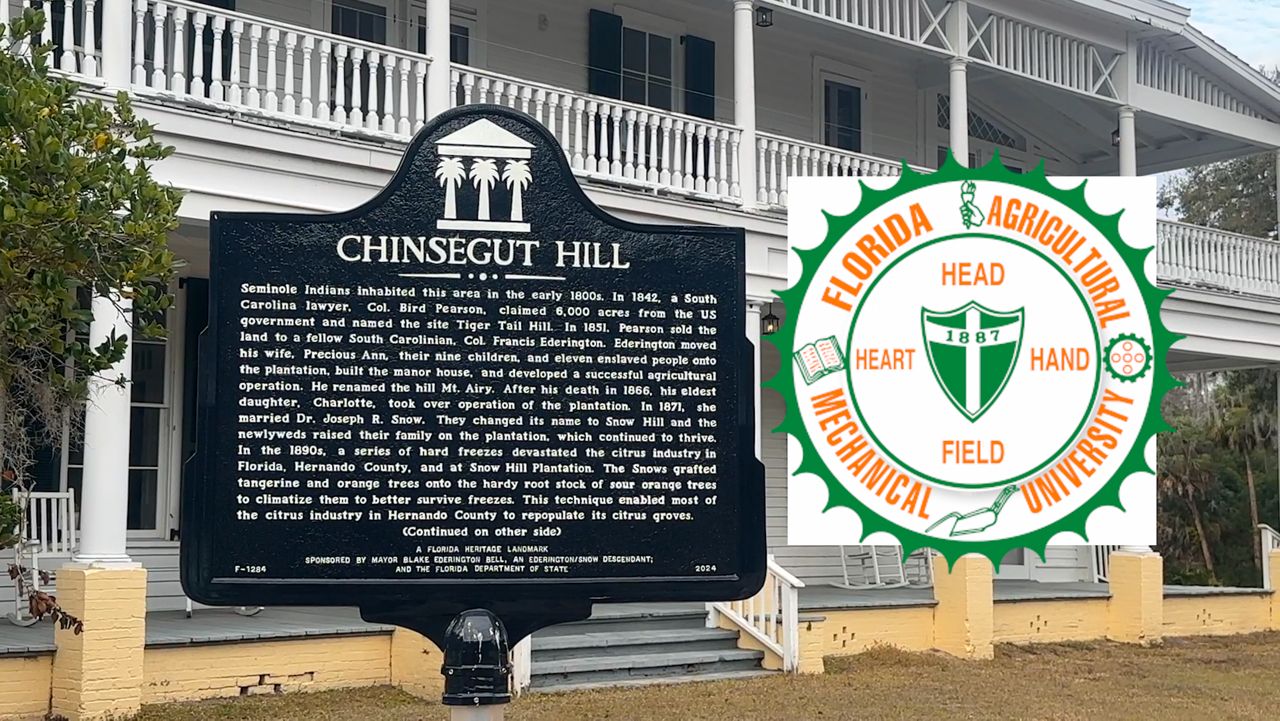
HERNANDO COUNTY, Fla. — A new partnership is reshaping the future of one of Hernando County’s most historic landmarks during Black History Month.
County commissioners have awarded preservation stewardship of Chinsegut Hill to Florida A&M University, linking the site’s long history of civic dialogue and race relations with the state’s historically Black land-grant institution.
In Brooksville, community members say the hill has always carried a deeper meaning.
What You Need To Know
Hernando County commissioners have awarded preservation stewardship of Chinsegut Hill to Florida A&M University
Next door to Chinsegut Hill, Florida A&M University’s BAERS campus spans more than 3,800 acres and operates as a major research and extension hub for agriculture, natural resources and environmental education. The land itself carries federal significance
Hernando County leaders say finances played a role in the decision. As state leaders discuss potential property tax changes, commissioners viewed the university’s unsolicited proposal as a stable option
FAMU plans to partner with local organizations to preserve the site’s full history, including women’s suffrage, Black and Native American stories
Rick Barge, farm manager at FAMU’s nearby BAERS campus, said the property’s original owners intentionally created a place for discussion.
“The people who lived here, the robins, they were all about race relations. You know, that’s why they came here. So that makes a difference,” said Barge.
The estate, purchased by Raymond and Margaret Robins in 1904, sits atop one of the highest points in Florida and is surrounded by a 114-acre preserve.
Next door, Florida A&M University’s BAERS campus spans more than 3,800 acres and operates as a major research and extension hub for agriculture, natural resources and environmental education.
The land itself carries federal significance. In 2015, the U.S. Department of Agriculture transferred the former Subtropical Agricultural Research Station property to Florida A&M University — one of the largest single land transfers ever made to a historically Black land-grant university created under the Second Morrill Act of 1890. The transfer expanded hands-on training, conservation research and community outreach programs in Central Florida.
University leaders say that mission makes stewardship a natural extension of its community outreach.
Dr. Dale Wesson, dean of FAMU’s College of Agriculture and Food Sciences, says the site will remain accessible to the public.
“We are a land-grant, which means that we actually operate with those three areas with education, research, and extension or community outreach. And so we see this as a function of our community outreach. And so we’re allowing the community to continue to take advantage of this property,” said Wesson.
County leaders say finances played a role in the decision. As state leaders discuss potential property tax changes, commissioners viewed the university’s unsolicited proposal as a stable option.
“This has been tried over and over by organizations that do not have the financial backing that Florida A&M has, and it has not been successful,” said Commissioner John Allocco.
Wesson says the agreement would remove the financial burden from the county.
“Hernando County will not have to pay any costs for us to take over the lease, to sublease this,” he added.
FAMU says the manor house will remain open for tours through the Tampa Bay History Center, while the university expands programming and operations to seven days a week. Weddings and community events will continue, though some buildings may occasionally be reserved.
Access has been a concern for some residents, something Wesson addressed.
“We’re allowing the community to continue to take advantage of this property,” he said during a meeting on Jan. 29.
The university also plans to partner with local organizations to preserve the site’s full history, including women’s suffrage, Black and Native American stories.
County officials are still negotiating final contract terms with Florida A&M University.