
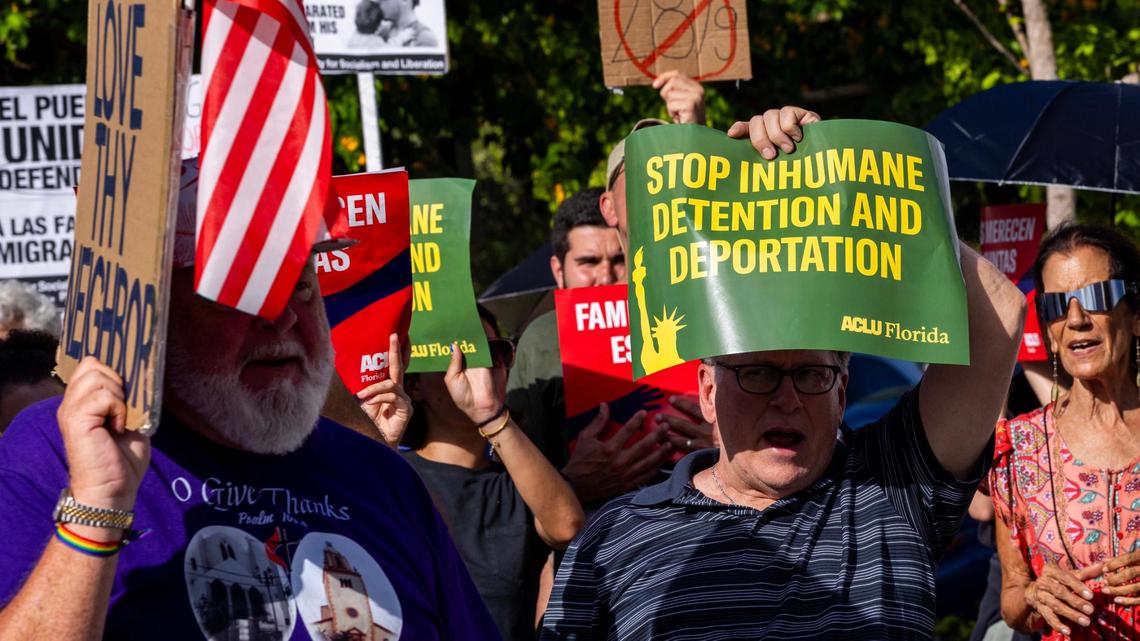
Demonstrators wave signs that read “STOP INHUMANE DETENTION AND DEPORTATION” during a press conference hosted by ACLU Florida, Florida Rising, The Florida Immigrant Coalition and Family Action Network Movement on Tuesday, June 17, 2025, in Miami.
D.A. Varela
dvarela@miamiherald.com
The Miami City Commission’s decision to partner with ICE through a 287(g) agreement last summer sparked significant controversy and public debate. The agreement allows Miami police officers to be trained for immigration enforcement under the supervision of ICE, a move that has faced backlash from residents and some city officials.
FULL STORY: Miami could undo ICE agreement, mayor says. Commissioners don’t plan to vote on it
Here are the highlights:
Despite public opposition, Miami City Commission voted 3-2 in June to enter a 287(g) agreement with ICE, allowing Miami police officers to be trained to carry out immigration enforcement functions under the direct supervision of ICE. Mayor Eileen Higgins, who was elected in December, opposes the agreement and has indicated she would support — but not sponsor — legislation to reverse it.The local political landscape has shifted, with three out of five commissioners now opposing the agreement. However, no commissioner has yet proposed a vote to terminate the partnership, partly due to fears of state and federal repercussions.Critics argue the partnership could harm Miami’s immigrant community, especially in light of recent national immigration enforcement incidents. Miami has seen fewer large-scale ICE raids compared to other cities, but concerns about the impact of smaller-scale enforcement operations remain.The city attorney warned last summer of potential financial consequences if commissioners voted against the agreement, citing risks of losing state and federal funding. But a lawsuit by the city of South Miami questioned whether it was mandatory that Florida cities sign such agreements.Miami Police Chief Manuel Morales reported that only three officers have been trained under the 287(g) agreement, with no current plans to expand. Mayor Higgins has committed to limiting further training under the agreement, reflecting ongoing concerns about its impact on the community.
The summary points above were compiled with the help of AI tools and edited by journalists in the Miami Herald newsroom. The full story in the link at top was reported, written and edited entirely by Miami Herald journalists.