By Sophia Noya | Staff Writer
What’s in a name? As far as the student body is concerned, a professor is a professor– all educators qualified enough to teach at a University level.
But next time you get an email from your professor, squint down at that e-signature. The multi-verse of Professors is bigger than what you can imagine: there are Professors, Assistant Teaching Professors, Courtesy Professors, Associate Professors, Visiting Assistant Professors and the list goes on.
Then, there’s something called an Adjunct Professor. According to FIU, over 500 Adjunct Faculty members teach each semester. But what exactly is an Adjunct Professor?
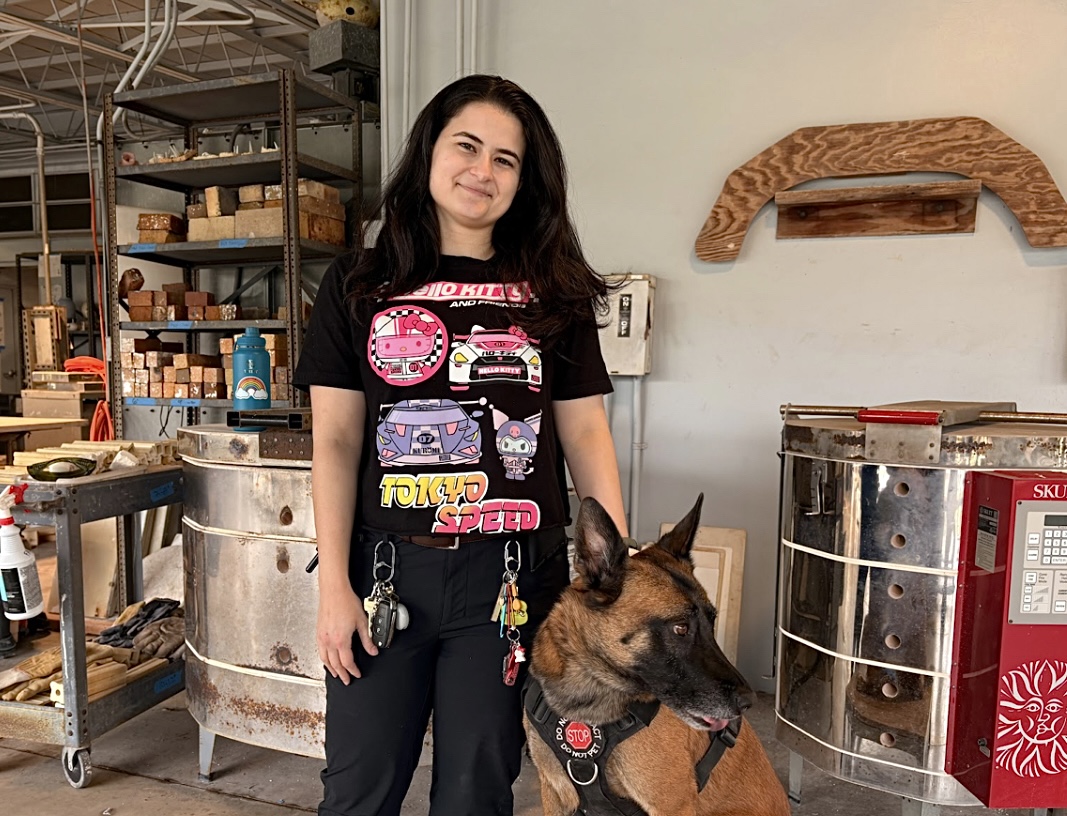
“The difference between an Adjunct and a full-time position is that an Adjunct contract is per semester. It’s a part-time position,” explained Victoria Carballo, an Adjunct professor who teaches ceramics.
She continues: “Full-time professors have a workload that is divided into teaching, services, and research. An adjunct contract only asks for teaching.”
For an Art professor like Carballo, services and research may include attending portfolio reviews and experimenting with new mediums, both of which she does voluntarily rather than for salary.
The U.S. Department of Labor does not offer an official definition for what “part-time employment” entails, only that it is less work than a full-time position. For an Adjunct, it means teaching fewer days a week, and a contract that guarantees a job only until the end of a semester.
“In some cases, it can be unstable,” Carballo said, “I’m very lucky that I have the trust of my department. They take care to make sure I have classes so that I get paid.”
The biggest difference between an Adjunct and a full-time professor is, undoubtedly, the gap in financial compensation.
It is typical to pay Adjunct Professors either a flat rate for the entire semester or per course taught. Compare with other colleges such as the University of Central Florida or Florida State University, which also offer their Adjuncts similar compensation.
This unorthodox income often leaves Adjuncts in need of a second job.
“I’m also the lab manager for the ceramics studio,” Carballo explained, “That position is hourly pay, more than an Adjunct. Between my two jobs, my salary is comparable to a full-time position.”
This year will be Carballo’s fourth working as an Adjunct at FIU. In addition to her experience, she holds a Master’s Degree in Ceramics from Florida Atlantic University.
While most in her position would expect a promotion, she’s not so certain.
“I’m not expecting a promotion. The opening of a full-time position has to be voted on and approved by the Dean of the college,” she said, “So, unless they open a full-time ceramics position, I will not be promoted to full-time.”
Despite this, Carballo remains positive and appreciative of her position as an Adjunct.
“I do feel like what I do is rewarding. I’m lucky enough to be working in an area I’m passionate about,” she said, “I’ve always wanted to be a teacher, and I love being able to make a difference in the lives of my students.”
She concludes, “It doesn’t matter to me that it’s not a full-time position. I’m super grateful for my situation. I really love my job.”
About Post Author