
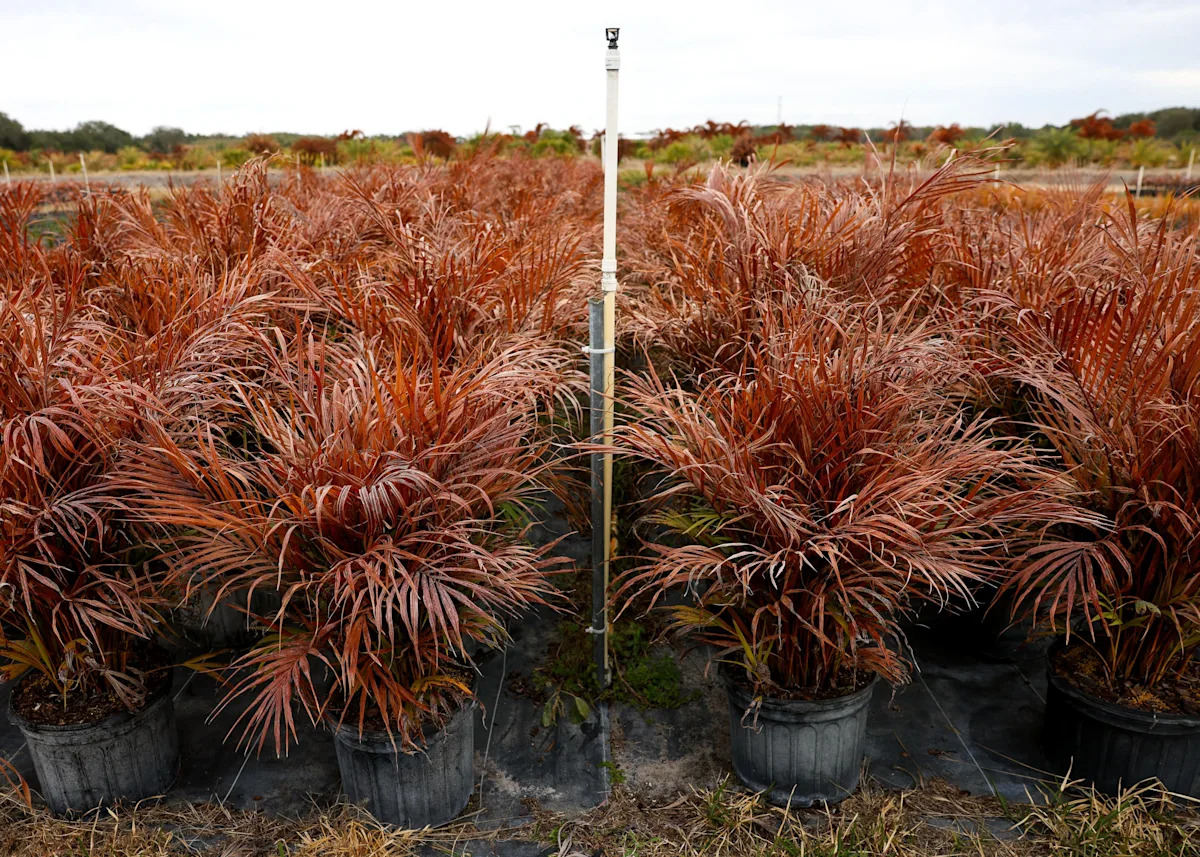
Growers on the Treasure Coast, who have adapted over the years to seasonal hurricane damage, were sucker-punched by the devastation caused by record-breaking cold temperatures in February.
Farms, nurseries and citrus groves on the Treasure Coast suffered varying degrees of frost damage, a loss that will result in far-reaching consequences on local agriculture, growers said.
East Coast Nursery, a family-owned business near Indiantown, reported 6,000 Clusia shrubs and 10,000 palms lost following a 26-degree freeze, with winds up to 30 mph.
“It’s going to change the landscape. It’s going to change the whole game,” said Mark Rutizer, of East Coast Nursery. “With how expensive it is to run everything, a lot of guys were just looking for a reason to get out and sell their land.”
It was the worst cold front the nursery has faced in more than 20 years in business, Rutizer said.
“It’s looking like I’m pretty screwed, but I am trying to figure it out,” Rutizer said. “I have fruit trees out here. My mangoes are fried. Dragon fruits fried. Jackfruits fried. And all of my palms and everything. It’s a punch in the stomach.”
He intends to stay in business but is worried about having to start basically from scratch after losing up to 70% of inventory, he said.
“I don’t know how you come back from this, to be honest,” he said. “This is my livelihood.”
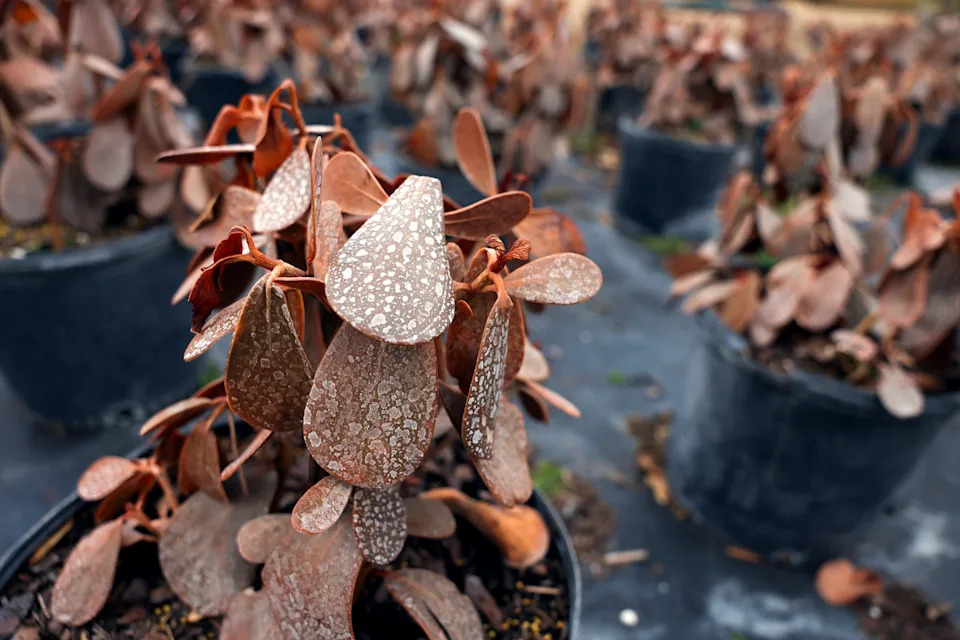
Clusia shrubs and palms lost to cold weather are seen, Feb. 11, 2026 at East Coast Nursery, a family-owned business in Indiantown. The nursery reported 6,000 Clusia shrubs and 10,000 palms were lost following a 26-degree freeze, with winds up to 30 mph in early February.
Florida freeze damages crops
Florida experienced several freeze events between late December and early February, according to the University of Florida.
“The recent and continuing cold-weather events have challenged Florida’s farmers at a critical time during the growing season,” according to the Florida Farm Bureau in a statement. “Damage is still being assessed, but we know it is significant.”
Damage was felt across Treasure Coast farms, depending on the crop.
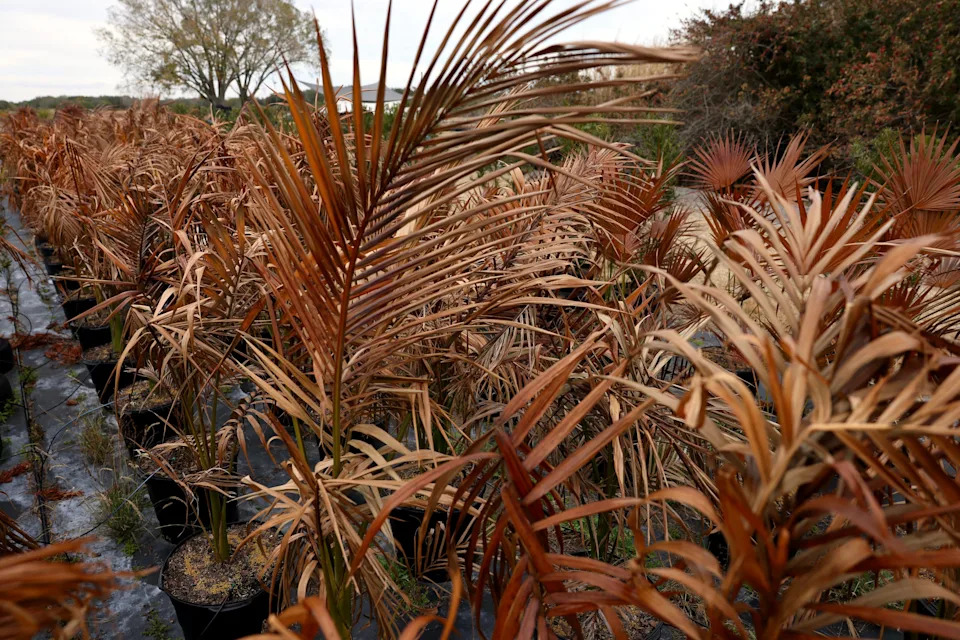
Clusia shrubs and palms lost to cold weather are seen, Feb. 11, 2026 at East Coast Nursery, a family-owned business in Indiantown. The nursery reported 6,000 Clusia shrubs and 10,000 palms were lost following a 26-degree freeze, with winds up to 30 mph in early February.
How did the freeze impact citrus?
Greene River Citrus, a family farm that has been growing citrus in Indian River County since the 1950s, was hurt by the damage, but it fared better than most, co-manager Aubrey Greene said.
“We are lucky because we don’t have any young trees at the moment. Our older trees are heartier and can tolerate cold better,” she said in a Feb. 3 email.
“However, we do stand to lose other fruit,” she said, referring to a lemon bloom and Sugarbelles still on the tree. A Sugarbelle is a citrus fruit, a cross between a honeybell and a clementine, developed by the University of Florida’s Institute of Food and Agricultural Sciences in the 1980s.
“Most of the Sugarbelles I cut into early Sunday and Monday morning were frozen,” she said, referring to Feb. 1 and 2. “As far as how many pounds of citrus are expected to be destroyed and affected by this freeze, only time will tell.”
Greene also owns a gift fruit and juice business, Greene Sugars. Because of the supply shock, she anticipates her season will be cut short, she said.
“I cannot guarantee to my customers that there will be any more fruit this year,” she said. “I have pulled most of my fruit off my website, and I cannot juice any more Sugarbelle this year due to them being frozen on the tree.”
Jack Randall is TCPalm’s economy and real estate reporter. You can reach him at jack.randall@tcpalm.com.
This article originally appeared on Treasure Coast Newspapers: Treasure Coast farms face devastation after Florida freeze