
Lionel Messi hoisting MLS Cup last December served as validation for Inter Miami’s ambitious project and made the Argentine legend the biggest star to ever win the league’s top prize. So where did that 2025 Miami side rank among three decades worth of MLS champions?
MLS has changed dramatically over the past 30 years, growing from 10 teams when it started in 1996 to 30 in 2026. Through that aggressive expansion, the league has played different structures and had numerous playoff formats, making it hard to truly compare and contrast the most dominant sides.
Nonetheless, entering the new season, which kicks off Feb. 21, we took a stab at ranking the 30 MLS Cup winners, judging them by their success (or relative luck) in the regular season and their performances in the playoffs, as well as the strength of the rosters and the performances of the squads themselves. It couldn’t be just about how well a team played soccer — a hat-tip to the 2014 LA Galaxy, which may have been the best-performing team of that dynasty — but also the results on the field.
We called some former MLS stars, league winners and execs to ask their opinions (and get castigated a bit because of some decisions), and persevered to reach this final ranking.
What became clear in completing this exercise was the eras of MLS: the dominance of the first years of the league before salary cap restrictions broke up the best teams; the dip in quality of the early 2000s, when the league contracted the Tampa Bay Mutiny and Miami Fusion in 2002; finding its way in the designated player era when David Beckham arrived in 2007; then another dip in the mid-2010s before the targeted allocation money era and more expansion in the late 2010s helped push the league forward again.
It shows MLS’s willingness to tinker with rules to coax quality, but also that the league was usually reactive and slow to grow with the times. What will that mean for the next era of MLS, one expected to begin not in 2026, when many assumed it would be ready to capitalize off of the 2026 World Cup, but rather a year later?
That’s still to be seen. In the meantime, here’s our ranking of the 30 MLS Cup champions:
30. 2010 Colorado Rapids
(12-8-10, 46 points; +12 goal differential; fifth in Western Conference)
The second-worst team in the playoff field went through the Eastern Conference bracket (thanks to some archaic MLS competition rules), then toppled FC Dallas in frigid Toronto in extra time on an own goal where the attacking player who forced it (Mac Kandji) tore his ACL on the play. The Rapids were led by stalwarts Conor Casey, Pablo Mastroeni and Drew Moor but were not exactly an all-time MLS juggernaut.
29. 2020 Columbus Crew
(12-6-5, 41 points; +15 goal differential; third in Eastern Conference)
The COVID-year winner is always going to be viewed a bit differently, with little to no crowds and unpredictable player availability making for a bizarre backdrop. And while it’s not fair to punish Columbus for the fact that the top two seeds in the East fell in the opening round, it did pave the way for the Crew to coast to the final (and in their defense, they overcame a COVID breakout). They won the title without conceding a goal over the last three games, including a convincing 3-0 win over Seattle in the final.
28. 2009 Real Salt Lake
(11-12-7, 40 points, +8 goal differential; fifth in Western Conference)
The “Team is the Star” RSL that challenged for a Concacaf title and became one of MLS’s most consistent teams over a few-year period behind the likes of Kyle Beckerman, Javier Morales and Nick Rimando emerged in ‘09 as an unlikely MLS Cup winner over the Beckham-era LA Galaxy. Their run to the title was fueled by penalty-kick victories in the league semifinal and final, though, and they eked into the playoffs on the final day of the regular season with a losing record.
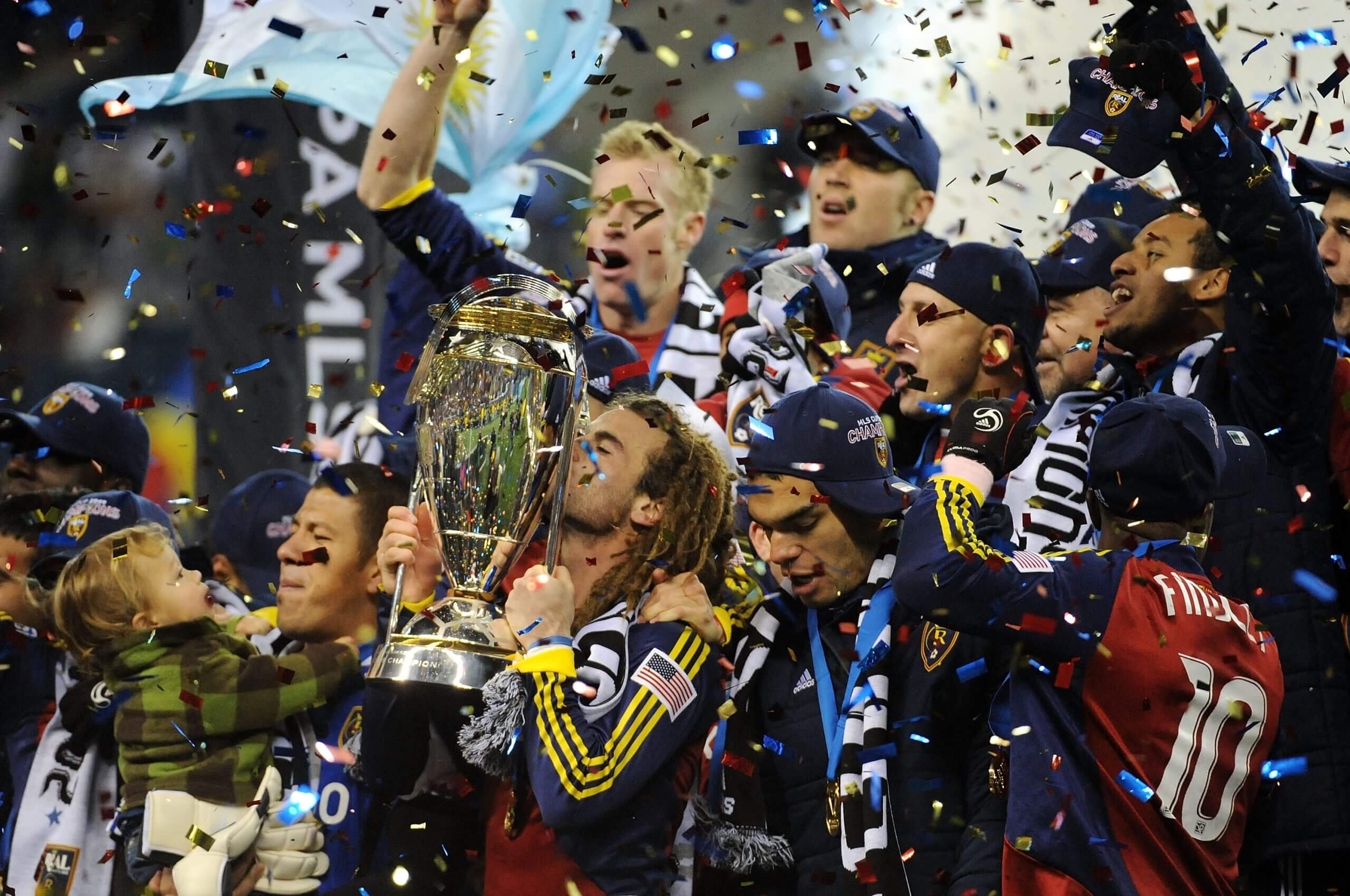
Kyle Beckerman kisses the MLS Cup trophy after RSL’s shootout triumph over the LA Galaxy in 2009 (Harry How / Getty Images)
27. 2004 D.C. United
(11-10-9, 40 points, +1 goal differential; second in Eastern Conference)
The last of D.C.’s four Cup-winning sides – one that featured 14-year-old Freddy Adu – was barely over .500 as part of a congested middle of the pack of a 10-team league and benefited from avoiding the Supporters’ Shield-winning Crew, who were upset in the first round of the playoffs by New England. After D.C. beat the Kansas City Wizards in the final, Peter Nowak became the first to win MLS Cup as player and coach.
26. 2005 LA Galaxy
(13-13-6, 45 points, -1 goal differential; fourth in Western Conference)
A .500 team with a negative goal differential, the Galaxy were the lowest seed in the playoffs. Nevertheless, they got hot, knocked off the top seeds in both conferences and added a second star to the crest with an extra-time win over the New England Revolution. Pando Ramírez was the hero of the final for a team paced by Landon Donovan and Herculez Gomez and also captured that year’s U.S. Open Cup.
25. 2021 NYCFC
(14-11-9, 51 points, +20 goal differential; fourth in Eastern Conference)
NYCFC was 22 points off the pace from the top of the table, but MLS Cup wound up being a battle of four-seeds – thanks in large part to a COVID-19 outbreak that decimated the Philadelphia Union in the Eastern Conference final to the tune of 11 players (including five starters) being ruled out. Nevertheless, NYCFC went into Portland, overcame a stoppage-time equalizer and prevailed in penalties for the club’s lone title.
24. 2016 Seattle Sounders
(14-14-6, 48 points, +1 goal differential; fourth in Western Conference)
This team kicked off a run of four MLS Cup appearances in five seasons (three of which came against Toronto FC) and was transformed by the midseason addition of Uruguayan playmaker Nicolas Lodeiro. Seattle was a pedestrian regular-season team, though, and its final triumph was made possible by the heroics of goalkeeper Stefan Frei, who made an all-time-classic save on Jozy Altidore in extra time and then saved Michael Bradley’s penalty in the shootout on his way to match MVP honors. Seattle had zero shots on goal in 120 minutes of MLS Cup.
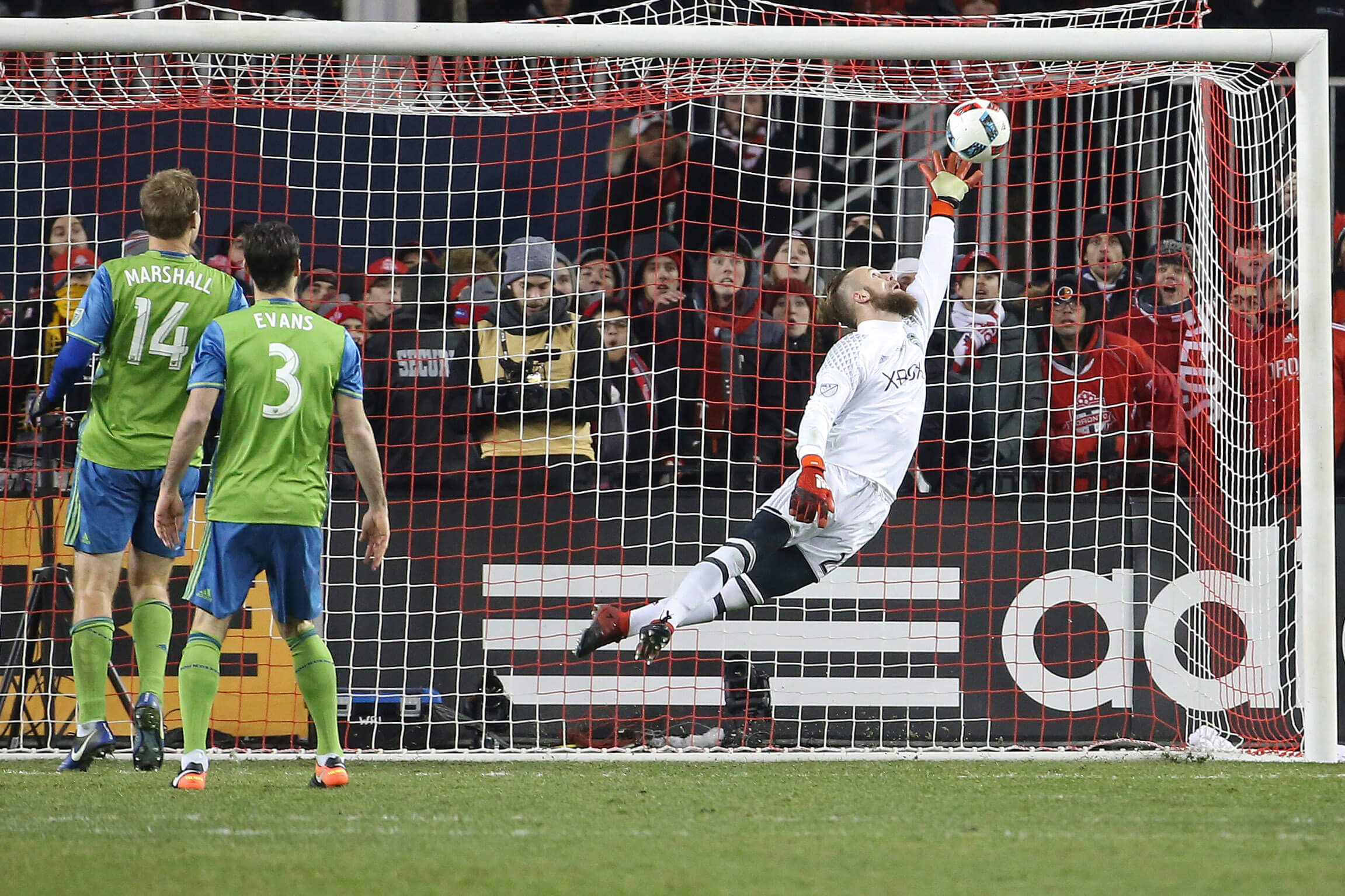
Stefan Frei’s full-extension save on Jozy Altidore’s header in 2016 is one of the great moments in MLS Cup history (Geoff Burke / USA TODAY Sports)
23. 2015 Portland Timbers
(15-11-8, 53 points, +2 goal differential; third in Western Conference)
Talk about fine margins. This side needed a 118th-minute equalizer and a famous double-post PK just to survive the opening round and were gifted the opener in MLS Cup off a goalkeeper gaffe 27 seconds in. Led by Diegos Valeri and Chará and 16-goal scorer Fanendo Adi, Portland was solid through and through, though, and knocked off the top two seeds in the West en route to the final in Columbus.
22. 2001 San Jose Earthquakes
(14-7-5, 47 points, +16 goal differential; second in Western Division)
The first of San Jose’s titles cemented a stunning worst-to-first turnaround. The playoff field was sorted by points per game since not every club finished with the same amount of matches played after the regular season was shortened by the September 11 attacks. In the postseason, the Earthquakes’ success was fueled by golden goals, including one in the best-of-three semifinal win over the’ Shield-winning Miami Fusion and another from Dwayne De Rosario in the final vs. the Galaxy.
21. 2003 San Jose Earthquakes
(14-7-9, 51 points, +10 goal differential; first in Western Conference)
After topping the West and missing the Supporters’ Shield by two points, these Quakes came back from a 4-0 aggregate deficit to the LA Galaxy in the second leg of the conference semifinals in one of the greatest games in league history. They wound up knocking off Shield-winning Chicago in the final to claim a second title in three years, with Donovan scoring twice in the title bout.
20. 2013 Sporting Kansas City
(17-10-7, 58 points, +17 goal differential; second in Eastern Conference)
SKC leaned on its stinginess, conceding a league-low 30 goals and finishing just a point off the Shield pace. In the playoffs, KC, featuring future USMNT World Cup starters Graham Zusi and Matt Besler, was fueled by comebacks, trailing in each round en route to a penalty shootout win over Real Salt Lake in the final, where goalkeeper Jimmy Nielsen made a pair of saves in the 10-round duel – despite playing through broken ribs in frigid conditions.
19. 2006 Houston Dynamo
(11-8-13, 46 points, +4 goal differential; second in Western Conference)
The Dynamo’s first title team lived on the edge, with Brian Ching’s stoppage-time goal lifting Houston over Chivas USA and out of the conference semifinals and his immediate extra-time reply to Taylor Twellman’s go-ahead goal stunning the Revs and sending MLS Cup to penalties where Ching, again, had the decisive touch. In Year 1 after relocating from San Jose, Houston was held to 13 draws in the regular season and was far from dominant, but it commanded the decisive moments on the biggest stage.
18. 2000 Kansas City Wizards
(16-7-9, 57 points, +18 goal differential; first in Western Division)
Like their 2013 successors, the pre-rebrand Wizards also won with defense – exemplified by U.S. goalkeeping legend Tony Meola winning league MVP for his 16 clean sheets (still the only goalkeeper to ever win the award) and MLS Cup MVP for blanking a Chicago Fire side that averaged more than two goals a game. Kansas City, which conceded eight fewer goals than the next closest competitor, completed the Shield-Cup double in stout, if not flashy, fashion.
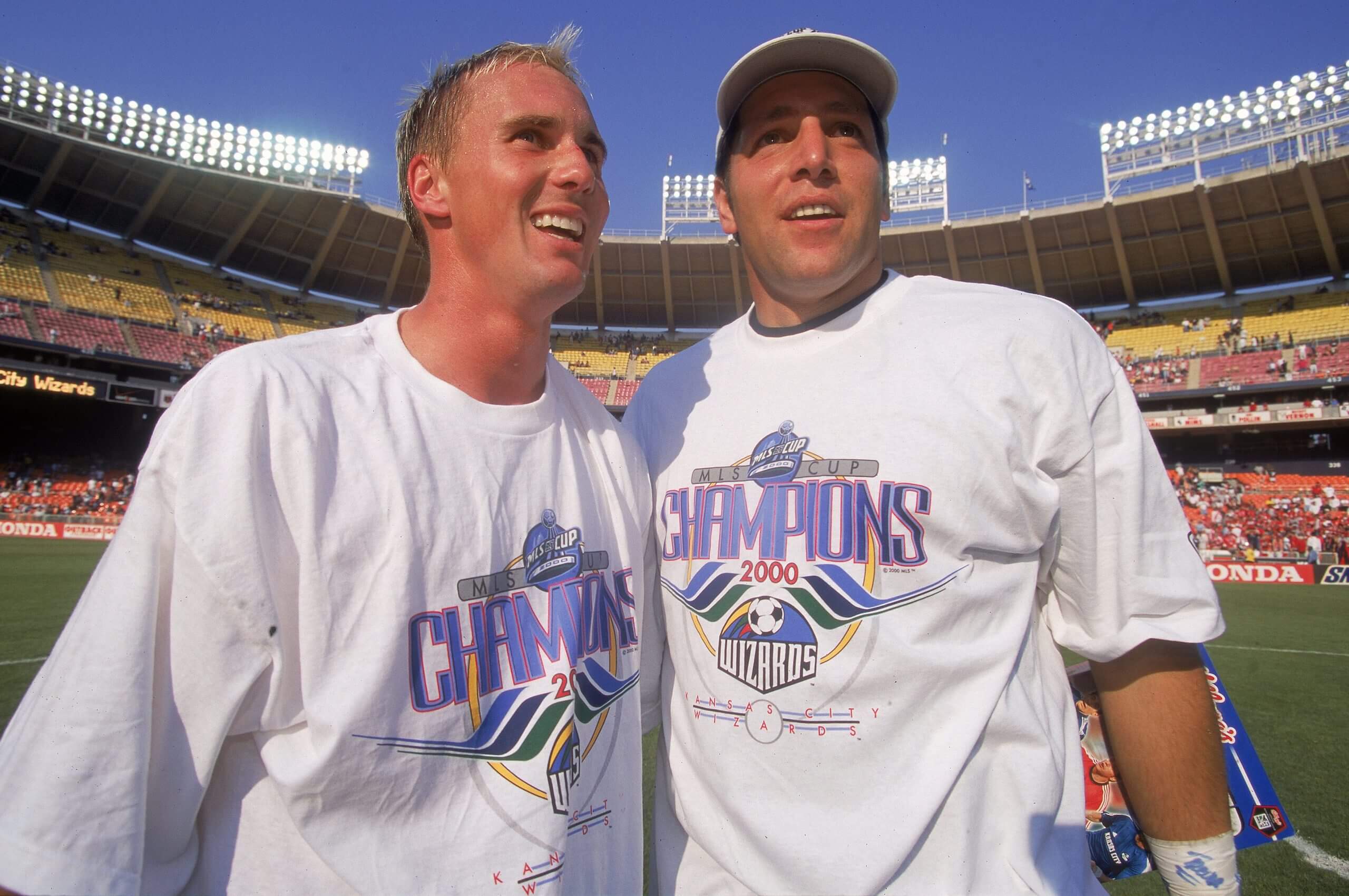
Kansas City Wizards stars Chris Henderson and Tony Meola celebrate winning 2000 MLS Cup in Washington, D.C. (Al Bello / Allsport)
17. 2007 Houston Dynamo
(15-8-7, 52 points, +20 goal differential; second in Western Conference)
The Dynamo went back-to-back with a second straight come-from-behind final win over the Revolution following a roller-coaster of a regular season that saw the club let the Supporters’ Shield slip away. Nevertheless, Houston is one of three teams in MLS history to repeat as champion, and for De Rosario, the game-winner in the final was his second in six seasons.
16. 2002 LA Galaxy
(16-9-3, 51 points, +11 goal differential; first in Western Conference)
The first of the Galaxy’s six titles was clinched on an extra-time golden goal by Carlos Ruiz in front of the third-largest crowd in the history of MLS Cup to this day. That largely partisan group of 61,000+ turned out in New England with hopes of witnessing the Revolution’s first title. Instead they saw the first of the team’s five Cup defeats. The Galaxy had previously lost three finals of their own, but Cobi Jones, Alexi Lalas & Co. broke that curse and allowed the Shield winner to do the double.
15. 1999 D.C. United
(17-9, 6 shootout wins, 57 points, +22 goal differential; first in Eastern Conference)
D.C. won its third title and second Supporters’ Shield in the first four years of MLS’s existence, cementing itself as the league’s first dynasty and bouncing back from a defeat in the final the year prior. It wasn’t the best or most dominant of DCU’s early teams (spoiler alert: more on those below), but it recovered from losing Bruce Arena to the USMNT, with Thomas Rongen stepping in as coach and Roy Lassiter leading the way with 18 goals and 11 assists.
14. 2008 Columbus Crew
(17-7-6, 57 points, +14 goal differential; first in Eastern Conference)
Guillermo Barros Schelotto’s masterclass of a season was punctuated by a masterclass of a final, with the Argentine playmaker assisting on all three goals in a win over the Red Bulls that delivered Columbus its first title. The Crew won the Supporters’ Shield as well, with Schelotto winning league MVP honors after a 16-assist campaign. The title also made Sigi Schmid the first coach to win MLS Cup with multiple clubs.
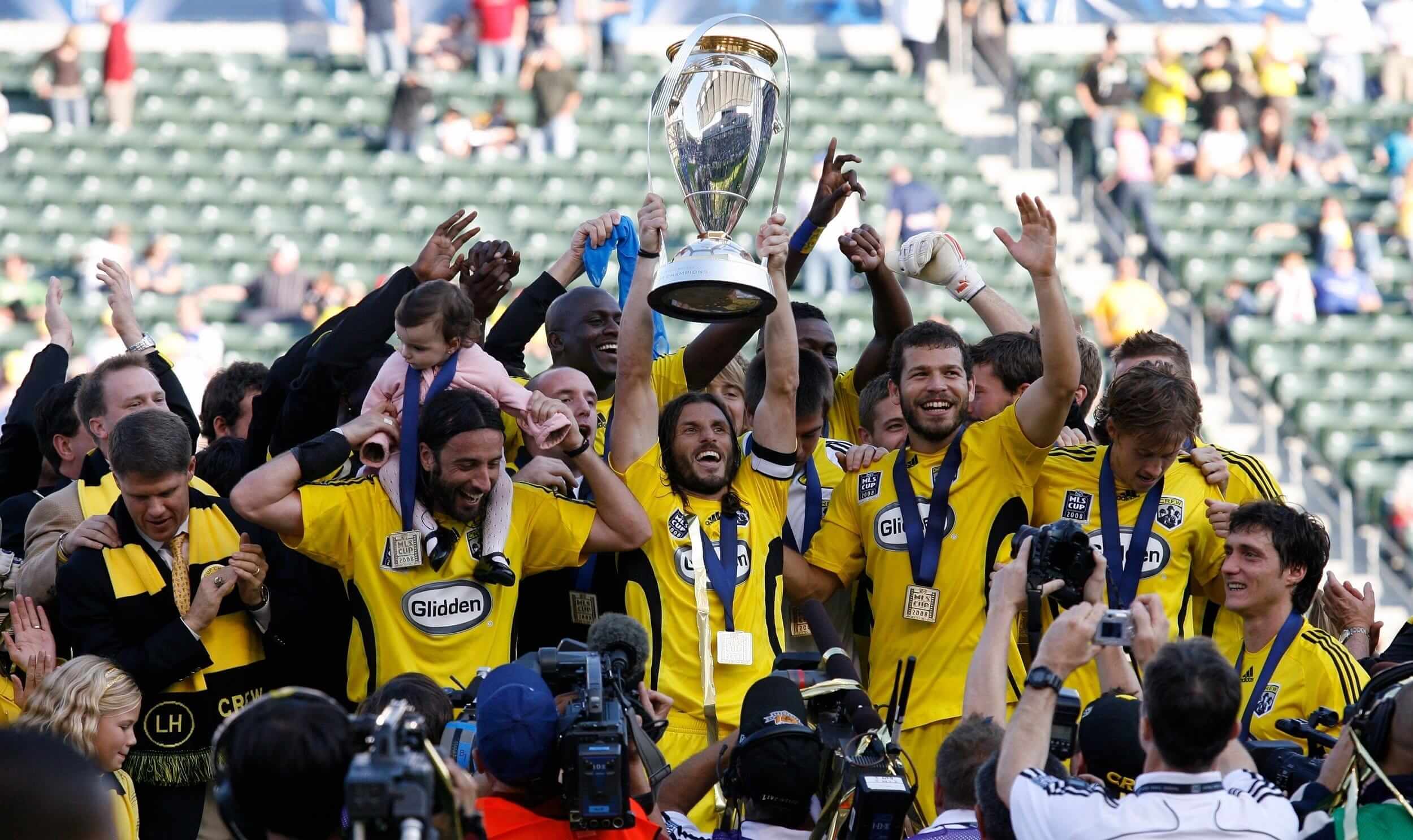
Frankie Hejduk and the Columbus Crew lift the 2008 MLS Cup trophy (Kyle Robertson / Columbus Dispatch / USA TODAY Network)
13. 2024 LA Galaxy
(19-8-7, 64 points, +19 goal differential; second in Western Conference)
LA set the new standard with a sixth MLS Cup, beating an upstart Red Bulls group in the final. Riqui Puig’s 13-goal, 15-assist season was the straw that stirred the drink, though the Galaxy had to win the final without him after he tore his ACL making the game-winning assist in the conference final vs. Seattle. Considering crosstown LAFC had reached the previous two finals and edged the Galaxy for first in the West on a tiebreaker, this was an extra-sweet rebound for a club that was second-to-last in the conference a year prior.
12. 2019 Seattle Sounders
(16-10-8, 56 points, +2 goal differential; second in Western Conference)
The Raúl Ruidíaz-Jordan Morris-Lodeiro-led Sounders topped Toronto FC in their MLS Cup rubber match, with that being the third such final in four years between the two sides. On the way and as part of MLS’s new single-elimination format for the duration of the bracket, Seattle went to Los Angeles and knocked off LAFC, which not only won the Supporters’ Shield but did so by setting a new league points record.
11. 1996 D.C. United
(15-16, 1 shootout win, 46 points, +6 goal differential; second in Eastern Conference)
The inaugural MLS champion started off as one of the worst teams in the league. D.C. lost its opening three games and won just two of its first nine before finding its way under Arena. The turnaround was boosted by adding Jaime Moreno in the summer window, and United finished with the third-most points before toppling the two teams ahead of them. United dispatched the Tampa Bay Mutiny in the conference semis and in MLS Cup came from 2-0 down to stun the Galaxy in a torrential downpour in New England, with Eddie Pope’s golden goal launching the league’s first dynasty.
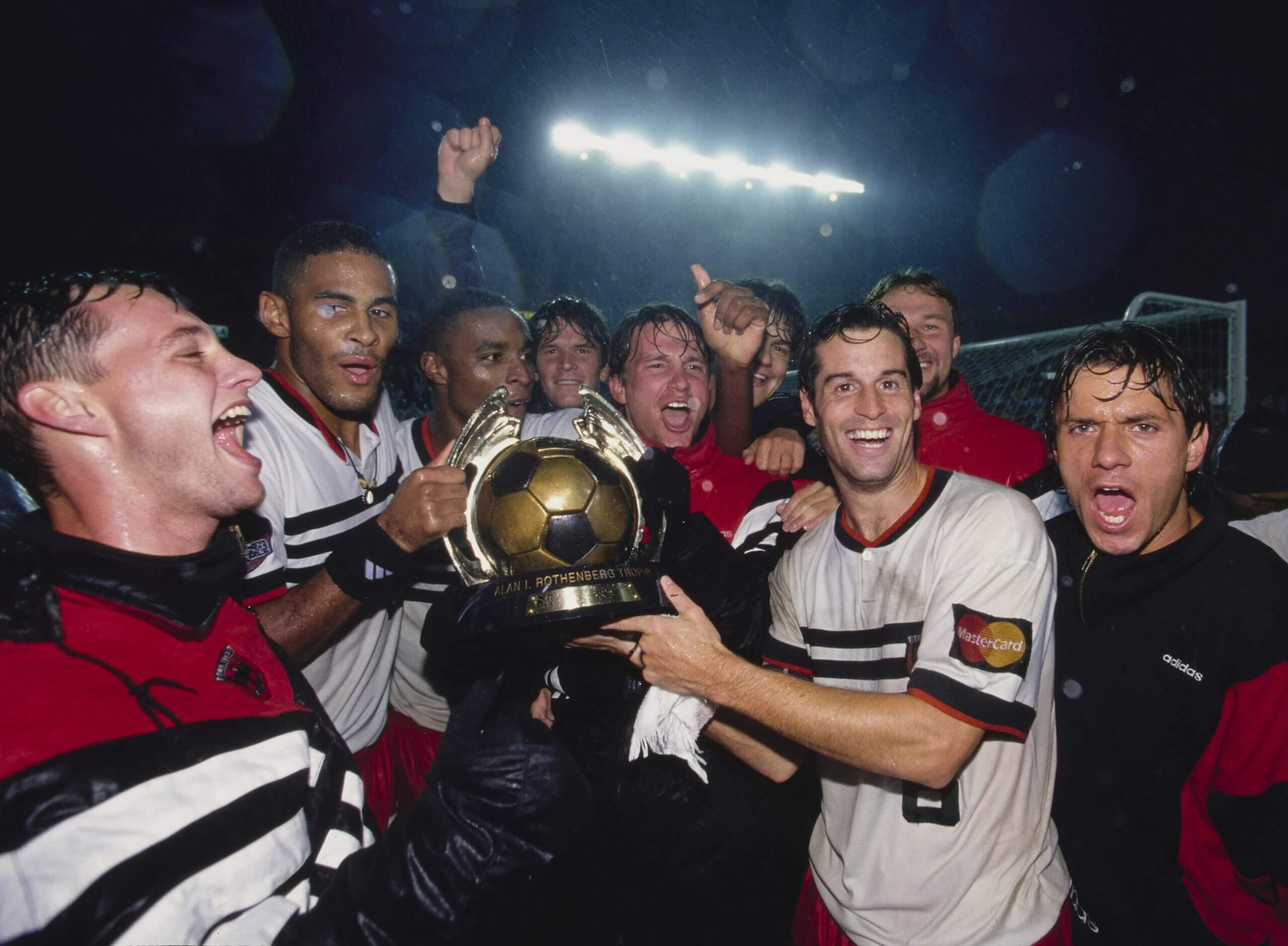
D.C. United celebrates the first MLS Cup after outlasting the Galaxy in a torrential downpour (Simon Bruty / Allsport / Getty Images)
10. 1998 Chicago Fire
(18-12, 2 shootout wins, 56 points, +17 goal differential; second in Western Conference)
Chicago won a double — MLS Cup and the U.S. Open Cup — and is the only expansion team to win an MLS Cup. Led by future USMNT manager Bob Bradley, a stacked team featuring the international likes of Luboš Kubík, Peter Nowak, Roman Kosecki and Jerzy Podbrożny and Americans C.J. Brown, Zach Thornton, Jesse Marsch, Frank Klopas, Ante Razov and Josh Wolff. The Fire beat arguably two of the best teams in MLS history in the playoffs: the ‘98 Galaxy and D.C. United, to win the title.
9. 2012 LA Galaxy
(16-12-6, 54 points, +12 goal differential; fourth in Western Conference)
The most recent team to go back-to-back, this Galaxy came off of a dominant 2011 season and had a decent encore. They lost eight of their first 11 games and finished a distant eighth in the Supporters’ Shield standings, but from early summer, when Omar Gonzalez returned from a torn ACL, LA lost just two of its final 17 games, going 11-2-4 down the stretch. It knocked off Vancouver, Shield-winning San Jose and Seattle in the Western Conference playoffs before beating the Dynamo in MLS Cup to send Beckham off with another title.
8. 2018 Atlanta United
(21-7-6, 69 points, +26 goal differential; second in Eastern Conference)
Atlanta’s ambitious expansion launch was rewarded with a title in the club’s second season, as Tata Martino masterminded a brilliant side, which hosted the highest-attended MLS Cup ever (over 73,000). Atlanta narrowly missed the Shield but took down its winner, the Red Bulls, in a head-to-head, two-legged conference final to leave no doubt before blanking Portland in MLS Cup. This team was led by record-setting goalscorer Josef Martínez and leaned on a balance of South American talent (Martínez, Miguel Almirón, Ezequiel Barco, Franco Escobar) and veteran U.S. presence (Darlington Nagbe, Michael Parkhurst, Brad Guzan, Jeff Larentowicz) to reach the peak.
7. 2014 LA Galaxy
(17-7-10, 61 points, +32 goal differential; second in Western Conference)
The post-Beckham Galaxy sent Donovan into (temporary) retirement with another Cup triumph, edging the Revolution yet again in extra time. Robbie Keane further cemented his status as an all-time league great with the 111th-minute winner for a side that finished second in the Supporters’ Shield table but took out the holder, Seattle, in a thrilling conference final on the away goals tiebreaker.
6. 2023 Columbus Crew
(16-9-9, 57 points, +21 goal differential; third in Eastern Conference)
Wilfried Nancy’s side sold the influential Lucas Zelarayán in the middle of the season but wound up getting stronger, as Cucho Hernández, Diego Rossi and Nagbe became the pillars of the Crew’s third championship side. In winning the final, Columbus prevented LAFC from going back-to-back. The ‘23 Crew were third in the Shield standings, but boasted the league’s top attack and goal-differential, playing Nancy’s distinct and dominant style all the way to the trophy.
5. 2022 LAFC
(21-9-4, 67 points, +28 goal differential; first in Western Conference)
LAFC’s summer signing of Gareth Bale was validated with a single moment at the death of MLS Cup, when the Welshman headed in an equalizer to force penalties against the Philadelphia Union – an all-time MLS moment in an all-time great final. LAFC had also edged Philly for the Supporters’ Shield via tiebreaker to do the double, and in the playoffs emerged from a classic El Trafico matchup vs. the rival Galaxy and thrashed the West’s second-place team, Austin FC.
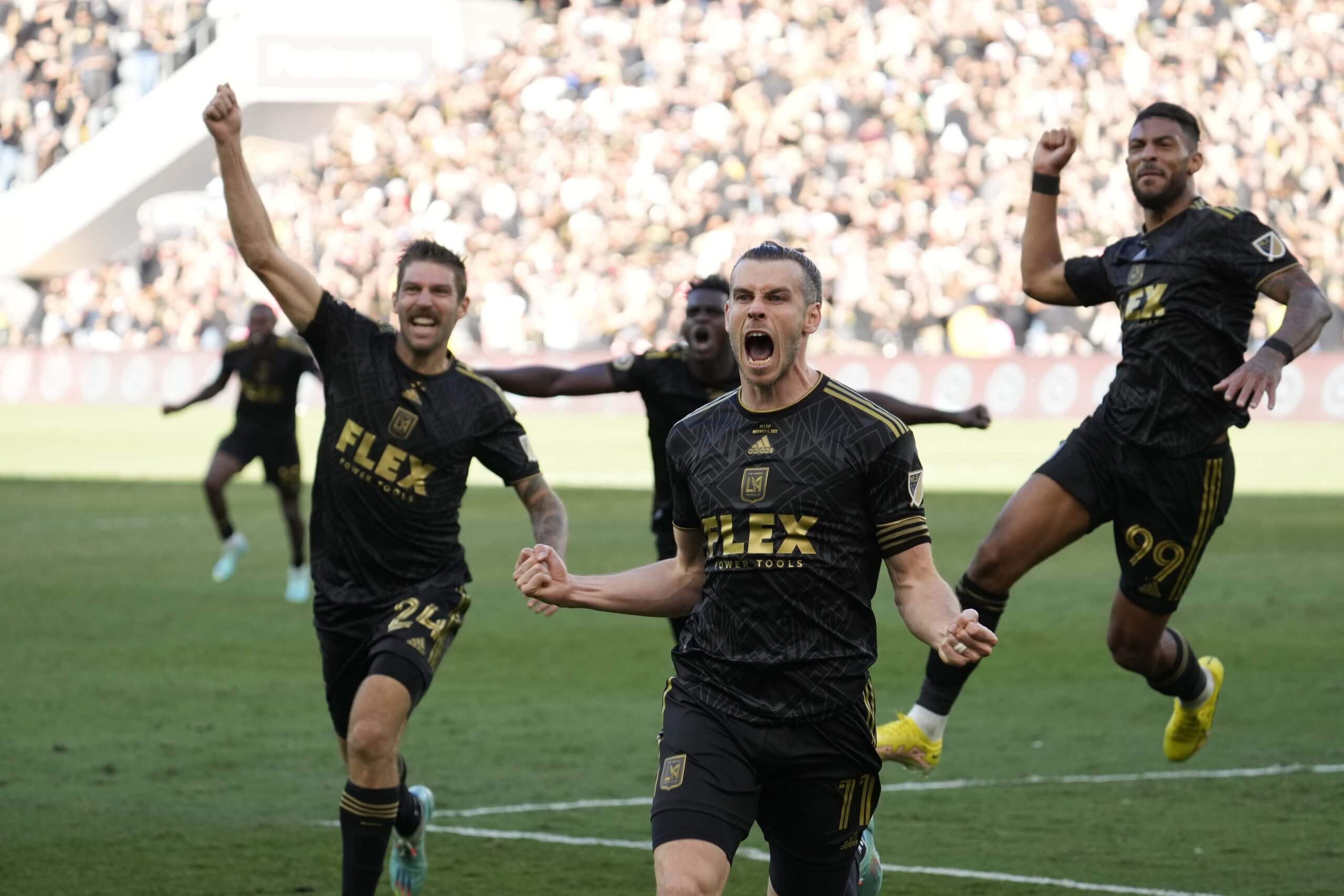
LAFC players celebrate Gareth Bale’s goal at the death to force penalties in the 2022 MLS Cup final (Robert Hanashiro / USA TODAY Sports)
4. 2011 LA Galaxy
(19-5-10, 67 points, +20 goal differential; first in Western Conference)
The beginning of the Galaxy’s dynasty under Bruce Arena, this team had four Best XI selections — Omar Gonzalez, Todd Dunivant, Beckham and Donovan — and won the double, taking the Shield and then beating the Red Bulls, RSL and Dynamo en route to MLS Cup. Keane joined in August and played just four regular-season games, scoring twice, but started every game of the playoffs and scored once, a hint of what would come over the next few seasons. With 19 wins and a plus-20 goal differential, it was a dominant Galaxy side that would repeat as champ.
3. 1997 D.C. United
(17-11, 4 shootout wins, 55 points, +17 goal differential; first in Eastern Conference)
The first repeat champion in MLS history and the first to do the Shield-Cup double, this D.C. team was a reminder that DP-caliber talent existed before Beckham. A dominant side led by Moreno (16 goals), Bolivian playmaker Marco Etcheverry (11 assists) and Salvadoran forward Raúl Díaz Arce (15 goals) tore through MLS supported by a lineup that included U.S. stalwarts Pope, John Harkes, Jeff Agoos and Tony Sanneh. United finished six points clear atop the table and slashed through the playoffs to win another MLS Cup under Arena.
2. 2025 Inter Miami
(19-7-8, 65 points, +26 goal differential; third in Eastern Conference)
From a pure talent standpoint, this is the No. 1 team. Lionel Messi, Jordi Alba and Sergio Busquets are players that defined their position. Messi is the greatest of all time. So deep and dangerous was this team that Luis Suárez, among the greatest strikers of his generation, did not get off the bench in MLS Cup. Coming off of a Shield win (and single-season points record) in 2024, Miami followed it by finishing one point back of the Shield in 2025 and then easing through the playoffs before outlasting Vancouver in the final. Miami’s 20 goals in a single postseason is the new league standard.
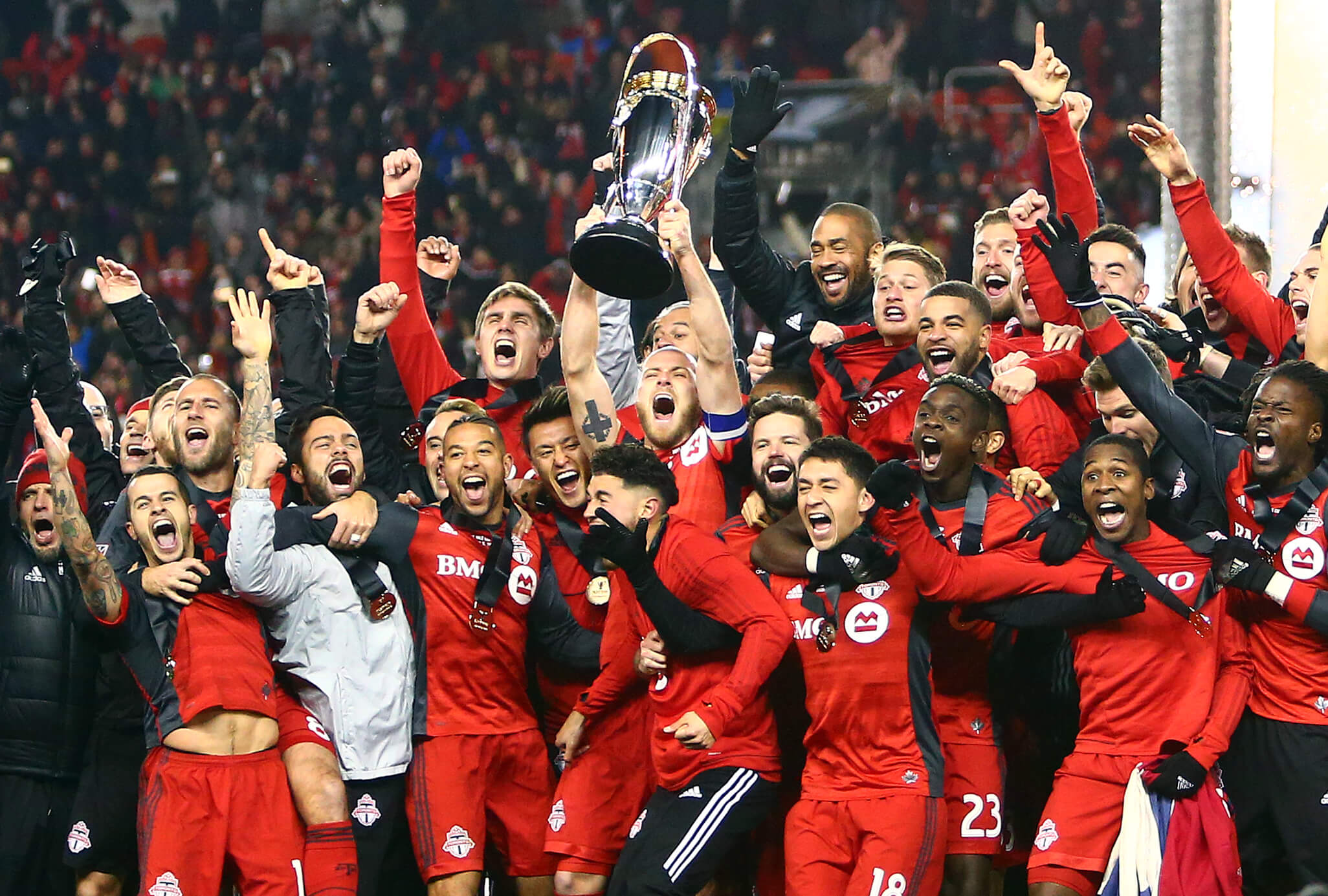
Michael Bradley hoists the 2017 MLS Cup, which completed Toronto FC’s treble-winning season (Vaughn Ridley / Getty Images)
1. 2017 Toronto FC
(20-5-9, 69 points, +37 goal differential; first in Eastern Conference)
The key to success in MLS is getting your designated players right, and TFC nailed all three: Michael Bradley, Jozy Altidore and Sebastian Giovinco changed the culture of a club and then produced at a very high level to turn Toronto into a juggernaut. This club won the Supporters’ Shield, MLS Cup and the Canadian Championship to deliver MLS’s first domestic treble, scoring 74 regular-season goals along the way and adding another 17 in the playoffs, which was a record for eight years. They followed up the 2017 season by advancing to the Concacaf Champions League final, beating Tigres and Club América before falling to Chivas on penalties in the final.